China is Leading the Global Green Energy Transition and Challenging the Traditional World Order at COP31

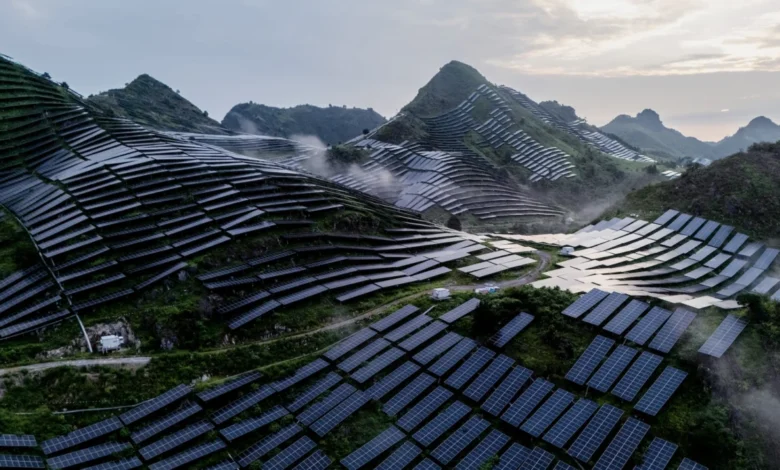
As the international community gathers in Turkey for COP31, the climate summit has become a stage for a fundamental shift in the global balance of power. While the conference is ostensibly focused on decarbonization targets and policy implementation, the underlying narrative is defined by China’s rapid emergence as the world’s primary architect of the renewable energy transition. Former US Secretary of State John Kerry, in recent commentary, underscored a stark reality: China is not only outpacing its peers in the deployment of clean technology, but it is also leveraging this industrial dominance to reshape its geopolitical influence, leaving the United States and other Western nations struggling to keep pace.
The Shift Toward an Electrostate World Order
The global transition from fossil fuels to electrified systems is no longer a theoretical exercise; it is an economic imperative. China has pivoted its entire industrial engine to capture this market, with clean-tech exports exceeding $220 billion in 2025. This move is both a strategic response to domestic economic stagnation and a calculated effort to ensure national energy security. By controlling approximately 85 percent of global solar manufacturing capacity and 80 percent of the lithium-ion battery supply chain, Beijing has effectively made itself the indispensable partner in the global energy transition.
This transition toward what some analysts term an "electrostate" model suggests a future where economic power is measured by control over electricity grids, storage capacity, and the manufacturing of high-tech hardware rather than the control of oil fields and maritime trade routes for hydrocarbons. The geopolitical privilege once held by the United States—underpinned by the dollar’s role as the primary currency for oil trading—is facing a credible challenge. As nations move toward renewable energy, the reliance on US-backed oil markets wanes, potentially weakening the traditional levers of Western influence.
A Chronology of China’s Green Pivot
China’s current stance on climate leadership is the result of years of incremental, yet increasingly aggressive, policy adjustments.
- 2020: China announces its "Dual Carbon" goals, aiming for peak carbon emissions by 2030 and carbon neutrality by 2060.
- March 2024: Analysis of Chinese energy production indicates the first sustained trend of flat or falling emissions, marking a significant departure from decades of growth.
- 2025: China solidifies its market dominance, with clean-tech exports reaching $220 billion and producing nearly 75 percent of the world’s electric vehicles.
- March 2026: The adoption of the latest "five-year plan" officially mandates that China "actively participate in and lead global climate governance."
- November 2026: COP31 in Turkey begins with global focus on whether Beijing will transition from a policy participant to an active architect of international climate frameworks.
The Economic Catalyst: Beyond Domestic Consumption
For years, China’s leadership has been vexed by a reliance on massive infrastructure spending and a lack of robust domestic consumption. The green energy sector has provided a crucial solution: an export-led growth strategy that aligns with global climate commitments. By positioning itself as the "green factory of the world," Beijing has bypassed the traditional constraints of internal demand.
Furthermore, the "Belt and Road Initiative" (BRI) has become a primary vehicle for this strategy. Recent data shows that the value of green energy deals signed under the BRI in the first half of 2026 alone has eclipsed the total for the entire previous year. By exporting solar panels, wind turbines, and grid infrastructure to nations in the Global South, China is building a coalition of dependencies that may prove critical if the country chooses to challenge Western-led trade restrictions, such as the tariffs currently imposed by the US and the European Union on Chinese electric vehicles.
The View from Washington and Global Perspectives
The American position, meanwhile, remains complex. John Kerry’s assessment highlights a widening gap between Chinese industrial acceleration and the fragmented approach of the United States. Kerry noted that the volatility of global oil markets, particularly following conflicts in the Middle East, has forced many nations to seek energy independence. "The marketplace has made its decision," Kerry stated. "It is moving to electrons. The only country that has hugely accelerated is China."
However, observers caution that China’s path to leadership is not without hurdles. Yixian Sun, a professor of sustainability governance at the University of Bath, notes that there remains a significant "mismatch" between China’s internal ambitions and the international community’s willingness to accept Beijing as a global leader. Many Western nations remain deeply suspicious of Chinese intentions, viewing their green technology dominance as a national security risk rather than a climate solution.
Implications for COP31 and Beyond
The current summit in Turkey serves as a litmus test for China’s diplomatic strategy. Beijing has signaled a desire to discuss the "free flow of green technology," a clear pushback against the protectionist tariffs that currently plague the sector. Whether this will lead to a broader cooperative framework or a hardening of trade blocs remains to be seen.
Analysts are looking for several key indicators during the summit:
- Climate Finance: Will China increase its commitments to support a "just transition" for developing nations?
- Institutional Leadership: Will Beijing bid to host COP33 in 2028, signaling a long-term commitment to setting the global agenda?
- Diplomatic Alignment: Will China successfully rally the "BRICS plus" nations to form a united front against Western climate-related trade measures?
The Reality of the Transition
The "just transition"—a framework intended to protect workers and livelihoods as the world pivots away from fossil fuels—is central to the discussions in Turkey. For developing nations, the priority is not just emissions reduction, but affordable access to the technology required to reach those goals. If China can provide a cheaper, more accessible alternative to Western technology, its influence in the developing world will likely grow, regardless of political friction with the Global North.
As the summit proceeds, the reality is that the energy transition is no longer solely an environmental issue. It is a fundamental realignment of the global economy. Whether the result is a cooperative effort to mitigate climate change or a new, energy-focused manifestation of great-power competition, the shift is already well underway. China has positioned itself at the center of this transformation, and as the COP31 proceedings continue, the rest of the world must decide whether to engage with this new reality or continue to face the risks of economic and environmental instability.
The sentiment expressed by observers remains cautious. As Kate Logan of the Asia Society Policy Institute noted, Beijing is likely looking for a cooperative outcome at COP31 that avoids major confrontation. Yet, by merely showing up as the global leader in renewable energy deployment, China has already fundamentally altered the conversation. The transition to an electrified world is, as Kerry suggested, "unstoppable," but the terms of that transition—and who benefits most from it—remain the primary point of contention in the global climate arena.
Ultimately, the success of the Turkey summit may not be measured by the promises made, but by the acknowledgement of who holds the keys to the future of energy production. For the world, the climate crisis is a matter of survival; for China, it has become an opportunity to rewrite the rules of international influence.