White House Counsel Will Scharf Warns House Oversight Committee Chairman Robert Garcia Against Impending Investigations into the Trump Administration

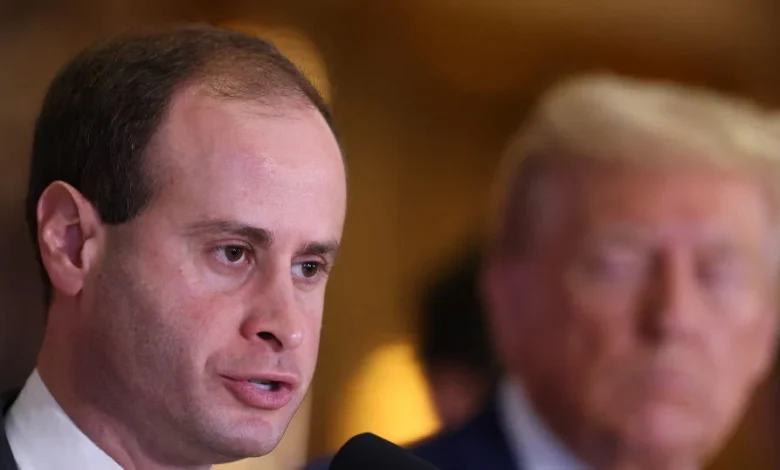
The escalating tensions between the executive branch and the incoming legislative leadership reached a critical inflection point this week, as White House Counsel Will Scharf issued a stern legal warning to Representative Robert Garcia, the presumptive chairman of the House Oversight and Government Reform Committee. In a formal letter dated November 10, 2026, Scharf signaled that the administration would aggressively contest future congressional subpoenas, characterizing planned Democratic investigations as potential acts of criminality rather than legitimate legislative oversight. This development marks the opening salvo in what is expected to be a contentious two-year struggle for power as the administration enters the latter half of President Trump’s second term.
The Legal and Political Friction
The confrontation stems from the results of the 2026 midterm elections, which saw the Democratic Party secure a robust majority in both chambers of Congress. With control over committees and the power to issue subpoenas, Democrats have announced a comprehensive investigative agenda targeting the administration’s business dealings, immigration policies, and various ethical concerns.
In his correspondence to Rep. Garcia, Scharf argued that the oversight plans outlined by Democratic leadership lack a "legitimate legislative purpose," a threshold established by the Supreme Court for congressional inquiry. Scharf’s letter suggested that the administration views these proposed actions not as constitutional checks and balances, but as a campaign of harassment designed to intimidate executive branch employees.
"Beyond being inconsistent with the clear, well-recognized constitutional limitations on your investigative functions, threats to executive branch officials designed to deter them from public service, or process designed merely to abuse or instill fear in the recipient may cross the line into blatant criminality," Scharf stated. He further warned that the executive branch may respond to what it deems "unlawful subpoenas" by initiating its own investigations into the actions of congressional members.
Constitutional Tensions and Precedent
The dispute centers on the boundaries of Article I authority—which grants Congress the power to investigate and legislate—and the protections afforded to the executive branch. Historically, the relationship between these two branches has been fraught with friction, particularly when the White House and the legislative majority represent opposing political parties.
The legal standard for congressional subpoenas remains heavily influenced by the 2020 Supreme Court decision in Trump v. Mazars USA, LLP. In that ruling, the Court balanced the competing interests of Congress and the President, establishing a four-part test for when legislative committees can access a President’s personal information. While the Court recognized that Congress possesses "significant legislative interests," it also emphasized that such requests must not be used to harass or interfere with the "lawful functioning of government."
Scharf’s current argument hinges on the assertion that Democratic intentions are purely political. By framing these upcoming inquiries as "abusive and capricious," the White House is preparing a defense strategy that relies heavily on the judiciary to block access to sensitive documents and testimony.
Congressional Response and the Democratic Agenda
Representative Robert Garcia, who is poised to assume the chairmanship of the House Oversight Committee in January, rejected the White House’s characterization of his committee’s agenda. In a strongly worded rebuttal, Garcia framed the White House’s warning as an attempt to undermine the fundamental principles of a co-equal branch of government.
"It appears Donald Trump has something to hide," Garcia said in a statement. "Let’s be clear: Congress’ authority comes from Article I of the Constitution, not from the permission of the White House. We are a co-equal branch of government and will not be deterred by baseless threats from a weaponized DOJ or from the President’s lawyers."
Garcia’s legislative agenda is expected to be expansive. Key areas of focus identified by the incoming majority include:
- Financial Oversight: An in-depth review of the Trump family’s business dealings and potential conflicts of interest that may have arisen during the second term.
- Corporate Accountability: Investigations into specific industry regulations and government contracts that may have been influenced by political donors.
- Immigration Enforcement: Scrutiny of the federal government’s handling of immigration, specifically regarding the detention and processing of migrants.
- Legacy Issues: Renewed interest in long-standing questions surrounding the Jeffrey Epstein scandal and its intersection with high-level government figures.
The President’s Rhetoric and Executive Strategy
President Trump has taken an increasingly aggressive posture on social media, specifically on Truth Social, where he has characterized the incoming investigations as "extortion" and "sleaze." His directive to the Justice Department to monitor the activities of the Oversight Committee indicates a strategy of preemptive legal warfare. By calling for the accountability—and potential imprisonment—of political opponents, the President is signaling that his administration will utilize every available federal mechanism to impede congressional access to records and personnel.
This rhetoric underscores the polarized nature of the current political environment. For the President, the legislative oversight is a distraction and a political attack. For the Democrats, it is a necessary check on what they describe as a "weaponized" executive branch.
Broader Implications and Future Outlook
The standoff between Scharf and Garcia has profound implications for the functioning of the federal government through 2028. Several key consequences are likely to emerge as this conflict intensifies:
- Protracted Litigation: The battle will likely move to federal court, as the administration refuses to comply with subpoenas and committees move to enforce them. This could result in a series of legal precedents that further define the limits of the subpoena power.
- Legislative Gridlock: The focus on investigative activities will likely consume much of the political oxygen in Washington, potentially slowing the passage of standard budget appropriations and other essential legislative tasks.
- Institutional Erosion: As both sides accuse the other of "weaponizing" their respective powers, there is a risk of further degradation in the norms that facilitate cooperation between the branches of government.
- Public Trust: The ongoing confrontation is likely to deepen the partisan divide among the electorate, with each side viewing the other’s actions as a fundamental threat to the democratic order.
As January approaches, the Oversight Committee is expected to begin issuing formal requests for information. The administration’s vow to resist these requests suggests that the country is headed toward a period of intense institutional strain. With the House and Senate under Democratic control and a Republican White House eager to fight, the coming months will serve as a definitive test of the American system of checks and balances.
Ultimately, the dispute highlights the fragility of the balance of power. Whether the judiciary will intervene to mediate this conflict or allow it to play out as a political contest remains the most significant question in the upcoming session of Congress. As both sides prepare for the legislative calendar, the tone of the communication between the White House counsel and the future committee chair suggests that compromise is unlikely, and a prolonged, high-stakes standoff is all but certain.