Dana White Addresses White House Press Secretary Rumors Alongside President Trump in Surprise Briefing

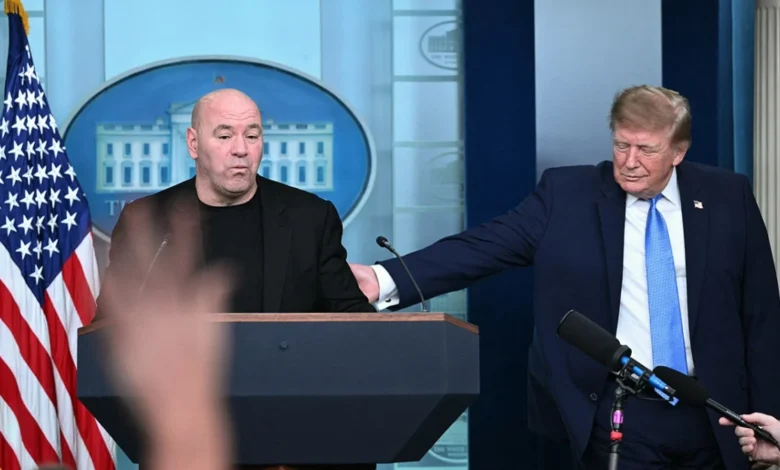
The intersection of professional sports promotion and American politics produced an unexpected spectacle on Monday as Ultimate Fighting Championship (UFC) CEO Dana White joined President Donald Trump at a White House press briefing in Washington, D.C. The appearance served to officially debunk viral media reports suggesting that the combat sports executive was slated to take over the role of White House Press Secretary. Standing behind the podium in the Brady Briefing Room, both men addressed the origins of the rumor, turning what began as an offhand remark into a broader conversation regarding political resilience, executive leadership, and the unconventional relationship between the commander-in-chief and the prominent fight promoter.
The origins of the rumor traced back to a tumultuous 24-hour news cycle that reportedly frustrated the administration. According to President Trump, the idea to name the UFC chief as his chief spokesperson was initially floated during an informal exchange with members of the media. Facing intense legislative pressure and negative media coverage, the president admitted that his mind wandered to his longtime friend and sports executive.
"We were having a very bad press day, and I said: ‘I don’t know why I thought of his name.’ He’s been my friend for a long time. I said: ‘You know, I think I’m going to get Dana White to be my new press secretary,’" Trump recounted to the assembled reporters. "I said it to a group of the press and that was it. I was sort of kidding, and then they wrote the story as though I wasn’t kidding."
The comment quickly snowballed across digital media platforms and cable news networks, generating widespread speculation among political pundits regarding a potential unprecedented career shift for White. At the time the reports broke, White was thousands of miles away in London, overseeing preparations for a Zuffa Boxing event. He described the subsequent media firestorm as surreal, noting that his phone immediately began ringing incessantly as journalists sought confirmation of the prospective appointment.
The Timeline of Events and White’s Response
When the rumors began circulating online, Dana White was entirely occupied with international sports business. The sudden convergence of combat sports management and Washington politics caught his inner circle off guard. Upon taking the podium during the White House briefing, White was quick to extinguish any lingering speculation about a permanent move from the Octagon to the West Wing.
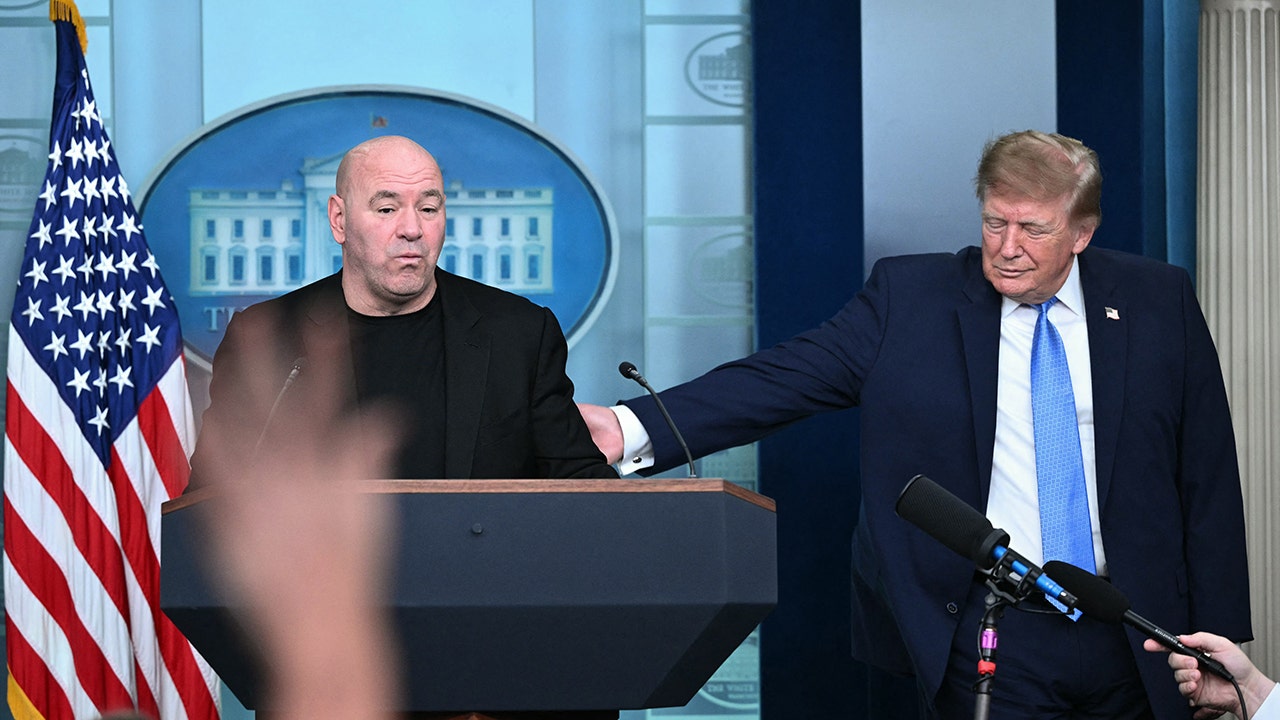
"I have zero political aspirations," White told the press corps. "I was at a fight for Zuffa Boxing in London when he called me and told me that he had done this, and the last 24 hours of my life have been insane."
Despite clarifying that he had no intention of leaving his post at the helm of the UFC to pursue a career in public service or federal administration, White playfully noted that he had never explicitly rejected the president’s proposition during their private conversations. When pressed by reporters regarding whether he outright told the president "no," White acknowledged the unique nature of their friendship, leaving the door open to the informal dynamic that has characterized their rapport for decades.
A History of Public Friendship and Shared Events
The camaraderie between Donald Trump and Dana White is well-documented and spans well over two decades, predating Trump’s initial entry into electoral politics. Their alliance was forged during the early days of the UFC, when mixed martial arts struggled to secure mainstream athletic commission sanctioning and major venue bookings. During an era when traditional arenas barred UFC events due to regulatory hurdles and political pushback, Trump offered his properties—most notably the Trump Taj Mahal in Atlantic City, New Jersey—as venues for early UFC events. This critical support helped the fledgling promotion survive financial instability and regulatory opposition.
Over the years, this mutual support translated into prominent public appearances. Trump has frequently attended high-profile UFC events, receiving rousing receptions from crowds at venues such as Madison Square Garden in New York and T-Mobile Arena in Las Vegas. Conversely, White has been a vocal political surrogate, speaking at Republican National Conventions and appearing alongside Trump at various rallies and high-profile gatherings.
Most recently, the two figures collaborated on high-profile promotional events, including the staging of "UFC Freedom 250" on the South Lawn of the White House in Washington, D.C. These crossovers reflect an intentional strategy by political campaigns and sports executives alike to leverage cross-demographic appeal, drawing sports fans into political discourse and vice versa.
Praise for Presidential Resilience
During the briefing, White expanded on his personal observations of Trump, highlighting the physical and psychological resilience required to navigate high-stakes politics and executive leadership. Reflecting on the physical dangers and intense public scrutiny Trump has faced throughout his multiple presidential campaigns and terms in office, White offered a candid assessment of the president’s character.

"He’s the toughest, most resilient human being that I’ve ever met in my entire life," White stated. "Many times during the last eight or 10 years, I have told him: ‘Why? Why do you keep doing this?’ But as tough and as resilient as I thought he was, after he got shot, he proved he is a one-of-one unique human being."
The remark drew nods from administration officials in the room, underscoring the deep personal loyalty that exists between the president and his supporters in the sports entertainment sector. When a reporter jokingly asked White to analyze a hypothetical UFC cage match between President Trump and former President Joe Biden, White offered a characteristic blend of sports analysis and political deflection.
"It would be very bad. Yeah, I think it would be very bad," White said, laughing before adding, "I can’t believe you actually have questions for me."
Broader Discussions: Pete Rose and MLB Eligibility
Before stepping away from the podium, White was asked for his perspective on another prominent cultural topic: a potential posthumous presidential pardon for Pete Rose, the legendary Major League Baseball player known as "Charlie Hustle," who passed away in 2024.
Rose, who holds the all-time MLB record for career hits with 4,256, was banned from baseball in 1989 following an investigation into gambling on baseball games, including those involving the Cincinnati Reds team he managed. That lifetime ban kept him out of the National Baseball Hall of Fame for decades. However, the landscape surrounding Rose’s legacy shifted significantly when MLB Commissioner Rob Manfred removed Rose and 16 other deceased individuals from the permanently ineligible list.
President Trump has long been a vocal proponent of Rose’s reinstatement to the Hall of Fame, frequently arguing that the exclusion of baseball’s hit king is a disservice to the sport’s history. During the briefing, Trump reiterated his favorable stance toward the idea of a posthumous federal pardon, aligning with sports figures and fans who believe Rose’s on-field achievements outweigh his off-field infractions.

Fact-Based Analysis of Implications
While the joint appearance at the White House press briefing ultimately confirmed that the "press secretary" appointment was nothing more than a lighthearted joke born out of a frustrating news cycle, the event underscored several broader cultural and political realities.
First, it demonstrated the persistent crossover between high-profile entertainment executives and national politics. In an era where media consumption habits are shifting away from traditional nightly news toward digital platforms and niche interest communities, aligning with figures like Dana White allows political leaders to reach demographics that might otherwise ignore conventional political messaging.
Second, the episode highlights the modern weaponization of off-the-cuff remarks in the 24-hour news cycle. What began as a conversational joke made by a president frustrated with negative press quickly materialized into structured reporting and speculation, requiring a joint public appearance by the president and a private CEO to correct the narrative.
Ultimately, the White House briefing provided a moment of levity in the high-stress environment of Washington, D.C., reaffirming the enduring personal bond between Trump and White while firmly keeping the UFC executive in the sports world rather than the political arena.
Related posts: