The American political landscape is undergoing a profound and rapid transformation, characterized by intense legislative gridlock, high-stakes local elections, and shifting dynamics within both major political parties. As the nation looks ahead to the crucial 2026 midterm elections, the CNN Political Briefing podcast, hosted by CNN Political Director David Chalian, has served as a primary audio chronicle of these developments. Bringing together key policymakers, campaign strategists, investigative journalists, and political insiders, the program provides deep-dive analysis into the forces reshaping Washington, state capitals, and major metropolitan areas alike. From fractured congressional caucuses and unprecedented federal shutdowns to unexpected mayoral upsets and historic Department of Justice proceedings, the discourse surrounding contemporary American governance has rarely been more contentious or consequential.
Legislative Gridlock and Congressional Fractures
At the heart of the national conversation is a deeply divided Congress grappling with severe internal dissent and legislative paralysis. A prominent flashpoint in recent months has been the mechanics of federal funding and the persistent threat—and ultimate reality—of government shutdowns. The budgetary battles on Capitol Hill have exposed deep ideological fault lines not only between Democrats and Republicans but increasingly within the Republican conference itself.
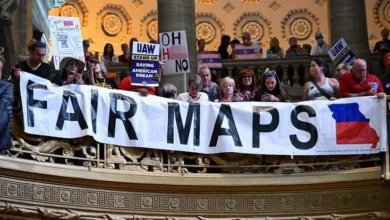
Discontent among House Republicans has occasionally spilled into public view. For instance, California Republican Representative Kevin Kiley used an appearance on the podcast to voice sharp criticisms of House leadership, bluntly asserting that Speaker Mike Johnson had "failed to lead" during critical legislative moments. Rep. Kiley’s observations point to a broader "vibe shift" underway within the GOP conference as members navigate the legislative realities of divided government while anticipating a political landscape that extends beyond the tenure of President Donald Trump. Kiley’s own political future has been thrown into sharper relief by domestic redistricting battles in his home state of California, where new district lines—championed by Democratic Governor Gavin Newsom—threaten to upend traditional electoral maps.
The friction over federal appropriations reached a boiling point with a historic government shutdown that extended over several weeks in the autumn of 2025. As federal agencies closed non-essential functions and furloughed workers, the blame game between Capitol Hill leadership reached a fever pitch. On one side, vulnerable moderate Republicans, such as New York Representative Mike Lawler—representing a fiercely contested battleground district won by Kamala Harris—argued that Democrats had committed a critical strategic error by forcing a prolonged standoff. Rep. Lawler insisted that the Republican legislative platform would ultimately resonate more favorably with an electorate weary of economic uncertainty.
Conversely, Democratic leaders mobilized a robust defense of their caucus’s strategy. Representative Suzan DelBene, chair of the Democratic Congressional Campaign Committee, laid out a targeted roadmap aimed at recapturing the House majority in the 2026 midterms. Meanwhile, progressive voices within the party, such as California Representative Ro Khanna, detailed the non-negotiable policy positions held by Democrats during the shutdown negotiations. The stalemate was ultimately resolved following intense behind-the-scenes negotiations, though the episode left lasting scars on the legislative process and highlighted the volatile nature of coalition management in a narrow-majority House.
Shifting Dynamics and Tensions Within the MAGA Coalition
Beyond Capitol Hill, the political fortunes of the Republican Party remain inextricably tied to the movement led by President Donald Trump. However, recent developments suggest potential vulnerabilities in the previously impenetrable bond between the president and his core MAGA base.
Political analysts, including POLITICO’s Jonathan Martin, have closely examined whether the administration’s second term is exhibiting early signs of a lame-duck period. Cracks in party unity became apparent during high-profile policy pivots, such as a notable reversal by President Trump regarding the public release of historical investigative files concerning Jeffrey Epstein—a move intended to appease restless factions within his own party but which underscored underlying internal friction. Furthermore, public opinion data and voter feedback indicate that some conservative supporters have grown critical of the administration’s messaging hierarchy. While grassroots supporters often prioritize immediate domestic concerns—most notably consumer prices, inflation, and household affordability—the White House has frequently pivoted toward high-profile foreign affairs initiatives. This strategic tension has forced party strategists to ponder how the conservative coalition will evolve and who might emerge to lead the movement in the post-Trump era.

On the Democratic side, party leaders are actively debating how to leverage these fractures. Figures such as former Virginia Governor Terry McAuliffe, who previously chaired the Democratic National Committee, have argued that an aggressive focus on the perceived vulnerabilities of the opposition remains the Democrats’ most potent electoral weapon. Drawing on decades of experience managing intra-party tensions and high-stakes national campaigns, McAuliffe has prescribed a forward-looking strategy focused on economic populism and disciplined message coordination to secure victories in the upcoming midterm contests.
Electoral Upheavals in Major Municipalities
While federal battles dominate cable news broadcasts, some of the most fascinating political laboratories of late 2025 were found at the municipal level, particularly in high-stakes elections across New York City, New Jersey, and Virginia.
The New York City mayoral race proved to be a watershed moment for urban American politics. The contest captured national attention following the stunning victory of Zohran Mamdani, a little-known progressive state assemblyman who fundamentally rewrote the traditional political playbook in Gotham. Errol Louis, political anchor at Spectrum News NY1, analyzed Mamdani’s meteoric rise, noting how a coordinated grassroots movement and a sharp focus on housing affordability and municipal services allowed a progressive insurgent to navigate a crowded field that included prominent figures like former New York Governor Andrew Cuomo.
For the Republican Party, competing in the nation’s largest city remains an uphill battle, given that registered Democratic voters traditionally outnumber Republicans by a six-to-one margin. Curtis Sliwa, the city’s Republican standard-bearer who previously mounted a challenge against former Mayor Eric Adams, waged a determined campaign despite immense pressure from within political circles to clear the field. Sliwa’s campaign, along with concurrent gubernatorial and legislative races in New Jersey and Virginia, provided CNN correspondents Jeff Zeleny and Eva McKend with a rich canvas to evaluate voter sentiment in the final stretch of the 2025 election cycle, offering crucial bellwether data for the national political apparatus ahead of the 2026 midterms.
High-Stakes Legal Precedents and American Justice
In parallel with legislative and electoral battles, the intersection of politics and the American judicial system has produced extraordinary chapters in modern history. The Department of Justice’s prosecution of former FBI Director James Comey stands out as a watershed moment that has reignited debates over executive authority, prosecutorial discretion, and the rule of law.
Legal experts and authors have rushed to place these developments within a proper historical continuum. Elie Honig, a former federal and state prosecutor and author of When You Come at the King: Inside DOJ’s Pursuit of the President, From Nixon to Trump, appeared on the briefing program to contextualize the Comey case. Honig’s analysis highlighted the structural pressures placed on federal law enforcement agencies when high-level political figures become the focus of criminal investigations, noting that such proceedings leave an indelible mark on public trust in democratic institutions.
Broader Impact and Implications for 2026
The convergence of federal gridlock, shifting party coalitions, municipal political realignments, and intense legal scrutiny creates a volatile backdrop as the United States looks toward the 2026 midterm elections. Both major parties face distinct strategic imperatives: Republicans must navigate leadership transitions, internal policy debates, and voter anxieties over the cost of living, while Democrats seek to capitalize on legislative friction and urban progressive momentum to rebuild a path toward congressional majorities.
As chronicled through the in-depth reporting and expert interviews featured on the CNN Political Briefing, the decisions made by key political players today will directly shape the balance of power in Washington and state governments for years to come. With the political landscape shifting at an unprecedented pace, the ongoing dialogue among lawmakers, journalists, and strategists remains essential for understanding the trajectory of American democracy.
Related posts: