A Historic Shift in Georgia: Democrats Win Control of the Public Service Commission After 30 Years


Beginning in January, the political landscape of Georgia’s energy sector will experience its most significant transformation in a generation. For the first time in 30 years, Democrats will hold a majority on the five-member Georgia Public Service Commission (PSC), the powerful regulatory board that oversees the state’s utility monopolies, including its largest electric provider, Georgia Power.
This historic transition—cemented following consecutive election cycles driven heavily by public frustration over rising utility bills—puts a progressive majority in charge of a traditionally conservative-leaning regulatory body. With three of the five seats now occupied by Democrats—including returning Commissioner Peter Hubbard, alongside Shelia Edwards and Alicia Johnson—the commission is poised to pivot toward heightened oversight, increased transparency, and a renewed emphasis on consumer affordability and clean energy adoption.
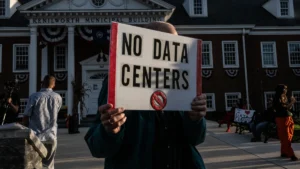
The shift comes at a critical juncture for the state. In recent years, the PSC has faced mounting scrutiny from consumer advocacy groups, environmental organizations, and everyday ratepayers. Driven by a combination of surging household energy demands, the rapid expansion of energy-intensive data centers across the state, and consecutive rounds of rate hikes, energy affordability has transformed from a niche regulatory issue into a mainstream political flashpoint.
The New Majority’s Agenda: Triage and Transparency
With their new four-year majority window secured, the Democratic commissioners have outlined an ambitious, albeit methodical, strategy to reform how the state’s energy policies are developed and implemented.
“There’s a long laundry list of things that need to be looked into,” said Commissioner Peter Hubbard following his successful reelection bid. “And so we’ll have to triage, in fact, and decide how best to move forward.”
Chief among Hubbard’s immediate priorities is the establishment of an official affordability docket. This series of structured public hearings will delve directly into the root causes of soaring electricity bills and evaluate actionable mechanisms to deliver financial relief to residential customers. Furthermore, the incoming majority intends to subject upcoming regulatory filings from Georgia Power—particularly those concerning capacity expansion, generation requests, and customer rate adjustments—to an unprecedented level of rigorous analysis.
However, energy experts caution that while the regulatory philosophy of the commission will change overnight, tangible relief for ratepayers will require patience.
“We may not be able to expect immediate effects on our wallets,” noted Kristin Phillips, an associate professor at Emory University who specializes in energy burden and the PSC. “But I think we can expect immediate change in the types of decisions that are made.”
The Campaign Trail and the Rise of Energy Advocacy
The road to this historic majority was paved by years of grassroots organizing that successfully reframed the once-obscure regulatory board as a vital kitchen-table issue. For decades, PSC elections largely flew under the radar of the average Georgia voter, dominated by low turnout and minimal public debate.
That dynamic shifted dramatically during recent election cycles. Grassroots networks, environmental coalitions, and economic justice groups mobilized voters by directly connecting utility governance to everyday household financial stability.
“We knew that we had to connect the dots between energy and affordability,” said Brionté McCorkle of Georgia Conservation Voters, an organization that heavily campaigned for Democratic candidates and worked to elevate the profile of the PSC races. “It’s not just this obscure regulatory body like it used to be treated. Its decisions directly affect household budgets, communities, health, and our energy future.”
By focusing public attention on the cumulative impacts of utility rate increases, advocates successfully transformed the commission into a referendum on corporate accountability and consumer protection.
The Data Center Boom and the Promise of "Downward Pressure"
At the heart of the regulatory debates facing the new commission is Georgia’s explosive growth as a national hub for data centers. Driven by the artificial intelligence boom, cloud computing, and digital infrastructure expansion, tech companies have flocked to Georgia, resulting in unprecedented demands on the state’s electrical grid.
To accommodate this massive influx of industrial power demand, Georgia Power has consistently maintained that the infrastructure costs required to build new generation sources will be substantially offset by the new revenue generated by these tech facilities. The utility refers to this dynamic as “downward pressure.”

Under this framework, Georgia Power argues that while residential rates may not necessarily decrease, the influx of corporate revenue will absorb a significant portion of the cost increases that would otherwise fall squarely on the shoulders of everyday households and small businesses. The utility recently reinforced this argument during negotiations to supply power to a massive new OpenAI data center facility, claiming the deal would generate roughly $15 per month in downward pressure for the average residential customer.
Similarly, Georgia Power credited data center revenue growth as a primary factor enabling a temporary rate freeze approved by the commission last year.
However, these corporate assurances have frequently drawn skepticism from consumer watchdogs. Critics point out that the rate freeze was announced by the utility without first conducting a formal PSC evidentiary hearing—a procedural step that would have allowed independent experts and public advocates to thoroughly audit the utility’s financial claims.
Oversight, Secrecy, and Public Trust
Beyond questions of rate structures and generation capacity, the new Democratic majority is inheriting an institution long dogged by criticisms regarding corporate transparency.
Public interest advocates have frequently raised alarms over the heavy redaction of documents filed with the commission. For instance, the high-profile contract governing energy delivery to the OpenAI data center was entirely redacted prior to approval, with only a generalized summary made available to the public. Under current regulatory frameworks, extensive details concerning service contracts, private energy acquisition deals, and specific construction costs are routinely shielded from public scrutiny under the legal umbrella of trade secrecy.
This lack of open access has historically made it exceedingly difficult for consumer advocates to verify whether Georgia Power is genuinely delivering on its promises to protect ordinary ratepayers from subsidizing industrial infrastructure growth.
“I absolutely think transparency is potentially one of the biggest impacts here,” Professor Phillips said regarding the implications of the election results. “It has been often on advocates to push on the way that the PSC communicates about the decisions that it’s making, and I’m hoping that there will be more clarity and transparency.”
Utility Response and Corporate Outlook
Despite the looming shift in regulatory oversight, leadership at Southern Company, the parent corporation of Georgia Power, has expressed confidence in its ability to navigate the incoming political dynamic.
During the company’s third-quarter earnings call, Southern Company CEO Chris Womack addressed the transition, emphasizing that affordability remains a central tenet of the utility’s operational strategy. Womack argued that Georgia Power’s historical track record provides a solid foundation for constructive engagement with the newly configured commission.
“If you look at what we have been doing with rate freezes, with benefits, with how we are providing benefits from growth to customers—existing customers—as well as to the communities, we think that’s a strong platform to stand on,” Womack told investors and analysts.
The utility maintains that its long-term resource planning adequately balances the explosive energy needs of commercial and industrial partners with the economic realities faced by residential ratepayers.
Looking Ahead: The 2028 Rate Case and Beyond
As the new commissioners prepare to take office in January, they face a packed and consequential docket. In addition to launching the proposed affordability hearings, the Democratic majority has pledged to conduct a thorough examination of Georgia Power’s long-term integrated resource plans, load growth forecasts, and infrastructural investment strategies ahead of the next major rate-setting process scheduled for 2028.
Furthermore, Commissioner Hubbard has proposed initiating a comprehensive rate case review for the state’s natural gas utilities—an administrative procedure that has not been undertaken in over a decade.
By leveraging their four-year majority, the new commissioners aim to fundamentally reorient energy policy in Georgia, institutionalizing consumer protections and environmental considerations that will outlast their current terms.
“We’ll continue with an agenda next year and the year after that to take advantage of this four-year period when we have the majority and can push for long-lasting reforms and shifting the direction of the state in terms of energy,” Hubbard concluded.