KFF Health News Minute Highlights Crucial Healthcare Trends and Systemic Challenges Across the United States


The American healthcare landscape has faced a relentless wave of complex policy shifts, economic pressures, and clinical debates, as documented through the weekly broadcasts of the KFF Health News Minute. Spanning from late spring through the autumn months, a rotating team of health journalists—including Arielle Zionts, Jackie Fortiér, Sam Whitehead, Katheryn Houghton, Zach Dyer, and Rachel Spears—has dissected the stories shaping medical care, public health policy, and health insurance for millions of citizens.
From the skyrocketing costs of fertility treatments and prescription medications to sweeping changes in federal health programs like Medicaid and the Affordable Care Act (ACA), these weekly summaries highlight a system grappling with structural inequities, technological disruption, and rising consumer costs.
Main Facts and Policy Shifts in Public Health Insurance
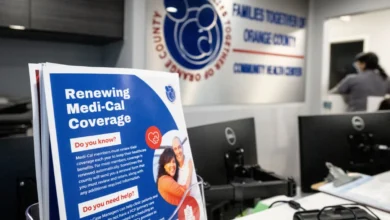
A major focal point of recent health reporting centers on the evolving rules governing public health insurance programs, particularly Medicaid and the Affordable Care Act. Throughout the summer and fall, state and federal policy adjustments introduced stricter criteria for enrollment and retention, leaving many vulnerable populations navigating new bureaucratic hurdles.
In June and August, reporting highlighted the implementation of strict new work requirements for able-bodied adults seeking to maintain Medicaid coverage. According to policy analysts, these rules are significantly more stringent than many initial projections suggested, forcing states to establish mechanisms to verify employment status. Doctors and healthcare advocates voiced strong opposition, arguing that medical professionals should not bear the administrative and ethical burden of determining whether a patient is too ill to comply with mandatory work thresholds. Furthermore, reports in August noted that homeless populations face heightened barriers, required to repeatedly prove employment or participation in approved work-training programs simply to retain vital health coverage.
Simultaneously, the landscape for Affordable Care Act (Obamacare) plans has experienced notable turbulence. Premium cost spikes reported in July and June have driven many consumers toward cheaper, less comprehensive insurance alternatives to avoid double-digit rate hikes. As open enrollment approached in late October, policy experts warned shoppers to scrutinize plan changes carefully. Compounding these consumer concerns, investigations revealed that some health plans and pharmacy benefit managers continue to pocket drug discounts instead of passing savings directly to enrollees, while certain insurers offering ACA plans sought substantial rate increases.
Immigrant health access also emerged as a critical issue. In early October, data showed that hundreds of thousands of immigrants holding legal status had quietly become ineligible for various forms of government-sponsored health insurance, highlighting ongoing friction within federal safety-net eligibility guidelines.
Chronology of Key Healthcare Developments
The progression of health policy and medical news over the studied months reveals a clear timeline of systemic challenges:
- Late May to June: Discussions surrounding preventative care dominated early summer. Experts debated the risk-to-reward ratio of routine screenings for older adults, warning that over-screening can lead to unnecessary interventions. Concurrently, new federal proposals regarding looser artificial intelligence safeguards aimed to accelerate innovation in healthcare, even as regulators weighed the risks. States began grappling with stricter Medicaid work requirements, and physician-assisted suicide gained legal ground in additional jurisdictions.
- July: Insurance transparency and coverage disruptions took center stage. Reports in mid-July emphasized that switching health plans frequently results in dangerous coverage gaps that can prove fatal for patients managing chronic conditions. Meanwhile, debate intensified over infant formula safety regulations and the sustained rise in abortion rates four years post-Roe v. Wade.
- August: Workplace safety and maternal health gained prominent coverage. Amid rising rates of violence against hospital workers, labor advocates pushed for mandatory staffing ratios. In maternal care, simple innovations—such as wristbands bearing the words "I Gave Birth"—were championed as potentially lifesaving tools to prevent postpartum mortality among new mothers.
- September and October: Financial toxicity and alternative care models became key themes. High fertility treatment costs drove prospective parents to seek care abroad, while local initiatives—such as an Austin, Texas nonprofit helping musicians pay for health insurance—demonstrated grass-roots efforts to bridge coverage gaps. As October progressed, discussions shifted toward the risks of polypharmacy (taking multiple medications simultaneously), rising public support for "Medicare for All," and the financial aid obligations of nonprofit hospitals.
Supporting Data and Systemic Economic Pressures
Economic strain remains a defining characteristic of the modern American patient experience. The KFF Health News Minute series repeatedly underscored how out-of-pocket costs and institutional consolidation impact everyday medical decisions.
Hospital monopolies continue to drive up healthcare expenditures for both individual patients and commercial insurers, according to August reporting. This lack of market competition forces consumers to pay inflated prices for routine and specialized procedures. High costs have similarly bled into family planning; with domestic fertility treatments remaining prohibitively expensive, an increasing number of Americans are traveling internationally to access affordable in-vitro fertilization (IVF) and other reproductive technologies.
Medication management has also proven perilous. Analyses from October and September emphasized that older patients managing long-term, complex regimens of prescription drugs face severe health risks if their medications are not regularly reviewed by primary care providers. Conversely, patients fighting for coverage of high-demand medications, such as GLP-1 receptor agonists used for diabetes and weight loss, face arduous administrative battles with insurers reluctant to shoulder the financial burden.
At the community level, the economic viability of traditional care models is declining. Reports from September highlighted that numerous small businesses can no longer absorb the escalating cost of employer-sponsored health insurance, casting employees into the individual market. Simultaneously, the steady nationwide decline in available nursing home beds has forced older Americans and their families to seek alternative living arrangements, ranging from home health aides to shared-housing roommate models designed to facilitate aging in place.
Official Responses and Institutional Reactions
As these multifaceted crises unfold, reactions from medical professionals, legal experts, and advocacy groups reveal deep divisions over the direction of American healthcare policy.
Regarding mental health and emergency response, several municipalities have adopted innovative non-police intervention models, deploying mobile crisis teams via 911 dispatch to manage psychiatric emergencies—a shift widely praised by mental health advocates seeking alternatives to law enforcement involvement in health crises.
However, regulatory and legal shifts have sparked considerable anxiety. In August, disability rights organizations expressed profound alarm over a Department of Justice legal opinion that threatened to roll back decades of civil rights protections guaranteeing access to in-home care. Similarly, suicide prevention experts pushed back against purely clinical approaches to mental health, arguing that macroeconomic interventions—such as improving overall financial well-being and reducing consumer debt—are fundamentally necessary to save lives.
In the realm of public safety, federal policy decisions drew criticism; a notable controversy erupted in September when the federal government scaled back funding for fentanyl test strips in favor of broader public health measures, drawing pushback from harm-reduction advocates who viewed the strips as an immediate, frontline defense against fatal overdoses.
Broader Impact and Future Implications
The cumulative findings synthesized by the KFF Health News Minute point toward a healthcare system standing at a precarious crossroads. The friction between cost containment and quality of care affects every demographic, from neonates and new mothers to aging Baby Boomers navigating chronic illness.
As states experiment with innovative delivery models—such as integrating medically tailored meal deliveries into Medicaid programs to reduce long-term hospitalizations—the broader healthcare infrastructure is being forced to adapt to shifting demographic realities. The aging population requires structural transformations in long-term care, elder housing, and chronic disease management. At the same time, the tightening of public benefit eligibility criteria threatens to push marginalized populations further from the safety net.
Ultimately, these reports demonstrate that while medical science and technology continue to advance at a rapid pace, the socioeconomic and administrative barriers to accessing that care remain formidable. Addressing these systemic vulnerabilities will require sustained legislative oversight, greater price transparency from insurers and hospital systems, and a renewed commitment to equitable public health policies that prioritize patient outcomes over institutional profit margins.