The Long Reckoning: How a Decade of Political Turbulence Led to a Historic Midterm Realignment

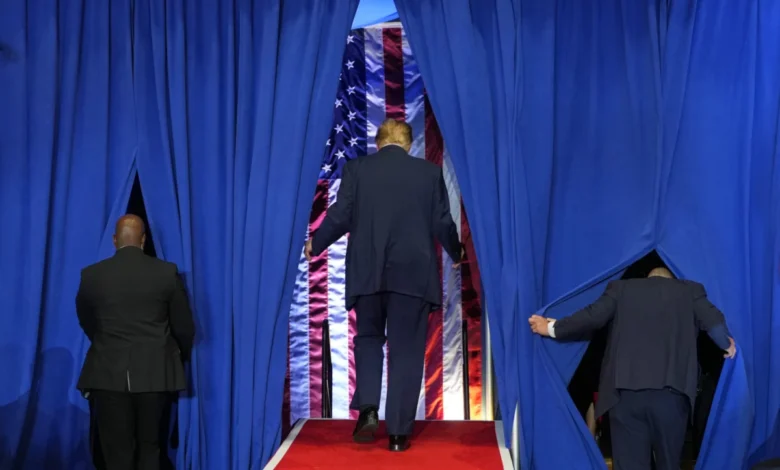
The landscape of American politics underwent a seismic shift in the 2026 midterm elections, marking a definitive conclusion to an era defined by the singular influence of Donald Trump. From the rust-belt corridors of Ohio to the suburban precincts of Pennsylvania, the Republican Party faced a electoral collapse of historic proportions, culminating in a 13-point national popular-vote margin for Democrats. This outcome, which saw the GOP lose seven Senate seats and over 40 House districts, represents a reversal of fortune that political analysts are already comparing to the post-Watergate rout of 1974.
A Grassroots Perspective on a Fractured Base
The vulnerability of the Republican coalition was visible days before the voting began. At an Ohio University branch campus in Chillicothe, the atmosphere was a far cry from the roaring, high-energy rallies of 2016. Jacob Hawk, a 39-year-old self-employed landscaper, stood at the periphery, his frustration palpable. Balancing the economic pressures of rising fuel costs with the personal burdens of raising three children—including a nine-year-old son with complex developmental needs—Hawk sought answers from the candidates on stage. His experience was not an anomaly but a reflection of a broader constituency grappling with the disconnect between populist promises and the realities of governance.
While many attendees remained loyal to the former president, their devotion was increasingly characterized by uncertainty. The economic strain, exacerbated by a foreign policy that critics argued had drifted toward costly, protracted entanglement in the Middle East, left voters searching for a bridge between their lived difficulties and their political allegiances. Even as some supporters attempted to deflect blame toward Congress, the pervasive sense of unease suggested that the "forgotten class" that had propelled the MAGA movement to power was now bearing the brunt of its policy outcomes.
The Evolution of the Trumpian Rally
The 2026 rally circuit offered a stark contrast to the candidate’s earlier appearances. The boisterous, conquering-hero rhetoric of the 2016 campaign had evolved into a digressive, often surreal style of oratory. The Chillicothe event, streamed to a smaller, more subdued crowd, featured the now-customary messianic framing, yet the substance of the address centered on grievances ranging from the physical appearance of local candidates to personal home renovations and global geopolitical conflicts.
This disconnect between the gravity of the national economic climate and the nature of the presidential discourse fueled frustration among both protesters and wavering supporters. When incidents of physical altercations broke out between opposing sides, the tension served as a microcosm of a country polarized by unresolved questions regarding the cost of the conflict in Iran, which has drained over $47 billion from the U.S. treasury, and the shifting priorities of a party that once campaigned on an "America First" non-interventionist platform.
Economic Realities and the Industrial Heartland
In Vandalia, Ohio, the setting for a subsequent Republican pep rally served as a grim monument to the state’s economic struggle. Located in a former Delphi auto-parts factory—a facility that once anchored the local economy before its 2009 closure—the event was housed in a space now utilized as a warehouse for imported goods. The juxtaposition of abandoned American manufacturing potential and the logistical reality of global trade hit home for the few dozen attendees.
Between 2000 and 2025, Ohio lost approximately 300,000 manufacturing jobs, a trend that had historically made the state highly receptive to protectionist rhetoric. However, with the GOP in control of state government for over a decade, the burden of proof had shifted to the candidates. Despite growth in the Columbus metropolitan area—spurred by large-scale investments in data centers and semiconductor manufacturing—the broader state narrative remained one of economic anxiety. Candidates found themselves in the precarious position of defending an administration associated with both a struggling industrial base and inflationary pressures that hit working-class households the hardest.
Pennsylvania: The Suburban Shift
The Pennsylvania results underscored the depth of the Republican decline. In York County, a region that had historically supported the Republican ticket by comfortable margins, the 2026 midterms revealed a significant erosion of the base. Interviews with local voters revealed a diverse array of grievances that cut across traditional partisan lines.
For many, the motivation for voting against the Republican slate was not merely ideological but deeply personal. Voters cited the reduction of social-welfare benefits, including SNAP and Medicaid, as immediate catalysts for their departure from the party. Others pointed to the personal conduct of the administration, expressing a desire for "gridlock" as a means of curbing what they perceived as an unchecked exercise of executive power.
The result in Pennsylvania was decisive: the Republican incumbent lost by 10 points. This trend was replicated across the nation, with even deep-red strongholds in Kansas, Texas, and South Carolina failing to provide the traditional buffer for Republican candidates. The loss of the South Carolina seat, once held by the late Lindsey Graham, was particularly symbolic. Graham’s 2016 warning—that the nomination of Donald Trump would lead to the party’s destruction—resurfaced as a prophetic evaluation of a decade-long political trajectory.
Analytical Context: A Delayed Reckoning
The 2026 election results are the culmination of a decade of political volatility. Following the 2016 victory and the subsequent instability of the 2020 and 2024 cycles, the Republican Party had successfully staved off a comprehensive electoral reckoning through sheer institutional resilience and the mobilization of a highly committed base. However, the accumulation of various crises—inflationary pressures, the costs of foreign conflict, and a perceived move away from the populist principles of 2016—eventually overwhelmed the party’s defensive efforts.
The scale of the defeat is notable not just for its breadth, but for its depth. By flipping five governorships and 12 state legislative chambers, the Democratic Party effectively dismantled the infrastructure that had sustained Republican influence in statehouses for over a decade. The transition from the "Trump wave" years to the 2026 results mirrors the historical cycle of political realignment, where voters, having experimented with a disruptive model of governance, ultimately opt for a reset in the face of perceived institutional failure.
Implications for the Future
The political landscape following the 2026 midterms remains in flux. The Republican Party now faces an internal crisis of identity: whether to double down on the populist rhetoric that drove its initial success or to undergo a structural reform to address the concerns of suburban and working-class voters who have defected to the Democratic column.
For the Democrats, the challenge will be to translate this electoral mandate into meaningful legislative action that addresses the economic anxieties of those like Jacob Hawk. With the electorate clearly signaling a rejection of the status quo, the window for addressing systemic issues—from the cost of living to the stability of the American manufacturing sector—will be narrow.
As the dust settles, the prevailing sentiment among many voters, even those who had long supported the Republican agenda, is one of retrospection. The "reckoning" that Lindsey Graham predicted in 2016 arrived not as a singular event, but as a slow-rolling shift that ultimately reshaped the American political map. The question now remains whether the political class can interpret these results as a mandate for governance, or if the country is destined to remain trapped in the cycle of polarization that defined the last ten years. For voters like Bill in Pennsylvania, the realization that their political support had failed to deliver the promised change has left them with a sense of regret—and a clear demand for a different path forward.