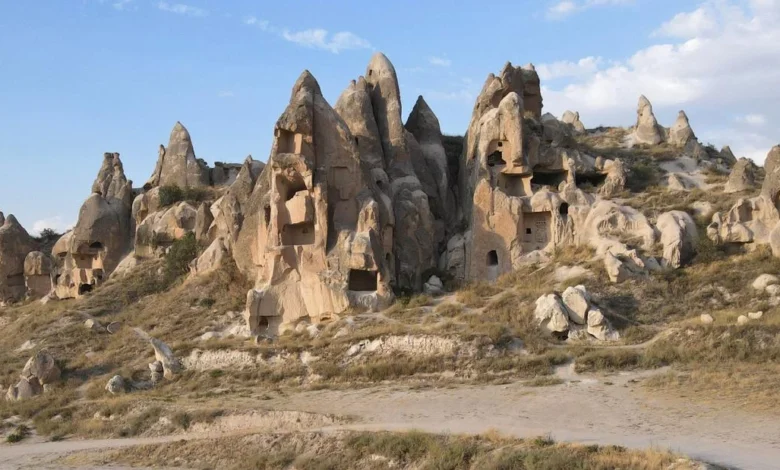
Across the heart of central Turkey, a vast, undulating landscape unfolds like an ancient, handwoven tapestry, defined by a shimmering palette of caramel, ocher, cream, and soft rose. This is Cappadocia, a geological wonder where the horizon is punctuated by conical rock formations known as "fairy chimneys," or peribacaları. While the region is globally recognized for its iconic hot air balloon festivals that crowd the sky at dawn, the true soul of Cappadocia resides on the ground—within the labyrinthine valleys and the subterranean cities carved directly into the living rock.
The Geological Genesis of a Surreal Landscape
The distinctive topography of Cappadocia is the direct result of violent volcanic activity occurring between 9 and 3 million years ago. Three now-extinct volcanoes—Erciyes, Hasan, and Melendiz—blanketed the Anatolian plateau in thick layers of ash and lava. Over eons, this material compressed into a soft, porous volcanic rock known as tufa.
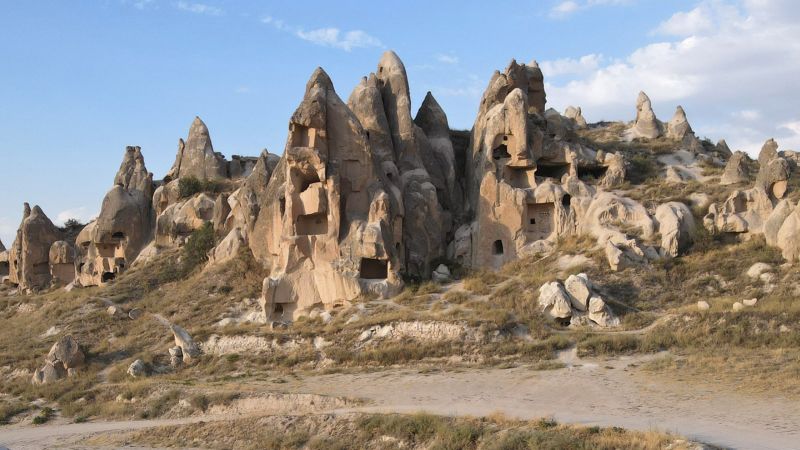
As the climate shifted and the region was subjected to the relentless forces of wind and water, the upper layers of harder basalt eroded at a slower rate than the softer tufa beneath. This differential erosion created the iconic, mushroom-like pinnacles that stand today. Because tufa remains relatively soft when first excavated but hardens significantly upon exposure to air, human inhabitants discovered thousands of years ago that they could carve elaborate dwellings, churches, and storage facilities directly into these formations. This unique interaction between geology and human ingenuity has sustained settlements in the region from the Hittite era through to the 20th century.
Zelve: A Chronicle of Byzantine and Medieval Resilience
Nowhere is the historical significance of this rock-carved civilization more evident than in the Zelve Open-Air Museum. Historically a significant monastic center, Zelve provides an unparalleled window into life during the Byzantine period. Unlike many other sites that were abandoned or repurposed entirely, Zelve served as a thriving community from the 6th century until as recently as the 1950s.
"Zelve was permanently occupied for over 1,400 years, which is an extraordinary testament to human adaptability," notes Dr. Tolga Uyar, a medieval art historian at Nevşehir Hacı Bektaş Veli University. The site illustrates the complex social fabric of medieval Anatolia, where peasant farmers and monastic orders lived in close proximity, sharing the same cliff faces and communal spaces. Today, visitors can walk through the remains of kitchens, stables, and chapels, observing the evolution of architectural techniques as the space was re-carved and transformed to meet the needs of successive generations.

The Ihlara Valley: A Green Oasis in an Arid Plateau
While much of the Cappadocia region presents an arid, desert-like aesthetic during the summer months, the Ihlara Valley offers a dramatic, lush contrast. Carved by the Melendiz River, this 14-kilometer-long gorge descends deep into the earth, revealing a verdant ecosystem of poplars and fruit trees that thrives regardless of the parched plains above.
The trek from Ihlara Village to the Selime Monastery serves as one of the most rewarding routes in the region. The trail is marked by the presence of cave churches dating back to the 8th and 9th centuries, many adorned with remarkably preserved murals. The journey culminates at the Selime Monastery, an imposing structure that stands as the largest religious complex in Cappadocia. Climbing its 300 steps reveals a structural complexity that defies the limitations of the era, offering a vantage point that overlooks the entire valley—a site that served as a critical defensive and spiritual refuge for early Christian communities during periods of regional instability.
The Evolution of Sustainable Tourism and Guided Exploration
For decades, the economy of Cappadocia was rooted strictly in agriculture, particularly the cultivation of grapes and stone fruits. However, the 1990s and 2000s marked a pivot toward tourism as the primary economic driver. This transition has had a profound impact on the landscape. As intensive chemical agriculture decreased, environmentalists have noted the resurgence of native flora, including rare species like Iris galatica and wild orchids, which have reclaimed the valleys.

Mehmet Güngör, a veteran guide who has navigated these valleys for over 25 years, emphasizes that the true value of the region lies in its quiet, rugged trails. "Cappadocia is not just a backdrop for photographs," Güngör says. "It is a living landscape that requires physical engagement to be understood. When you walk these paths, you are retracing the steps of monks, traders, and farmers who have traversed this soil for two millennia."
Güngör’s work, alongside similar local initiatives, highlights a shift toward "slow tourism." By providing access to hidden churches—many of which remain locked and unlisted in standard guidebooks—these local experts ensure that the heritage of the region is preserved while providing an authentic, educational experience for visitors. These tours often extend to full-moon night hikes, which offer a unique perspective on the shifting colors of the "Red Valley" (Kızılçukur), where the high iron content in the tufa creates a deep, crimson glow as the sun sets.
Horseback Traditions and the Legacy of the Yılkı
The history of the region is also deeply tied to the horse. Historically known as "the land of beautiful horses," Cappadocia has maintained a long-standing tradition of equestrian culture. Prior to the widespread mechanization of farming in the mid-20th century, horses were central to the regional economy. During the winter months, when agricultural work slowed, farmers would release their horses into the wild to graze freely. These semi-feral horses, known locally as Yılkı, became a symbol of the region’s rugged independence.

Today, this tradition has been repurposed for tourism through outfits such as the Cemal Ranch, which operates in the vicinity of Ortahisar. Cemal Koksal, who represents a multi-generational family of horse breeders, notes that riding offers a connection to the land that motorized tours cannot replicate. "Riding through the Rose and Red valleys at sunset provides a perspective on the topography that is impossible to gain from the road," Koksal observes. The ranching model serves as a modern guardian of these equestrian roots, ensuring that the animals are well-maintained while offering a sustainable way for visitors to traverse terrain that would otherwise be inaccessible.
Economic and Cultural Implications
The transformation of Cappadocia from a series of rural farming villages into an international tourism hub has not been without its challenges. The management of the "fairy chimneys"—many of which are fragile—requires constant oversight to prevent degradation. The Turkish government and local authorities have implemented strict preservation regulations, including the limitation of vehicle access to certain sensitive areas and the careful monitoring of cave structural integrity.
The economic impact is significant: the region attracts millions of visitors annually, supporting a diverse ecosystem of boutique hotels carved into rock, local artisan cooperatives, and regional transportation services. However, the long-term sustainability of this growth depends on the continued preservation of the very sites that draw visitors. Historians argue that by promoting hiking and equestrian tours, the region is successfully encouraging a model of tourism that is less invasive than mass-market options and more focused on the preservation of the historical narrative.

Looking Forward
As global travel trends shift toward immersive and sustainable experiences, Cappadocia finds itself in a unique position. It offers not only the spectacle of its famous balloon-filled skies but also a deep, intellectual engagement with human history. Whether exploring the intricate frescoes of the Church of the Grapes (Üzümlü Kilise) in the Çavuşin region or observing the seasonal bloom of wild flora in the valleys, the region remains a testament to the intersection of geological power and human perseverance.
The "fairy chimneys" are not merely geological curiosities; they are vessels of history, having sheltered civilizations through the Byzantine, Seljuk, and Ottoman periods, and into the modern era. For the traveler, the imperative is clear: while the view from above is unparalleled, the true essence of Cappadocia is found by descending into its depths, walking its ancient paths, and respecting the fragile, stone-carved heritage that continues to stand against the elements.