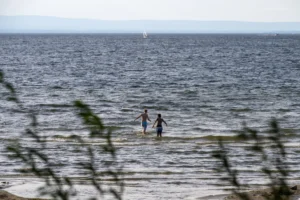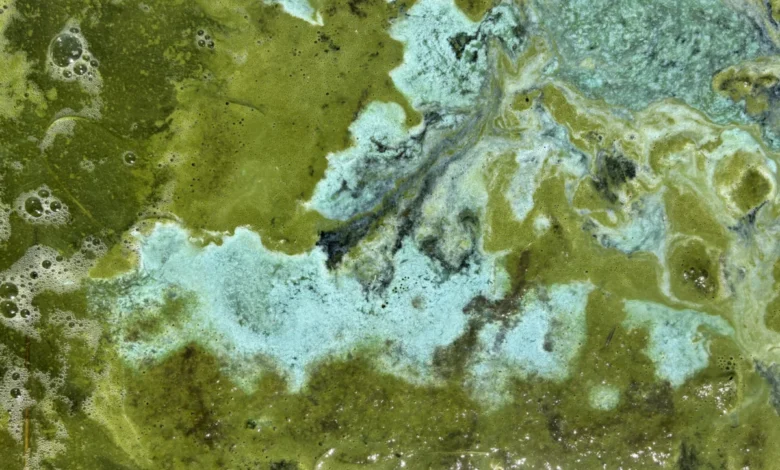
On the last day of August, Jeff van den Noort stood on the shoreline of Lake Champlain in northern Vermont, staring at a thick, neon-green film that had choked the water just steps from his home. It was a scene that had become all too familiar. As he waded into the shallows, the water—once a pristine centerpiece of his childhood summers—now resembled a toxic, soupy sludge. Van den Noort, who has monitored the lake for years as part of a grassroots volunteer network, dipped a jar into the muck, collected a sample, and began the routine process of documenting yet another cyanobacteria bloom. His observations are not merely anecdotal; they are part of a growing body of evidence suggesting that Vermont’s decade-long, billion-dollar effort to restore Lake Champlain is fundamentally failing.

The ecological decline of Lake Champlain, a 120-mile-long body of water that provides drinking water to approximately 200,000 people, has become a litmus test for the state’s environmental policy. Despite the passage of the landmark Vermont Clean Water Act in 2015, which was intended to curb the inflow of phosphorus and restore the lake’s health by 2036, progress has stagnated. With the state halfway through its two-decade recovery timeline, internal data and federal oversight reports indicate that Vermont has achieved only 35% of its required phosphorus reduction goals.
A Chronology of Declining Standards
The roots of the current crisis trace back to decades of agricultural intensification and urban expansion, but the regulatory timeline accelerated in the early 21st century. In 2002, the Environmental Protection Agency (EPA) set initial pollution limits for the lake. By 2015, following intense pressure from environmental groups and the federal government, then-Governor Peter Shumlin signed the Clean Water Act, promising a more aggressive stance on runoff.

The following year, in 2016, the EPA finalized rigorous new cleanup targets. The state was given 20 years—until 2036—to meet these benchmarks. For a brief period, the state appeared to be moving in the right direction. Between 2015 and 2020, Vermont invested heavily in upgrading sewage treatment plants and establishing the Clean Water Fund. A 2020 EPA report card even suggested that the state was meeting its initial milestones.
However, the momentum stalled shortly thereafter. By 2023, federal officials began expressing alarm. In a sternly worded letter to the head of Vermont’s Department of Environmental Conservation, the EPA’s regional administrator warned that the state was "not on track" to meet its 2036 goals. The letter noted that to achieve the required reductions, the state would need to more than double its current annual pace of progress—an endeavor that, given current funding and political gridlock, appears increasingly unlikely.

The Phosphorus Problem and the Limits of "Low-Hanging Fruit"
The primary driver of the lake’s degradation is phosphorus, a nutrient essential for plant growth that, in excess, triggers explosive blooms of cyanobacteria. These blooms are more than an eyesore; they represent a significant public health risk. Ingesting water laden with these microorganisms can lead to vomiting, diarrhea, liver damage, and skin rashes. Furthermore, some researchers have pointed to emerging, albeit complex, potential links between chronic exposure to cyanobacteria toxins and neurodegenerative conditions such as ALS and Parkinson’s disease.
The state’s initial cleanup efforts focused on what experts call "low-hanging fruit," such as upgrading municipal sewage treatment facilities. While these projects improved water quality in some areas, they failed to address the more difficult, systemic sources of pollution: agricultural runoff and non-point source stormwater.

An analysis of water quality data from 2015 through 2025 reveals a grim reality. Seven of the lake’s 15 primary monitoring stations have consistently exceeded EPA phosphorus limits every single year for the past decade. Even more concerning, four of those stations recorded higher average phosphorus levels over the last ten years than they did in the preceding decade. This data confirms that the state’s current mitigation strategies are failing to neutralize the influx of nutrients from farm fields and paved urban surfaces.
The Regulatory Tug-of-War
A central point of contention is the division of regulatory authority. In Vermont, the Agency of Agriculture manages on-site farm waste, while the Agency of Natural Resources (ANR) handles pollution that leaves the farm and enters the watershed. This bifurcated system has led to significant lapses in enforcement.

Critics, including former EPA officials, argue that the Agency of Agriculture suffers from a conflict of interest, as its primary mission is to promote the dairy industry. This has resulted in a reluctance to impose stringent permits on Concentrated Animal Feeding Operations (CAFOs). While New York has effectively utilized federal permits to manage large-scale farm runoff for years, Vermont has repeatedly sought delays. A recent state task force report recommended waiting another five years before fully developing a similar program, a move that environmental advocates describe as a stalling tactic.
The tension between these agencies has spilled into the public record. Internal emails obtained via public records requests show high-level officials acknowledging that many farms are currently discharging waste into waterways without proper permits—a direct violation of the federal Clean Water Act. Despite this, the state has struggled to consolidate authority or enforce compliance. In 2024, the EPA ordered Vermont to consolidate agricultural pollution regulation under the ANR, noting that the state had been given "ample time and opportunity to cure longstanding program deficiencies" and had failed to do so.

The Climate Multiplier Effect
Adding to the complexity of the cleanup is the accelerating impact of climate change. Increased frequency of extreme weather events is undermining restoration efforts. In July 2023, for example, catastrophic flooding swept through Vermont, washing an estimated six months’ worth of phosphorus into the lake in just one week.
Furthermore, warmer temperatures are extending the growing season for cyanobacteria. Blooms are now appearing earlier in the spring and persisting later into the autumn. Droughts, such as the one experienced in 2025, concentrate pollutants in shallow bays, creating "no-go zones" for recreation and wildlife. These environmental shifts mean that even if the state were to successfully curb current runoff, the "legacy phosphorus"—nutrients already embedded in the lake’s sediment—will continue to fuel blooms for years to come.

Implications for National Water Policy
The failure of Vermont—a state with a long-standing reputation for environmental stewardship—to solve its water quality crisis carries profound national implications. If a small, conservation-minded state cannot overcome the political and economic hurdles required to mitigate agricultural and urban runoff, the prognosis for larger, more complex bodies of water—such as the Chesapeake Bay or the Great Lakes—is grim.
State officials, including Secretary of the Agency of Natural Resources Julie Moore, continue to preach patience, citing the complexity of the ecosystem and the need for long-term investments. "We are moving apace with the commitments we’ve made," Moore stated. "This is a complex ecosystem, and we need to come at this work with a whole lot of humility."

However, for residents like Steve Cushing, a long-time advocate for St. Albans Bay, the time for patience has long since passed. "Overall, you can’t really see a big improvement in water quality in the bay," Cushing said. Having watched federal and state officials cycle through town for 25 years with promises of future results, he remains skeptical.
As the 2036 deadline approaches, the data suggests that Vermont is at a crossroads. The state must decide whether to continue its current, incrementalist approach—which clearly fails to address the scale of the pollution—or to embrace the politically difficult, high-cost mandates required to truly save the lake. For now, on the shores of Lake Champlain, the water remains a cautionary tale of what happens when environmental policy fails to keep pace with the realities of an ecosystem in decline.