The Silent Arctic: How Declining Research Funding Is Blinding Us to a Rapidly Changing Ecosystem

For decades, the windswept expanse of Mitivik Island in Canada’s Hudson Bay served as a critical sentinel for the health of the Arctic. Once host to one of the world’s most significant nesting subpopulations of eider ducks, the island became the site of a pioneering research station in the 1990s, established by the Canadian government to address a alarming global decline in the species. This station was not merely a collection of tents and equipment; it was a hub of international cooperation where scientists worked alongside Inuit partners to decode the mysteries of avian migration, disease, and the cascading impacts of climate change. However, in 2024, the Canadian Department of Environment and Climate Change quietly shuttered the facility. Its closure marks a broader, alarming trend across the circumpolar north: the systematic dismantling of Arctic monitoring programs at the precise moment when the region is undergoing its most profound environmental shift in human history.
A Chronology of Environmental Surveillance and Decay
The story of the Mitivik Island station is a microcosm of the rise and fall of Arctic environmental science. In the 1990s, the discovery that eider populations had plummeted necessitated an urgent, boots-on-the-ground response. Through the collaboration between researchers and local Inuit hunters, the station uncovered that habitat loss and predation were only part of a complex puzzle. By using advanced telemetry—implanting satellite transmitters in nesting ducks—researchers identified vital overwintering sites, which allowed for the implementation of stricter hunting regulations. These policy changes led to a measurable recovery in eider numbers.
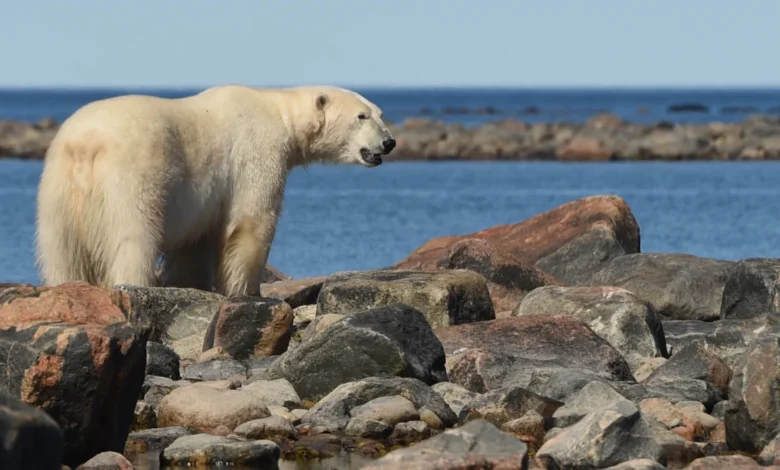
The timeline of decline began in the mid-2000s. In 2005, researchers documented the first major avian cholera outbreak in the region. Between 2006 and the following decade, the disease claimed thousands of nesting females, cutting the population by half. Concurrently, the loss of perennial sea ice forced polar bears—which typically hunt on the frozen ocean—to spend extended periods on land. These bears began scouring the island for eggs, effectively turning the nesting colony into a feeding ground. By the time the government closed the station in 2024, the nesting pairs had dwindled from a peak of 8,000 to just a few hundred, leaving the remaining population’s fate essentially unmonitored.
The Shrinking Footprint of Arctic Science
The closure of the Mitivik station is not an isolated bureaucratic decision but part of a sweeping retreat from the North. Currently, federal research activities are active in only three of Canada’s 14 migratory bird sanctuaries in the Arctic. This withdrawal is mirrored in other nations. In Alaska, the suspension of climate-based collaborations with Russia following the 2022 invasion of Ukraine severed access to vast swaths of data from the Siberian Arctic. Furthermore, the 2024 dissolution of the Arctic Research Consortium of the United States, following the elimination of National Science Foundation operating grants, has left a gaping void in the coordination of American research efforts.
Data indicates that the impact on scientific output is already severe. Reports show that between 2021 and 2024, the volume of U.S. research publications focused on climate change in Greenland fell by 32 percent. This decline is compounded by diplomatic friction; for instance, the Greenland Institute of Natural Resources temporarily suspended collaboration with U.S. entities last year, signaling the vulnerability of scientific infrastructure to volatile geopolitical climates.
Shifting Geopolitics and the "Resource Paradox"
Experts attribute this retreat to a fundamental shift in government priorities. During the early 2000s, Arctic research was often justified through the lens of resource extraction; companies and state agencies needed environmental data to mitigate the impact of oil and gas pipelines, roads, and drilling sites on caribou and other wildlife. As natural gas prices plummeted and hydraulic fracturing revolutionized the industry in lower latitudes, the impetus for northern oil exploration faded.
In its place, a new, more aggressive geopolitical focus has emerged. Governments are now prioritizing national security and the search for "critical minerals"—the rare earth elements required for the global energy transition. Canada’s recent commitment of $405 million toward an Arctic highway project, part of a $40 billion broader strategy to assert sovereignty over its northern territories, highlights this pivot. While billions are being funneled into infrastructure to facilitate resource extraction and territorial defense, the modest funding required to monitor the biological consequences of these activities is being treated as an expendable line item.
The Biological Cost of Diminished Oversight
The implications of this "blind spot" are profound. The Arctic is currently warming at a rate significantly faster than the global average. This shift is forcing approximately 96 species of Arctic mammals and birds to alter their migratory patterns, timing, and breeding grounds. Without consistent monitoring, scientists are losing the ability to track how these species are adapting—or failing to adapt—to these stressors.
One of the most concerning discoveries made by researchers like Jennifer Provencher involved the relationship between climate-induced disease and environmental toxins. Her team found that gastrointestinal parasites, which thrive in warmer temperatures, actually helped eider ducks purge heavy metals like mercury and lead from their tissues—toxins leaching from melting permafrost. Without ongoing field presence, such nuanced, cross-disciplinary biological interactions remain invisible.
Furthermore, the lack of data exacerbates the struggle of local communities. Indigenous hunters have for years provided early warnings about ecosystem shifts, such as the northern movement of orcas and the emergence of grizzly-polar bear hybrids. However, professional scientific verification is required to translate these observations into actionable policy or conservation strategy. As University of Alberta scientist Andrew Derocher notes, we are currently in a state where determining the status of the world’s 19 polar bear populations is becoming impossible due to the total cessation of fieldwork in many critical habitats.
Official Stances and the Future of Monitoring
When asked about the closure of long-term monitoring sites, Environment and Climate Change Canada maintained that it remains "committed to the long-term conservation of biological biodiversity." The department emphasized a transition toward "new technologies," such as remote sensing and satellite tracking, to replace manual field observations.
However, many in the scientific community are skeptical that technology can fully replace the human element. Mark Mallory, an ornithologist and former Canadian Wildlife Service scientist, argues that while high-tech tools provide data, they do not provide the context or the ability to witness the biological "big picture."
"No credible scientist would deny that not enough is being invested in long-term monitoring," Mallory stated. "But the bigger problem is that we are choosing to ignore the evidence we already have. Even if we continue to collect data showing shrinking ranges, skinnier species, and declining clutch sizes, the question remains whether that information will ever move the needle in the halls of government."
Conclusion: The Unprecedented Retreat
The current state of Arctic research represents an unprecedented retreat from environmental stewardship. Larry Hinzman of the University of Alaska, Fairbanks, notes that while funding for Arctic research has always ebbed and flowed, the current collapse is distinct because it coincides with a period of rapid, irreversible change.
As the Arctic ecosystem is forced into a new, volatile state, the decision to pull scientists from the field creates a profound accountability gap. We are effectively choosing to drive through a blizzard with the headlights turned off. Whether the eiders of Mitivik Island return, or whether they have perished in the quest for new, safer nesting grounds, may remain an unknown. For now, the loss of these research stations represents more than just a reduction in budget—it is a surrender of our ability to comprehend, and perhaps mitigate, the unraveling of one of the planet’s most fragile and vital biomes. The cost of this silence will likely be measured in the loss of species and the erosion of the very environmental intelligence needed to survive a changing world.
Related posts: