Democrat Haley Stevens appears with Michigan GOP Senate candidate Mike Rogers amid rift with Abdul El-Sayed

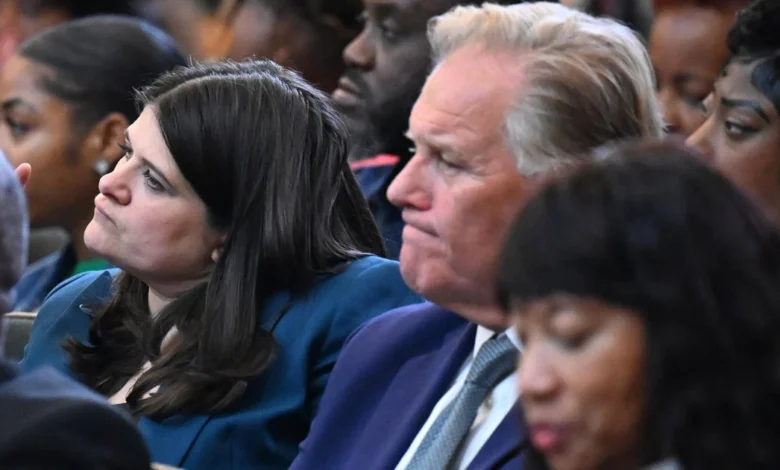
The political landscape in Michigan has shifted into a state of high-stakes volatility just days before the November 2026 election, as Democratic Representative Haley Stevens made a surprise appearance alongside Republican Senate candidate Mike Rogers at a Detroit church on Sunday. This public alignment serves as the latest inflection point in an increasingly fractious relationship between Stevens and her party’s nominee, Abdul El-Sayed, threatening to fracture the Democratic coalition at a critical juncture in the final sprint to the ballot box.
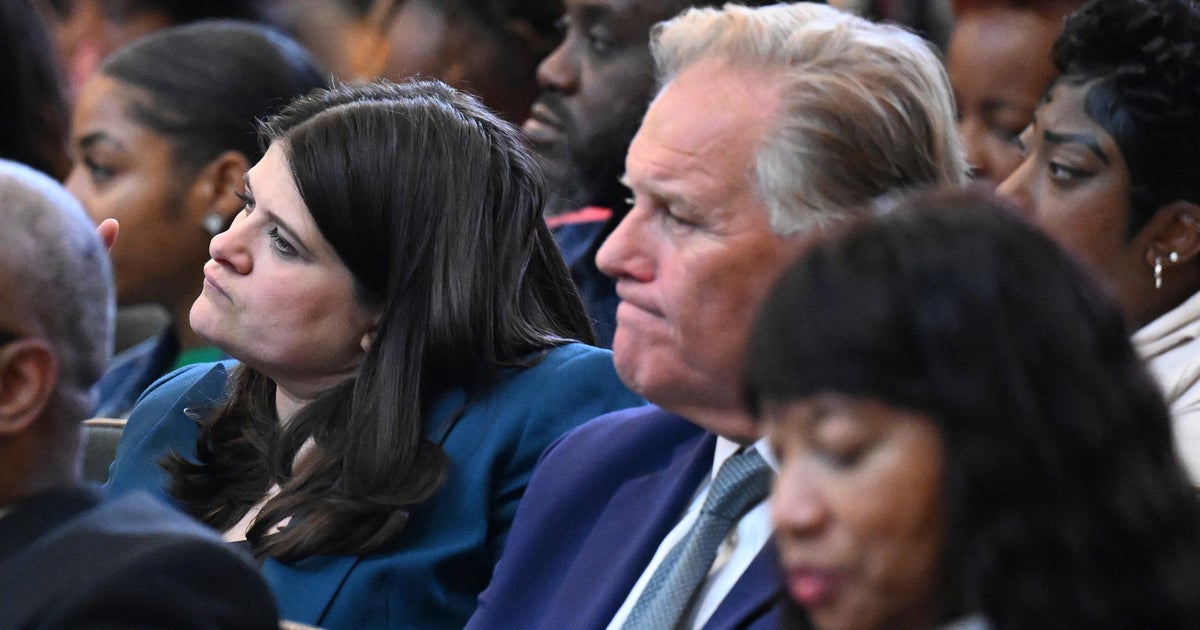
The optics of the appearance at the Perfecting Church, a prominent venue in Detroit, sent shockwaves through the state’s political establishment. For many observers, the presence of a sitting Democratic member of Congress at a campaign event for her Republican counterpart is virtually unprecedented in a high-profile U.S. Senate race. The move comes on the heels of a public dispute that has exposed deep-seated ideological and strategic fissures within the Michigan Democratic Party.
Chronology of a Growing Discontent
The roots of the current tension date back to the August 2026 Democratic primary, where Abdul El-Sayed successfully defeated Representative Stevens. Despite the primary having concluded three months ago, the wounds remain fresh. In the weeks following the contest, Stevens—who had received significant institutional support from the Senate Democrats’ campaign arm—pledged to support the party ticket. However, that commitment has been tested repeatedly by conflicting priorities and rhetorical clashes.
The latest escalation occurred last week when an outside political group launched a controversial advertisement. The spot attempted to link U.S. military aid to Israel to the rising cost of household groceries in Michigan. Stevens, who has long maintained a moderate stance on foreign policy, publicly demanded that El-Sayed condemn the advertisement, labeling its contents as antisemitic and dangerous.
El-Sayed, in response, accused Stevens of attempting to "relitigate a primary that ended three months ago." While he explicitly clarified that the advertisement was not produced by his campaign and stated his personal disagreement with its framing, he stopped short of the full-throated condemnation Stevens sought. This refusal to bow to her request became the catalyst for the current breakdown in communication between the two camps.
A Strategic Pivot or Personal Protest?
The decision by Stevens to appear at the church event with Mike Rogers is seen by political analysts as a calculated move to underscore her disapproval of the direction of the El-Sayed campaign. By physically aligning with Rogers—a former congressman and a veteran of the Michigan Republican apparatus—Stevens is signaling that her concerns regarding the rhetoric surrounding the Israel-Hamas conflict and the broader economic narrative are significant enough to transcend party lines.
Mike Rogers, who has been working to court suburban and moderate voters in a race that polls suggest is razor-thin, was quick to capitalize on the moment. In a message posted to social media platform X, Rogers praised Stevens as a "courageous leader" who has acted with "class" throughout the aftermath of the primary. His outreach represents a broader GOP strategy to peel away moderate Democrats who may feel alienated by the more progressive wing of the party represented by El-Sayed.
The Role of Domestic Alliances
The friction is not limited to the candidates themselves. The internal divide has permeated the private lives of those involved. Last week, it was revealed that Jason Turkish, the fiancé of Representative Stevens, has publicly stated his intention to vote for Mike Rogers. The disclosure added a layer of personal complexity to the public drama, turning the race into a topic of conversation that extends beyond traditional policy debates and into the social fabric of the Michigan political class.
The impact of this division on voter turnout remains the primary concern for Democratic strategists. In a state as closely contested as Michigan, any loss of enthusiasm or support from the moderate wing could be catastrophic for the party’s prospects of holding the Senate seat.
Implications for the Final 48 Hours
The fallout from the rift has been immediate and practical. CBS News has reported that Stevens was effectively asked to stay away from the remaining campaign events for the Democratic ticket. A "unity event" originally scheduled for Sunday, which was meant to feature Representative Jim Clyburn of South Carolina alongside both Stevens and El-Sayed, was restructured. El-Sayed opted to minimize the presence of dissenting voices, stating, "I would rather not distract from the key issues of this campaign."
This decision effectively sidelines a popular Democratic representative from the final push, potentially creating a vacuum in messaging that the Republican camp is eager to fill. The "key issues" El-Sayed refers to—likely inflation, reproductive rights, and manufacturing job growth—are now competing for oxygen against the narrative of a party in disarray.
Fact-Based Analysis of the Political Landscape
Data from the 2026 cycle shows that Michigan’s Senate race is one of the most expensive and closely watched in the nation. With a narrow margin of victory projected by most polling aggregates, the "enthusiasm gap" created by the Stevens-El-Sayed rift could be a deciding factor.
Historically, incumbents and party leaders emphasize unity to drive turnout. When high-profile figures break ranks, it can suppress voter confidence, particularly among independent voters who often decide the outcome of Michigan elections. The use of antisemitism accusations as a wedge issue is particularly potent, as it forces candidates to take binary stances that may alienate either the progressive base or the traditional Jewish Democratic constituency.
Furthermore, the involvement of outside groups in the ad-buying space has complicated the messaging for both candidates. By funding advertisements that utilize polarizing themes, these groups have effectively hijacked the campaign agenda, forcing candidates to react to external provocations rather than focusing on their own policy platforms.
Looking Toward Election Day
As the clock ticks down to Tuesday, the question remains whether the Democratic base will bridge its internal divide or if the damage from the primary’s aftermath has already been done. The image of Stevens and Rogers together in a church is a stark reminder of the fluidity of modern American politics.
For El-Sayed, the final days must be focused on consolidation and outreach to the coalition that secured his primary victory. For Rogers, the goal is to maintain the momentum gained by highlighting Democratic infighting and presenting himself as a stable alternative for moderate voters.
The events of this past weekend demonstrate that in the modern era, internal party cohesion is no longer a given. The Michigan Senate race, once a contest of policy and platform, has become a high-stakes test of political loyalty and ideological boundaries. Whether this development proves to be a decisive factor in the election or merely a final, noisy chapter in a tumultuous cycle will only be known when the polls close on Tuesday evening. As the state moves toward its final decision, the echoes of this rift are likely to resonate well beyond the ballot box, shaping the future of both the Democratic and Republican parties in Michigan for years to come.