NASA Seeks Private Sector Proposals to Save the Iconic Hubble Space Telescope from Orbital Decay

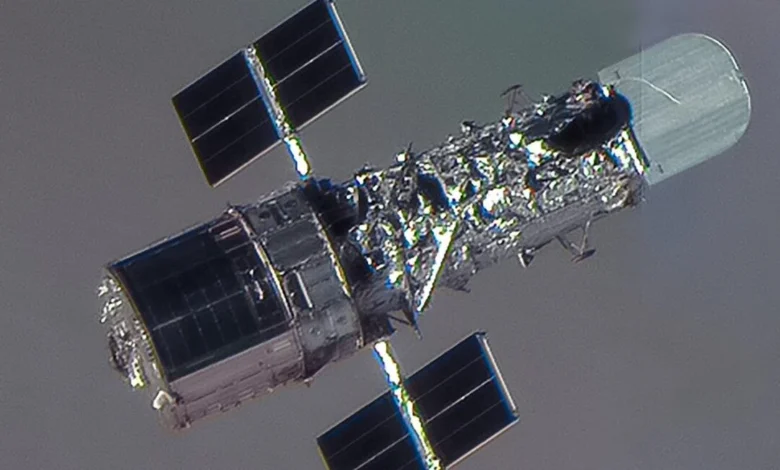
The Hubble Space Telescope, an instrument that has redefined our understanding of the cosmos for more than three decades, is approaching a critical juncture in its storied existence. After 36 years of operation, the observatory remains a scientific powerhouse, yet it is currently tethered to a trajectory that will eventually lead to its atmospheric reentry and destruction. Recognizing the telescope’s enduring value, NASA has issued a formal Request for Information (RFI) to the commercial space industry, seeking innovative concepts for potential missions to reboost, service, or safely deorbit the aging platform. This inquiry marks a significant shift in how the space agency approaches the lifecycle management of its most prestigious scientific assets, signaling a transition from government-exclusive servicing to potential private-sector partnerships.
A Legacy of Discovery and Gradual Descent
Launched in April 1990 aboard the Space Shuttle Discovery, Hubble was envisioned as a permanent, serviceable eye in the sky. Throughout the era of the Space Shuttle, NASA executed five sophisticated servicing missions (SM1 through SM4/SM4r) that replaced hardware, installed new cameras, and repaired critical failures, most notably the spherical aberration discovered in its primary mirror shortly after launch. These missions, the last of which concluded in 2009, did more than keep the telescope functional; they repeatedly upgraded its capabilities, ensuring that Hubble remained at the cutting edge of astrophysics.
However, the retirement of the Space Shuttle fleet in 2011 fundamentally altered the maintenance paradigm for Hubble. Without the heavy-lift capacity and rendezvous capabilities provided by the shuttle, the telescope has been left to its own devices. Lacking an onboard propulsion system, Hubble relies entirely on its orbital altitude to remain aloft. Over the last two decades, atmospheric drag—a phenomenon caused by residual gases in the upper atmosphere—has steadily sapped the telescope’s kinetic energy. Since its last altitude boost during the 2002 servicing mission, the observatory has drifted from 362 miles (583 km) down to its current altitude of approximately 292 miles (470 km).
Chronology of an Orbital Sunset
The physics of low Earth orbit (LEO) are unforgiving. As the telescope descends into the denser layers of the atmosphere, drag increases exponentially, accelerating the rate of altitude loss. Based on current orbital dynamics and projections regarding solar activity—which causes the atmosphere to expand and increases drag on objects in orbit—experts estimate that Hubble will become unstable between 2033 and 2034.
The timeline for intervention is narrow. NASA’s RFI, issued this past Thursday, establishes a clear target: any proposed mission must be capable of execution by 2032. This window allows for the development of new rendezvous and docking technologies, which would be essential for a robotic or human-crewed mission to interface with an instrument that was never designed for automated docking in the absence of a shuttle’s robotic arm. Responses to the RFI are due by November 30, serving as a pulse-check for industry interest and technical readiness.
Technical Requirements and Commercial Capabilities
NASA is not currently soliciting bids for a contract, but rather gathering intelligence on the feasibility of a rescue mission. The agency’s requirements are rigorous: any candidate mission must demonstrate the ability to capture Hubble without causing mechanical or structural damage. Once captured, the contractor must be prepared to execute a controlled burn to raise the telescope’s orbit to at least 373 miles (600 km).
The technical challenges are immense. Hubble is a large, complex machine with sensitive optical systems and aging insulation. A docking attempt would require precise guidance, navigation, and control (GNC) systems to match Hubble’s current velocity and orientation. Moreover, the mission profile involves more than just a boost; NASA has also expressed interest in potential servicing capabilities that could extend the telescope’s scientific life even further. If successful, such a mission could add an estimated 25 years of operational life to the platform, potentially allowing Hubble to operate well into the 2050s.
The responsibility for the mission—should it move forward—would lie with the private contractor. This includes the provision of the launch vehicle, the servicing spacecraft, mission operations, and, if the contractor deems it necessary, the inclusion of a human crew to handle delicate repair tasks. This "commercial-first" approach reflects the success of NASA’s Commercial Crew and Commercial Resupply programs, which have successfully offloaded routine LEO transport to companies like SpaceX, Northrop Grumman, and Boeing.
The Financial and Scientific Stakes
While no price tag has been attached to a potential rescue, the cost-benefit analysis of such a mission is a subject of intense debate within the astronomical community. Hubble remains one of the most productive scientific instruments in human history. Its data has been central to determining the expansion rate of the universe, characterizing the atmospheres of exoplanets, and observing the earliest stages of galaxy formation.
Proponents of a rescue mission argue that the cost of developing a robotic mission is a fraction of the price required to build and launch a successor of comparable scientific utility. Conversely, critics suggest that the investment might be better directed toward the next generation of space observatories, such as the Nancy Grace Roman Space Telescope or successor missions to the James Webb Space Telescope (JWST).
NASA officials maintain that the RFI is an exploratory step. "We are not committing to any specific path," a spokesperson stated. "Our objective is to understand the capabilities available in the marketplace. We want to know who is interested, what the technical feasibility looks like, and what the approximate cost might be."
Broader Implications for Space Debris and Sustainability
Beyond the scientific value, the eventual reentry of Hubble presents a significant logistical and safety challenge. At approximately 12.2 tons, Hubble is a massive object that would not entirely burn up during an uncontrolled atmospheric reentry. Significant components, including the primary mirror and portions of the support structure, could survive the heat of reentry and impact the Earth’s surface.
A controlled deorbit, which is one of the options NASA is requesting information on, would involve using a spacecraft to guide Hubble into a trajectory that ensures any surviving debris falls into a remote area of the ocean. This aligns with NASA’s commitment to responsible space debris mitigation and the protection of global populations from falling space hardware. By exploring a controlled disposal now, NASA is proactively managing the end-of-life risks for one of the largest satellites in orbit.
Industry Readiness and Future Outlook
The commercial space sector has evolved rapidly since the last shuttle mission. Companies specializing in on-orbit servicing, assembly, and manufacturing (OSAM) have emerged as key players. Organizations like Northrop Grumman, with their Mission Extension Vehicles (MEVs) that have already successfully docked with and extended the life of commercial telecommunications satellites, represent the type of expertise NASA is looking to leverage.
The coming months will be critical. As companies submit their white papers and capability statements, NASA will review the submissions to determine if the technology is sufficiently mature to support a flight in the early 2030s. If the industry feedback is positive, the next phase could involve a formal request for proposals, setting the stage for a landmark mission that could see a private spacecraft dock with a legendary scientific instrument.
Whether or not the rescue mission proceeds, the RFI serves as a reminder of the finite nature of space exploration. Every mission, regardless of its grandeur or impact, eventually faces the reality of orbital decay. Hubble’s story is entering its final chapters, but the agency’s willingness to explore unconventional, commercial solutions suggests that the telescope’s final legacy may be the pioneering of a new era of private-sector space maintenance and sustainability. For now, the world watches as astronomers, engineers, and private firms consider whether one of humanity’s greatest windows into the universe can be granted a stay of execution.