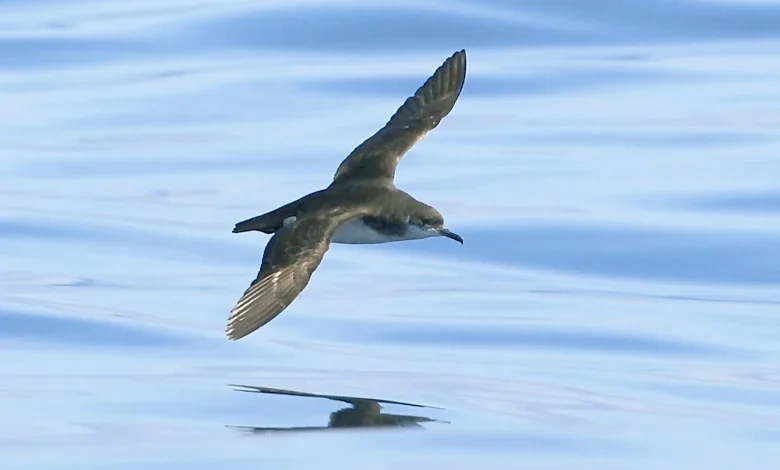
The phenomenon of jet lag, long considered a distinctively human struggle following rapid trans-meridian travel, has been confirmed as a significant biological reality for the Manx shearwater, a medium-sized seabird known for its remarkable long-distance migrations across the North Atlantic. New research published in the journal Science provides empirical evidence that these birds, when traversing long distances to reach their nesting burrows, experience an internal clock misalignment that forces them to deviate from their intended flight paths. By utilizing the sun as a primary navigation tool, these shearwaters essentially "jet lag" themselves, revealing that the challenges of maintaining a biological rhythm are a universal constraint among animals that rely on celestial cues for navigation.
The Biological Compass and the Cost of Time
At the heart of the study is the complex relationship between the Manx shearwater’s internal circadian clock and its reliance on a solar compass. Behavioral and sensory ecologist Patrick Lewin, the study’s lead author from the University of Oxford, explains that these birds possess an innate, genetically programmed clock that governs their physiology. However, as the birds forage over hundreds of kilometers of open ocean, their internal clocks must be recalibrated at every dawn and dusk.
The mechanism for solar navigation is inherently time-dependent. To maintain a constant bearing, an animal must compensate for the sun’s apparent movement across the sky. If an organism intends to fly south, it must adjust its angle relative to the sun throughout the day—traveling 90 degrees clockwise of the sun at sunrise, directly toward it at midday, and 90 degrees anticlockwise at sunset. If the bird’s internal clock is even slightly out of sync with the local time of its current longitude, the calculated orientation becomes skewed.
For every degree of longitude a bird traverses between sunrise and sunset, its internal clock drifts by approximately four minutes. This seemingly negligible discrepancy creates a measurable "compass bias." As the shearwaters fly eastward, their internal clocks lag behind local time, causing them to veer clockwise; conversely, when flying westward, they experience an anticlockwise drift. While these errors are typically small—often resulting in a deviation of only a few degrees—they provide the first clear evidence of "wild jet lag" in animals navigating autonomously in their natural environment.
Two Decades of Tracking Data
The findings are the result of an exhaustive longitudinal study that began in 2004, when researchers at the University of Oxford, led by Tim Guilford and Chris Perrins, first began deploying miniaturized GPS tracking devices on Manx shearwaters. These birds, which nest in burrow colonies along the western coasts of the United Kingdom and Ireland, are ideal subjects for such research due to their predictable breeding behaviors and the vast distances they cover in search of food.
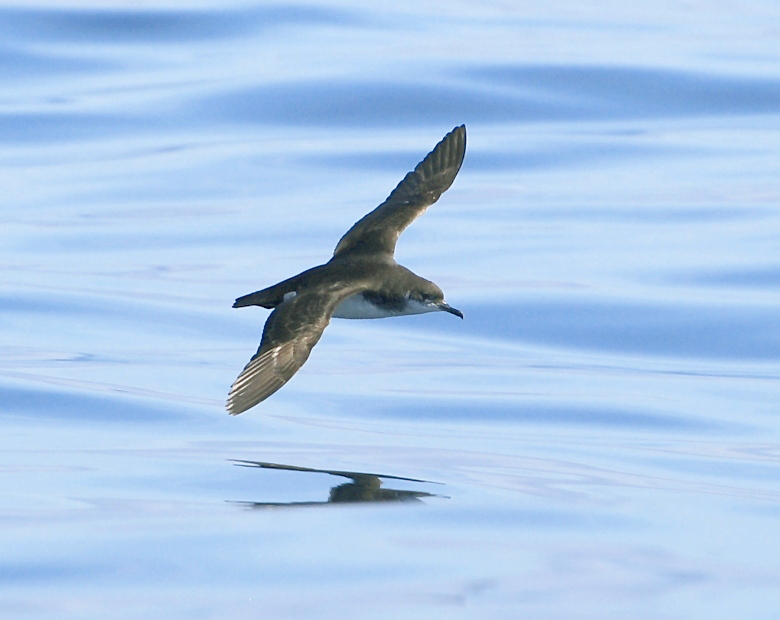
Over the course of twenty years, the research team compiled a database of 3,688 individual foraging trips, involving 1,045 unique birds. These trips ranged in duration from a single day to two weeks. By isolating the "homeward" legs of these journeys—which the researchers characterized by sustained, straight-line, high-speed flight—the team was able to map the birds’ actual paths against predicted routes based on a perfect solar compass.
The data analysis revealed a consistent pattern: the birds’ deviations were not random. When plotted against the expected errors of a solar compass, the observed flight paths of 335 homing trips conducted out of sight of land showed a striking correlation with the predicted navigational bias. The team rigorously tested alternative explanations, including the influence of crosswinds, the Coriolis effect, and potential reliance on magnetic sensing. None of these variables accounted for the directional errors as accurately as the solar compass bias model.
Navigational Resilience and Error Correction
While the study confirms that jet lag affects the shearwaters, the researchers emphasize that the birds are not helpless. The navigational errors observed reached a maximum of approximately 15 degrees, a deviation that is generally manageable for a species with a sophisticated "map sense."
"For a shearwater flying 1,000 kilometers east in a single day, the average error is roughly seven degrees," Lewin noted. "If the bird is constantly checking its position against its internal map, that error only adds about five kilometers to the total flight distance."
The research suggests a dual-navigation system in these birds. While the sun compass provides the primary directional vector, it appears to be constantly cross-referenced with a secondary system, likely based on familiar coastal landmarks or other environmental cues. This explains why, even when following coastlines, the birds continue to show slight, predictable drifts toward or away from the shore depending on their internal clock error. This behavior suggests that birds may never fully trust a single navigation source, instead relying on a weighted balance between celestial guidance and spatial memory.
Broader Implications for Animal Navigation
The discovery of jet lag in wild Manx shearwaters raises significant questions about the universality of this biological challenge. If small birds are subject to the limitations of their internal clocks while moving across longitudes, it is highly probable that other migratory species, particularly those that cover massive distances in short periods, face similar, if not more extreme, pressures.

The researchers suggest that the effect is most pronounced in species that are fast-moving or that live near the poles, where lines of longitude converge and the physical distance between time zones is shortened. This "longitudinal sensitivity" may have influenced the evolution of migratory routes and the development of backup navigational mechanisms in various avian and terrestrial species.
Furthermore, the study provides a unique perspective for human medicine. While researchers were unable to determine whether the birds suffer from secondary symptoms of jet lag, such as sleep deprivation or metabolic distress, the sheer frequency of these events in the birds’ lives suggests the potential for highly adapted physiological coping mechanisms.
"In humans, chronic jet lag is associated with a range of negative health impacts, from metabolic syndrome to cognitive decline," Lewin said. "By studying these birds, which are essentially living with constant, mild jet lag during their foraging seasons, we might uncover biological strategies that mitigate the damage caused by circadian disruption. There is a potential for translational research that could inform how we manage human health in a world of increasing global travel."
Future Research Directions
The team’s next phase of inquiry will focus on the consequences of these navigational deviations on the birds’ overall fitness. Researchers aim to investigate whether the severity of the jet lag correlates with a reduction in foraging efficiency, the amount of food brought back to the nest, or the long-term breeding success of the colony.
As autonomous navigation systems become increasingly prevalent in technology—ranging from drones to deep-space probes—the bio-inspired lessons from the Manx shearwater are already proving relevant. Engineers looking to improve the resilience of navigation systems in environments where GPS is unavailable may find the bird’s dual-system approach—balancing a primary sensor against a secondary map—a robust blueprint for future development.
Ultimately, the study of the Manx shearwater serves as a poignant reminder that even the most masterfully evolved biological systems are subject to the fundamental constraints of time. As the researchers continue to analyze the two-decade-long dataset, the focus will remain on understanding the trade-offs between speed, accuracy, and the metabolic cost of maintaining biological synchronicity in a vast, fast-moving, and often disorienting world. The case of the Manx shearwater proves that while the jet lag may be "tiny" to the human observer, to the bird navigating the vast, featureless Atlantic, it is a constant, subtle, and profound force of nature.