Fernando Alonso doubles down on criticism of lower-grid driver talent standards following Austin collision

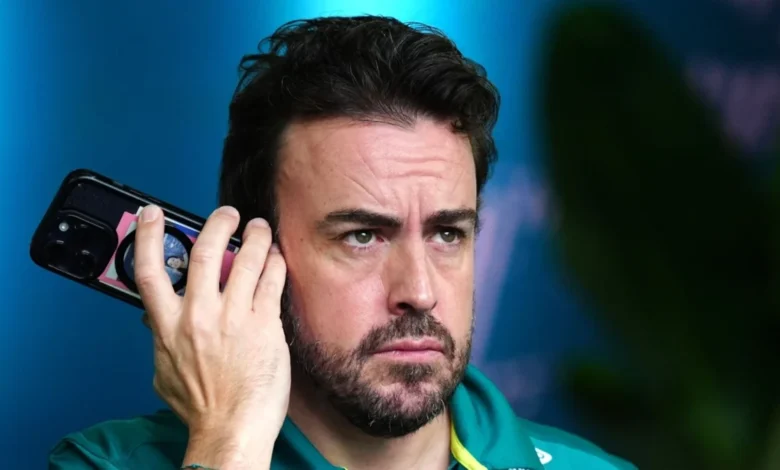
The Formula 1 paddock has been embroiled in a heated debate regarding driver standards and the competitive culture of the sport’s backmarkers following a contentious exchange between two-time world champion Fernando Alonso and Williams Racing’s Alex Albon. The dispute, which ignited during the aftermath of the United States Grand Prix in Austin, has highlighted a growing frustration among veteran drivers regarding the aggressive, and at times reckless, approach taken by those fighting in the lower third of the grid.
The friction originated on the opening lap of the race at the Circuit of the Americas. While battling for 12th position, Alex Albon attempted an ambitious overtake on the Aston Martin of Fernando Alonso at the Turn 11 hairpin. The maneuver resulted in a collision that caused significant bodywork damage to both vehicles. While neither driver was assessed a time penalty by the FIA stewards—allowing both to finish the race in 16th and 17th respectively—the incident served as a flashpoint for a broader critique of current racing standards.
Chronology of the Dispute
The discord between the two drivers began immediately after the checkered flag in Texas. During post-race interviews, Alonso, known for his uncompromising approach to race craft, characterized the driving standards at the rear of the field as "very low," suggesting a fundamental lack of talent among certain participants.
Heading into the media day for the Mexico City Grand Prix, rather than de-escalating, the Spaniard reinforced his position. In an interview with Sky Sports F1, Alonso stated, "I think it’s simply a very low level of driving and lack of talent. When you make repeated mistakes throughout the season and have crashes and 50 per cent of your race is in Lap 1, if I was the team principal I would not be happy."
Alonso contrasted these incidents with the measured approaches of world champions like Max Verstappen and Lewis Hamilton. He noted that when elite drivers find themselves at the back of the grid—often due to power unit penalties—they consistently navigate the field with patience and precision, rarely compromising their races in the opening corners. "Lap 1 is not the end of the world when you have your confidence and the talent to wait for one or two more laps," he added.
The Defense of the Grid
Alex Albon, who has been widely regarded as a pivotal figure in the development of the Williams project, responded to these comments during the FIA press conference in Mexico City. Maintaining a respectful but firm stance, Albon refuted the claim that the current grid lacks talent.
"I have a huge respect for Fernando. I looked up to him a lot growing up as a kid," Albon stated. "It’s not nice to hear those comments in many ways. You’re racing someone that you look up to, but at the same time, I don’t agree. I think the level is strong up and down the grid. I think 10, 15 years ago, the back half of the grid wasn’t the way it is now. We don’t have pay drivers anymore."
Albon’s defense centers on the evolution of the F1 entry process. The term "pay driver"—historically used to describe individuals who secured a seat primarily through personal or family financial backing rather than purely on merit—has become increasingly rare in the modern era. The current regulatory environment, combined with the extreme physical and technical demands of the current generation of ground-effect cars, has effectively filtered out competitors who lack the requisite skill set, according to many team principals.
Technical and Financial Pressures
The debate extends beyond simple personality clashes and touches upon the structural pressures of the current Formula 1 cost cap era. Alonso argued that the financial limitations placed on teams create a distorted incentive structure for those at the back.
"There are teams that are happy with the cost cap and breaking things every race. They can pay for them," Alonso remarked. He posited that the inherent difficulty of handling cars with less downforce and less grip at the back of the grid leads to a cycle of errors. When a driver is already struggling to extract performance from a sub-par machine, the added pressure of fighting for minor positions can result in rushed decision-making.
Furthermore, the "cost cap" effect is significant. With a strict limit on development budgets, teams like Williams, Aston Martin, and others in the lower-to-midfield bracket must be extremely judicious with their expenditure. Every front wing, suspension component, or chassis piece damaged in a first-lap collision represents a tangible setback for the team’s development trajectory. For a team fighting for a single point, the trade-off between the risk of an opening-lap maneuver and the potential reward is skewed.
Statistical Context and Driver Development
Data from the 2026 season indicates that first-lap incidents have remained a consistent variable, though the intensity of mid-field battles has increased as the performance gap between the fastest and slowest cars has narrowed. Analysts note that the current "DRS train" phenomenon, where cars are bunched together in a queue, often forces drivers into high-risk overtakes early in the race to avoid being stuck in a bottleneck.
Alonso’s perspective is informed by a career spanning over two decades, beginning in 2001. He asserts that the temptation to force a move on Lap 1 is a sign of immaturity or desperation. By contrast, experienced drivers recognize that a race is a long-form event where tire degradation, pit stop strategy, and fuel management offer more reliable opportunities to gain positions than a risky lunge into a tight corner.
Broader Implications for Formula 1
The friction between Alonso and Albon highlights a fundamental tension in modern motorsport: the balance between the "win at all costs" mentality and the necessity of race craft that preserves machinery. As the sport continues to grow in popularity, the pressure on younger drivers to prove their worth in limited seat time has intensified. This can often lead to a "must-perform" mindset that prioritizes aggressive, highlight-reel overtakes over the strategic, patient driving that defines championship-winning campaigns.
The FIA is unlikely to intervene in the philosophical debate, as the current regulations regarding on-track contact are well-defined. However, the comments from a figure as influential as Alonso may trigger renewed discussions in the drivers’ briefings regarding track etiquette and the definition of "avoidable contact."
Moving Forward: The Mexico City Grand Prix
As the paddock settles into the Autódromo Hermanos Rodríguez for the second leg of the Americas triple-header, all eyes will be on the opening corners. The high-altitude nature of the Mexico City circuit, which reduces downforce and puts extra strain on cooling systems, often leads to chaotic starts.
The schedule for the weekend remains packed, with Practice One commencing at 6:30pm UK time on Friday, October 30. The intense competition for the final points-scoring positions is expected to continue, and the verbal sparring between the veteran champion and the emerging talent of the mid-field will add an extra layer of narrative intensity to the proceedings. Whether this leads to a more cautious approach from those at the back of the pack, or merely serves to further polarize the garage, remains to be seen.
Ultimately, the dispute underscores the stark reality of the modern F1 grid: with every position worth millions in prize money, the margins for error are non-existent. For teams and drivers alike, the challenge remains not only to be fast but to be consistent enough to survive the opening lap—a task that continues to separate the field into those who view the race as a marathon, and those who treat it as a sprint.