Navigating the Storm of Disinformation: How to Spot Weather Misinformation and Find Reliable Sources in a Crisis

The proliferation of misinformation during extreme weather events has emerged as a critical public safety threat, transforming localized natural disasters into nationwide information crises. When hurricanes, wildfires, floods, and severe storms strike, digital ecosystems are frequently flooded with unverified rumors, digitally manipulated imagery, and malicious falsehoods. What often begins as an isolated post on social media—such as a fabricated photograph of wildlife roaming flooded city streets or a baseless rumor regarding government relief efforts—can cascade across digital platforms within minutes. Amplified by algorithms designed to maximize engagement through fear and outrage, these falsehoods are shared thousands of times until significant portions of the population accept them as factual truth.
This dynamic places an extraordinary psychological and cognitive burden on individuals striving to protect themselves and their families. Fact-checking under duress is inherently stressful; extreme weather induces panic, grief, and a sense of urgency where individuals feel compelled to process complex survival data in a compressed timeframe. Public health and communication experts emphasize that the best defense against this digital deluge is proactive preparation. Understanding where to locate credible information, mastering rapid fact-checking techniques, and learning how to compassionately correct loved ones before a crisis occurs are essential components of modern disaster readiness.
The Anatomy of a Weather Rumor: Timeline and Chronology of a Crisis
To understand how misinformation spreads during a natural disaster, researchers and emergency managers often look at a predictable four-stage timeline that unfolds alongside extreme weather events.
In the initial pre-impact phase, as meteorologists track an incoming storm or heatwave, speculation and anxiety begin to build online. During this stage, older, unrelated disaster footage is frequently recycled by opportunistic accounts seeking algorithmic clout. Users share dramatic videos of past hurricanes or historical blizzards, falsely claiming they depict the approaching storm. This primes the digital environment for confusion before the weather event even makes landfall.
During the acute impact phase—when power grids fail, cellular networks strain, and evacuations are ordered—information vacuums emerge. In the absence of immediate, official updates, community-driven social media channels fill the void. This is when rumors regarding infrastructure failures, looting, or unverified rescue operations peak. Because traditional communication channels may be temporarily knocked out, citizens desperate for news turn uncritically to peer-to-peer networks, where speculation is easily mistaken for on-the-ground reporting.
In the immediate aftermath, the recovery and relief phase begins, which unfortunately coincides with the peak of malicious conspiracy theories and institutional distrust. Historically, major disasters have been accompanied by falsehoods targeting relief organizations. For instance, during the 2024 Atlantic hurricane season, particularly in the wake of Hurricane Helene, widespread conspiracy theories falsely claimed that the Federal Emergency Management Agency (FEMA) was seizing private property, confiscating donated supplies, or redirecting disaster relief funds. These narratives not only hinder emergency response operations by forcing agencies to divert resources toward debunking myths, but they also discourage vulnerable populations from seeking vital life-saving assistance.
Finally, in the long-term recovery phase, the digital landscape transitions toward historical revisionism and debates over climate attribution, disaster planning, and infrastructural resilience. Misinformation during this period often pivots toward political narratives, downplaying the scientific consensus surrounding extreme weather trends or distorting the allocation of long-term federal and state recovery grants.
Navigating the Noise: Authoritative Sources for Emergency Information
While well-intentioned citizens often attempt to conduct independent research during a crisis, not all sources of information carry equal weight, particularly when human life and property are at stake. Relying on vetted, institutional channels is paramount to avoiding the amplification of harmful rumors.
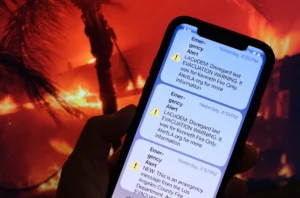
Local emergency management agencies serve as the primary operational authority during any disaster. City, county, and state governments maintain dedicated emergency management departments responsible for coordinating rescue and recovery efforts within their jurisdictions. These agencies frequently operate SMS-based emergency alert systems that citizens can join via text message to receive timely, geographically specific evacuation orders and safety updates. In major metropolitan areas, these are standalone departments, whereas in rural communities, alerts are typically coordinated through local sheriff’s offices.
At the federal level, the National Weather Service (NWS)—a division of the National Oceanic and Atmospheric Administration (NOAA)—remains the gold standard for meteorological data. By entering a local ZIP code on weather.gov, residents can customize their dashboards to receive hyper-local forecasts and severe weather alerts. Furthermore, the NWS operates regional branches that disseminate multi-lingual emergency alerts and text-based warnings, ensuring that language barriers do not impede public safety communications.
Commercial weather applications, including The Weather Channel, AccuWeather, Apple Weather, and Google, derive their foundational data from NWS models and are effective for tracking large-scale meteorological phenomena. However, experts caution that these consumer applications should not be used as sole determinants for critical evacuation decisions, as they may lack the hyper-localized granularity required for immediate life-safety actions.
Local journalism outlets—comprising traditional television newsrooms, independent newspapers, and public radio stations—play an indispensable role during crises. Certified local meteorologists interpret NWS data for specific communities, providing continuous live coverage, updated digital blogs, and verified ground-level reporting. During major power outages, many local news organizations lift paywalls and offer free livestreams across digital platforms, ensuring that residents without cable television retain access to vital updates.
Strategic Fact-Checking in High-Stress Environments
When facing an extreme weather event, cognitive overload is a natural physiological response. Fear, anger, grief, and confusion can impair critical thinking, making individuals more susceptible to cognitive biases such as confirmation bias—the tendency to search for, interpret, and recall information in a way that confirms one’s preexisting beliefs or fears.
To maintain clarity and make rational decisions, individuals should adopt structured, disciplined fact-checking protocols:
- Prioritize Targeted Inquiries: Resist the urge to engage in "doomscrolling," an obsessive consumption of negative news feeds that heightens anxiety without providing actionable solutions. Instead, define specific questions that directly impact safety, such as: When is the heavy rainfall projected to cease in my specific zip code? Are mandatory evacuation orders currently in effect for my county?
- Scrutinize the Source: Before sharing or acting upon information encountered on social media, interrogate its origin. Check whether a credible, verifiable source is explicitly cited or tagged. If a post lacks a clear institutional attribution, or if it originates from an unverified social media profile with a history of posting sensationalized content, treat it with extreme skepticism. When in doubt, withhold sharing to prevent the viral propagation of misinformation.
- Cross-Reference with Institutional Authorities: If a piece of breaking news cannot be independently verified through established newsrooms or government channels, assume it is unverified. While government agencies and professional newsrooms are not infallible, institutional entities maintain rigorous editorial standards and are bound by professional accountability to issue prompt corrections when errors occur.
- Utilize Dedicated Fact-Checking Resources: Familiarize yourself with established fact-checking organizations and digital literacy tools that systematically investigate viral internet rumors, digitally altered media, and disaster-related conspiracy theories.
The Artificial Intelligence Challenge: Spotting Synthetic Media
The rapid evolution and accessibility of generative artificial intelligence have fundamentally altered the information landscape during crises. According to a comprehensive analysis published by the Pew Research Center, approximately 34 percent of webpages published following the mainstream release of generative AI tools in late 2022 exhibit elements of AI-assisted editing, synthetic text generation, or digital manipulation.
During extreme weather events, bad actors frequently deploy AI-generated imagery and video to manufacture sensationalized crisis scenarios—such as hyper-realistic photographs of sharks swimming down flooded suburban streets, catastrophic building collapses that never occurred, or fabricated scenes of widespread looting. These synthetic artifacts are engineered to provoke immediate emotional outrage and bypass critical analytical filters.
To identify AI-generated images and videos, digital forensics experts recommend examining structural anomalies that current algorithms struggle to render perfectly. Key indicators include:
- Inconsistent Lighting and Shadows: Shadows that fall in multiple directions or fail to align with light sources within the frame.
- Anatomical Distortions: Unnatural rendering of human hands, fingers, teeth, or ears, as well as asymmetrical facial features or bizarre blurring in background crowds.
- Text and Signage Artifacts: Background text, street signs, or license plates that appear as garbled, unreadable gibberish rather than coherent alphanumeric characters.
- Physical Implausibilities: Fluid dynamics that defy the laws of physics, such as water flowing upward or unnatural reflections in standing water.
Navigating Conversations About Misinformation With Loved Ones
Debunking misinformation within personal networks requires a delicate balance of empathy, emotional intelligence, and strategic communication. Psychological research demonstrates that individuals are significantly more inclined to accept corrective information from trusted peers and family members rather than from anonymous online commentators or institutional authorities. Confrontational arguments in social media comment sections rarely yield productive outcomes and often result in entrenched dogmatism.
Communication frameworks established by environmental and behavioral research organizations suggest a structured approach to addressing misinformation with family and friends:
- Assume Best Intentions: Approach conversations with curiosity rather than hostility. The vast majority of individuals who share misinformation online do so because they genuinely believe it is true and wish to be helpful or protective of their communities. Approaching a loved one with aggression will immediately trigger defensive reactions, shutting down constructive dialogue.
- Engage in Dialogue, Not Debate: Ask open-ended questions to understand the emotional core of the person’s concern. Acknowledge the shared difficulty of navigating an increasingly noisy and confusing digital media ecosystem. Offer to trade sources and calmly explain the personal verification methods used to vet information before acting upon it.
- Recognize When to Disengage: Not every interlocutor is immediately receptive to correction. If repeated conversations lead to escalating tension or complete refusal to evaluate counter-evidence, it is vital to step back. Persistently forcing a confrontation can strain familial relationships and entrenched false beliefs further. In some cases, planting the seed of doubt and allowing time for reflection is the most effective long-term strategy.
- Pre-Bunking for Future Crises: For family members and friends who demonstrate openness to media literacy discussions, utilize "pre-bunking"—the practice of inoculating individuals against potential falsehoods before an extreme weather event occurs. By proactively discussing common recurring disaster myths (such as government property seizures or relief agency corruption) and establishing trusted information pipelines ahead of time, communities can build systemic resilience against the rising tide of digital disinformation.
Related posts: