United Launch Alliance Sets November 13 Return to Flight for Vulcan Centaur Following Nine-Month Hiatus

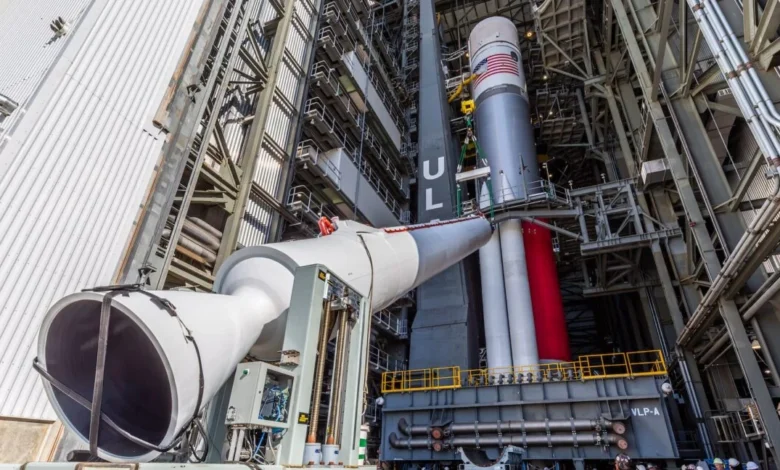
United Launch Alliance (ULA), the aerospace joint venture between Boeing and Lockheed Martin, has officially announced that its Vulcan Centaur rocket is scheduled to return to operational status on November 13. This milestone comes after a grueling nine-month investigation and corrective period prompted by an anomaly involving the solid rocket boosters (SRBs) that threatened to derail the company’s ambitious 2026 launch manifest. The upcoming mission, designated as the first of 38 contracted flights for Amazon’s Project Kuiper, represents a pivotal moment for the legacy launch provider as it seeks to restore confidence among government and commercial stakeholders.
The launch is set to lift off from Space Launch Complex-41 at Cape Canaveral Space Force Station in Florida, pending final approval from the Eastern Range. The primary objective of the mission is the deployment of 40 satellites for Amazon’s Low Earth Orbit (LEO) broadband constellation, a crucial step in the e-commerce giant’s multi-billion-dollar effort to compete with SpaceX’s Starlink network. While the mission is primarily commercial, the eyes of the Pentagon and the U.S. Space Force will be fixed on the flight, given that Vulcan serves as a cornerstone of the nation’s launch strategy for national security payloads through the next decade.
A Chronology of the Vulcan Program and Recent Challenges
The path to the November 13 flight has been marked by both technological triumph and significant engineering hurdles. The Vulcan Centaur was designed to replace the venerable Atlas V and Delta IV Heavy rockets, offering a more cost-effective and capable heavy-lift vehicle.
- January 2024: Vulcan Centaur completed its maiden flight, "Cert-1," successfully delivering the Peregrine lunar lander toward the moon. Despite a propellant leak that prevented the lander from reaching the lunar surface, the rocket itself performed flawlessly, signaling a promising debut.
- September 2024: The second flight, "Cert-2," saw the rocket reach orbit, but post-flight analysis revealed an anomaly involving the nozzle of one of the Northrop Grumman-manufactured solid rocket boosters.
- February 2025: A third mission experienced a similar nozzle failure during the ascent phase. While the rocket’s core stage and Centaur upper stage successfully compensated for the loss of performance, delivering the payload to the target orbit, the pattern of failure became impossible to ignore.
- March 2025: Following the February anomaly, ULA and the U.S. Space Force reached an agreement to ground the fleet pending a comprehensive root-cause analysis. This decision effectively halted the company’s launch schedule, causing a ripple effect throughout the aerospace industry.
- November 2025 (Projected): The return-to-flight mission marks the end of the grounding, utilizing a redesigned nozzle configuration intended to prevent the thermal structural issues encountered during previous flights.
Engineering the Solution: Addressing the Nozzle Anomaly
The root cause of the Vulcan’s grounding centered on the nozzle assembly of the GEM-63XL solid rocket boosters. During the high-velocity ascent, the boosters are subjected to extreme pressure and heat. In the two instances of failure, the internal nozzle components suffered from unexpected thermal degradation or structural separation, leading to asymmetrical thrust profiles.
ULA engineers, in collaboration with Northrop Grumman, have spent the better part of the year conducting a forensic investigation into the failure modes. The company stated that they have "made great strides" in understanding the physics behind the nozzle failures. By leveraging advanced computational fluid dynamics and static fire testing, the team identified several potential contributors, including material fatigue and thermal expansion tolerances.
To mitigate these risks, ULA has implemented design and process improvements to the nozzle assembly. The upgraded design is intended to provide greater structural integrity under the high-temperature environment of the launch plume. ULA emphasized that the upcoming mission will serve as a verification flight for these modifications. By flying the improved design, the company plans to collect telemetry data that will validate the simulation models used to certify the fix, ultimately ensuring the long-term reliability of the Vulcan launch vehicle.
The Strategic Importance of Vulcan for National Security
The stakes for this mission extend far beyond the deployment of commercial satellites. The United States Space Force has formally certified the Vulcan rocket for National Security Space Launch (NSSL) missions, which involve the transport of highly sensitive intelligence and military satellites into orbit.
The Pentagon’s reliance on Vulcan is substantial. Under the current NSSL Phase 2 and upcoming Phase 3 procurement contracts, Vulcan is slated to handle approximately 50% of the government’s major launches through the early 2030s. The grounding of the vehicle earlier this year created a strategic bottleneck, forcing the Department of Defense to re-evaluate its launch cadence and potentially rely more heavily on its primary competitor, SpaceX, to fill the gap.
Space Force officials have remained tight-lipped regarding the specifics of the investigation, but it is understood that the Department of Defense requires a rigorous flight-readiness review process. The return-to-flight mission will be scrutinized under a "high-confidence" framework, meaning that ULA must demonstrate, through both data and hardware, that the nozzle issue is entirely mitigated. If the November 13 flight succeeds, it will likely unlock a backlog of national security launches that have been delayed since the February incident.
Commercial Implications: The Amazon Kuiper Factor
Amazon’s Project Kuiper is arguably the most significant commercial driver for the Vulcan program. With 38 flights contracted, Amazon is ULA’s largest commercial customer. The scale of the Kuiper constellation, which aims to provide global high-speed internet, requires a massive and reliable launch cadence.
Delays in the Vulcan program have forced Amazon to adapt its deployment strategy. While the company has secured launch capacity from multiple providers—including Blue Origin, Arianespace, and SpaceX—the Vulcan remains a primary workhorse for the deployment of their satellites. A successful November 13 mission is essential to restore Amazon’s confidence in ULA’s ability to meet the ambitious deployment timelines required to maintain their FCC spectrum license obligations.
From a market perspective, the success of this flight is a litmus test for ULA’s viability as an independent launch provider. As the industry shifts toward reusable rocket technologies and lower launch costs, ULA must demonstrate that its flagship vehicle can maintain the high success rate and precision orbital insertion capabilities that characterized the Atlas V era. Failure to achieve a clean flight on November 13 could lead to further contractual revisions and potential loss of market share.
Analyzing the Path Forward
Looking beyond the immediate return-to-flight mission, the aerospace community is closely watching how ULA manages the transition from an experimental phase to a steady-state operational phase. The reliance on the GEM-63XL boosters is a significant variable in the rocket’s risk profile. While solid boosters are a proven technology, the specific nozzle issues encountered by Vulcan have highlighted the complexities of scaling up high-performance propulsion systems.
The decision to proceed with a flight test while simultaneously continuing additional testing and analysis reflects a calculated risk-management strategy. ULA’s assertion that flying the improved design is the "most beneficial path" suggests that ground-based testing alone may no longer yield the necessary data to achieve final certification. This approach mirrors industry best practices, where orbital flight is often the ultimate validation of design integrity.
Furthermore, the integration of lessons learned from the Vulcan program will likely have long-term benefits for the broader launch industry. Improvements in material science and thermal management of nozzles are transferable technologies that may improve future launch vehicle performance across the sector.
Conclusion: A Critical Window for ULA
As the countdown to November 13 begins, the atmosphere at ULA’s facilities in Decatur, Alabama, and Cape Canaveral is one of cautious optimism. The company has moved beyond the reactive phase of the investigation and is now firmly in the execution phase. The successful deployment of the 40 Amazon Kuiper satellites would represent a major psychological and operational victory for the team, effectively closing a difficult chapter in the Vulcan program’s history.
However, the mission remains only the first step. To maintain its position as a primary partner for both the U.S. government and its commercial clients, ULA will need to demonstrate a consistent, incident-free launch cadence following the return-to-flight. The aerospace sector is notoriously unforgiving of repeat failures, and the November launch will set the tone for ULA’s trajectory in the coming decade. Whether the company can successfully pivot from these technical setbacks to a period of sustained success will be defined by the performance of the Vulcan Centaur in the skies over Florida this November.