Ken Paxton Says He’s Tough on Crime. His Trust Invested $600,000 in a Convicted Fraudster’s Company.

Four years after North Texas home builder Scott Sherman completed a federal prison sentence for his role in a mortgage fraud conspiracy, his newly minted construction materials enterprise received a $600,000 capital infusion from a trust designed to insulate Texas Attorney General Ken Paxton and his wife, state Sen. Angela Paxton, from conflicts of interest. While the "blind trust" was ostensibly established to prevent the couple’s personal financial interests from overlapping with their public duties, newly released records from the 2023 impeachment investigation suggest the arrangement functioned less as a firewall and more as a conduit for business dealings with individuals whose criminal backgrounds stand in stark contrast to the attorney general’s self-proclaimed role as a champion against fraud.
The investment in Sherman’s companies—Wildcatter Sand Services and Grayson County Sand and Gravel—marks a significant departure from the standard expectations of public office. The revelation arrives at a precarious moment for Paxton, who is currently engaged in a high-stakes, expensive campaign for a U.S. Senate seat, while simultaneously attempting to maintain his image as a ruthless prosecutor of white-collar crime.
A History of Fraud and Business Expansion
Scott Sherman’s entry into the construction materials industry followed a turbulent period in his career. In 2014, he pleaded guilty to charges related to a mortgage fraud conspiracy. Prosecutors at the time alleged that Sherman, while operating Artisan Operating LP, participated in a scheme to artificially inflate home prices to secure excessive loans for more than two dozen properties across the Dallas-Fort Worth metroplex.
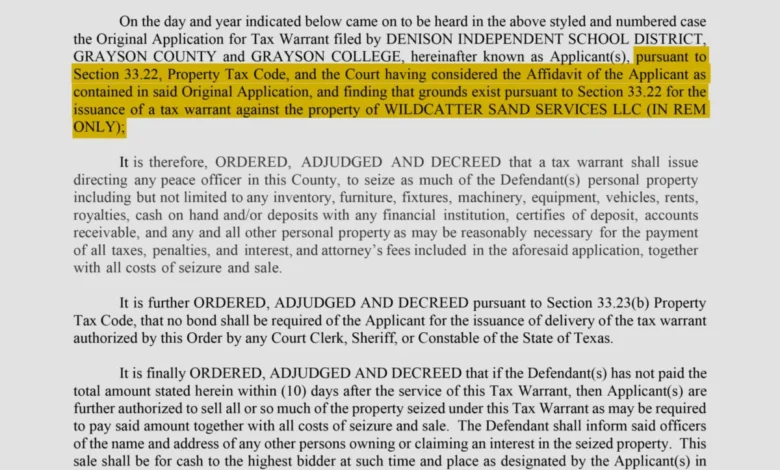
Despite this history, Sherman successfully rebranded, launching Wildcatter Sand Services and Grayson County Sand and Gravel alongside his father. The business rapidly evolved into a complex network of subsidiaries with operations spread across North Texas. However, as the enterprise grew, so did its liabilities. Records indicate that as the companies secured millions in revenue, they simultaneously began to default on tax obligations to local governments, including school districts in Grayson County, leaving taxpayers to shoulder the burden of uncollected revenue while the business owners continued to operate.

The Breakdown of the Blind Trust
The mechanism intended to protect the Paxtons from these financial entanglements was the "Esther Blind Trust." Managed by the couple’s friend, Chip Loper, the trust was incorporated with the explicit instruction that the manager would handle assets without consulting the beneficiaries or accepting instructions regarding specific investments.
However, evidence unearthed during the 2023 impeachment proceedings tells a different story. Text messages between Ken Paxton and Loper reveal ongoing discussions regarding specific financial holdings, suggesting that the "blind" nature of the trust was, at best, porous. Furthermore, the Paxtons’ 2020 federal income tax returns showed that the couple personally claimed more than $93,000 in itemized losses from Wildcatter-related entities. Legal experts, including Kathleen Clark, a professor at Washington University in St. Louis specializing in government ethics, argue that if a beneficiary is aware enough of a transaction to report it on a tax return, the trust cannot be characterized as blind.
"That is proof positive that there is nothing blind about this trust," Clark noted. "If the attorney general is actively reporting specific business transactions on his personal filings, he is by definition not shielded from the financial realities of those investments."
Legislative Influence and Environmental Policy
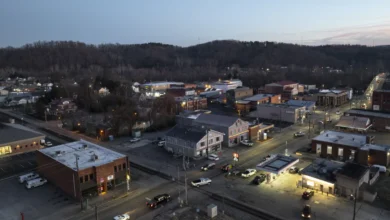
The intersection of the Paxtons’ business interests and their legislative activities became particularly apparent regarding the company’s operations in Gunter, Texas. Following the cash injection from the trust, Sherman expanded his operations to include a sand mine in Denison and a concrete plant in Gunter. The Gunter facility, operated by Wildcatter Redi-Mix, quickly became the target of local ire.
Residents filed repeated complaints with the Texas Commission on Environmental Quality (TCEQ), alleging that the plant produced clouds of dust that coated their properties for up to 12 hours a day. Between 2021 and 2022, the TCEQ issued multiple violation notices to the company. Yet, rather than facing increased regulatory scrutiny, the industry received legislative support.

State Sen. Angela Paxton voted in favor of Senate Bill 471, a measure championed by former state Sen. Drew Springer. The legislation allowed the TCEQ to disregard citizen complaints if a resident filed more than five "unsubstantiated" complaints within a seven-year period. Critics, including local advocate Deirdre Diamond, argued that the bill was designed to "weaponize the system" against residents seeking to protect their health and property values.
While Angela Paxton’s spokesperson, Matt Welch, maintains that her role on the Wildcatter advisory board was "non-governing" and that she had no knowledge of the specific complaints, the timing remains problematic. Records show that four Wildcatter companies wired over $73,000 to the Paxtons in the months surrounding the bill’s passage, including $10,000 in the two weeks leading up to the vote and $12,000 in the week immediately following.
A Pattern of Questionable Associations
The Wildcatter investment is not the only instance of the attorney general maintaining ties to individuals facing federal charges. Reports from The Wall Street Journal recently highlighted that Paxton spent New Year’s Eve 2024 in Dubai with two American citizens who had been indicted on federal healthcare-fraud charges. When confronted with these associations, Paxton’s office frequently frames the inquiries as evidence of "political persecution," asserting that the attorney general is a target of a partisan campaign to undermine his conservative agenda.
However, the implications for his potential tenure in the U.S. Senate are significant. Ethics experts, such as Donald Kettl, point out that U.S. Senate rules are far more stringent than those currently governing the Texas Attorney General’s office. If elected, Paxton would be required to maintain a truly qualified blind trust, free of any knowledge of specific investments. The current evidence suggests that his existing framework would fail to meet these federal requirements, raising fundamental questions about his ability to comply with Senate ethics standards.
Financial Impeachment Revelations
The scale of the financial transfers between the Wildcatter companies and the Paxtons reached its zenith during the most chaotic period of the attorney general’s career. Between January and June 2023, as Paxton faced a formal impeachment trial on charges of bribery and corruption, 15 separate payments totaling over $83,000 were wired to the trust.

Notably, on May 19, 2023—one week before the House formally impeached the attorney general—the trust wired $9,000 to the law firm of Mitch Little, who would go on to lead Paxton’s defense during the Senate trial. While it remains unproven if the funds were used as a "passthrough" for legal fees, the timing is glaring. The trust’s checking account balance was insufficient to cover such a payment without the specific deposits made by Wildcatter entities earlier that month.
Craig Holman of Public Citizen stated that the use of a business entity to funnel funds to a legal defense during an impeachment trial would be a "particularly problematic" development, bordering on the ethical lines that govern the separation of personal, political, and business finances.
The Broader Impact on Public Trust
The core issue for the Paxtons is the erosion of the "anti-fraud" mandate the attorney general claims to uphold. By profiting from a company that has failed to pay its taxes and that operates under the shadow of environmental violations, the attorney general faces a crisis of credibility. For residents like Deirdre Diamond, who eventually moved away from Gunter due to health concerns and disillusionment with the state’s regulatory apparatus, the news of the investment was devastating.
"You can’t pretend to be about protecting the people when you directly profit from the very entities that are harming them," Diamond said.
As the election cycle continues, the revelations regarding the Esther Blind Trust will likely serve as a focal point for critics. The evidence gathered from the impeachment records paints a picture of a financial arrangement that allowed the state’s top law enforcement official to maintain a deep, lucrative, and potentially compromising relationship with a business executive whose own career is defined by the very type of fraud the attorney general promises to eradicate. Whether this will impact the electoral outcome remains to be seen, but the structural failure of the trust has provided a clear, documented look at how the lines between public office and private profit have become increasingly blurred in the state of Texas.