Dolores Huerta the iconic labor activist and civil rights leader who co-founded the United Farm Workers has died at age 96

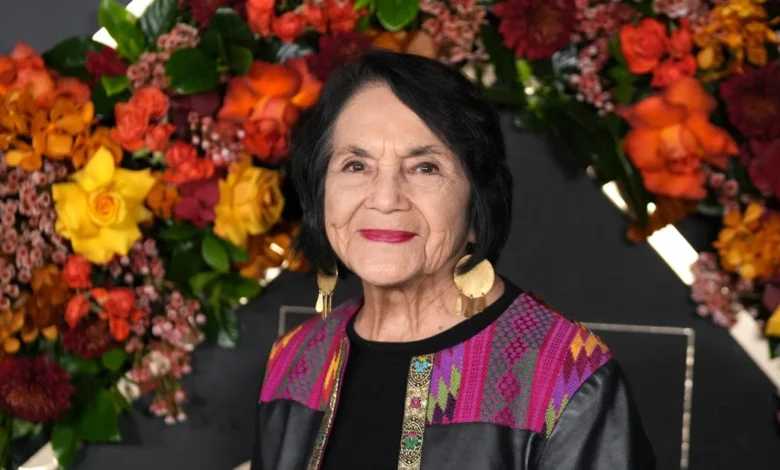
The labor movement and the American civil rights landscape are mourning the loss of one of their most formidable figures. Dolores Huerta, a visionary whose relentless advocacy transformed the lives of millions of agricultural workers and marginalized citizens, passed away on Wednesday at her home in Bakersfield, California. Her family confirmed that the 96-year-old activist succumbed to cancer, marking the end of a life defined by seven decades of grassroots organizing and legislative reform.
Known globally for the rallying cry "Sí, se puede" (Yes, it can be done), Huerta was a pioneer who shattered barriers for women and people of color. Her death, announced by her foundation, has prompted an outpouring of tributes from political leaders, labor unions, and human rights organizations worldwide. As California Governor Gavin Newsom ordered flags across the state to be flown at half-staff, the nation reflects on a legacy that fundamentally reshaped labor relations in the United States.
A Life of Unyielding Advocacy: A Chronological Overview
The trajectory of Huerta’s life is a testament to the power of persistent, organized resistance. Born Dolores Clara Fernandez in 1930 in Dawson, New Mexico, she was raised in the San Joaquin Valley of California. Her early exposure to her mother’s compassionate community leadership—running a hotel and restaurant—laid the foundation for her later activism.
- 1950s: While working as an elementary school teacher, Huerta became disillusioned by the systemic poverty and malnutrition she witnessed among the children of migrant farmworkers. This frustration catalyzed her transition from the classroom to the front lines of social justice.
- 1962: In a pivotal moment for American labor, Huerta co-founded the National Farm Workers Association (NFWA) alongside Cesar Chavez. The organization would later evolve into the United Farm Workers (UFW), the nation’s first successful union for agricultural laborers.
- 1965–1970: Huerta served as a lead negotiator during the historic Delano Grape Strike. Her ability to secure collective bargaining agreements, including the first health and benefit plans for farmworkers, set a national precedent.
- 1988: During a protest in San Francisco, Huerta suffered a brutal assault by police, resulting in broken ribs and a ruptured spleen. This incident became a turning point in her career, shifting her focus increasingly toward intersectional advocacy, including women’s rights, LGBTQ+ equality, and electoral politics.
- 2012: President Barack Obama awarded her the Presidential Medal of Freedom, acknowledging her role as a "tenacious leader" whose work helped pass the Agricultural Labor Relations Act.
- 2026: In her final months, Huerta continued to speak on the necessity of civic engagement, maintaining a rigorous schedule of public appearances despite her illness.
The Power of "Sí, se puede"
Perhaps Huerta’s most enduring contribution to the lexicon of social movements is the slogan "Sí, se puede." As she explained in an exclusive 2026 interview with CBS News, the phrase was a spontaneous, defiant response to defeatism. When she challenged Arizona leadership to support boycotts and strikes, they insisted it was impossible under the state’s restrictive labor laws. Her retort—"Sí, se puede"—became a rallying cry that transcended the agricultural sector, eventually fueling major political campaigns, including those of Barack Obama and various grassroots social movements globally.
Recent Revelations and Complex Legacies
The final year of Huerta’s life was marked by a moment of profound personal transparency that challenged the long-standing narrative of the UFW’s history. In a brave act of disclosure, she revealed that she had been sexually abused by Cesar Chavez in the 1960s, a trauma that resulted in the birth of two children. She had kept this secret for six decades, fearing that public disclosure would derail the fragile progress of the labor movement.
When asked about this decision, she characterized it as a "cross to bear," emphasizing that she prioritized the structural success of the movement over her own personal pain. Her willingness to address this history late in life has invited a nuanced re-examination of the personal costs associated with historical leadership roles.
Official Responses and Institutional Impact
The response to her passing has been swift and somber. Former House Speaker Nancy Pelosi highlighted the courage of a woman who "led with determination," noting that Huerta’s influence reached far beyond the fields of California into the hallowed halls of Congress.
Los Angeles Mayor Karen Bass underscored the practical nature of Huerta’s legacy, stating, "Dolores was proof of what ordinary people can accomplish when they organize." Former President Bill Clinton, in a statement, described her as a "stalwart champion" who treated every obstacle as a "fresh opportunity to educate, to organize, and to uplift."
Data and Legislative Achievements
Huerta’s impact is not merely symbolic; it is documented in law and economic reality. Her advocacy was instrumental in:
- The Agricultural Labor Relations Act (1975): The first law of its kind in the U.S. to grant farmworkers the right to organize, bargain collectively, and participate in secret-ballot elections.
- Immigration Reform: She was a vocal proponent of the 1986 Immigration Reform and Control Act, which provided amnesty to millions of undocumented workers.
- Safety Standards: She consistently pushed for the regulation and limitation of toxic pesticides in agricultural fields, fundamentally changing worker health and safety protocols.
Her career included being the first Latina inducted into the National Women’s Hall of Fame and the recipient of nine honorary doctorates. These accolades, however, were secondary to her desire to instill a "love for justice" in the next generation.
Analysis: The End of an Era
The passing of Dolores Huerta signifies the closing of a transformative chapter in 20th-century American history. She belonged to a generation of activists who operated in an era before digital connectivity, relying on face-to-face organizing, physical picket lines, and sheer physical endurance to demand rights for those the political establishment had long ignored.
Her legacy presents a complex case study for future activists. She demonstrated that institutional change is possible through high-stakes, persistent pressure—even when met with state-sanctioned violence. Yet, her late-life disclosures also serve as a reminder that the human costs of revolutionary movements are often buried to ensure their survival.
As the nation mourns, the focus remains on the structural changes she championed. From the inclusion of disability insurance for farmworkers to the empowerment of Latinas in political office, Huerta’s fingerprints are visible on the modern American social contract. Her life proves that while the challenges facing laborers and the disenfranchised are ever-evolving, the framework for change remains consistent: rigorous organization, unwavering courage, and the fundamental belief that progress is not a gift, but something to be fought for.
Dolores Huerta is survived by her 13 children and a global movement that continues to operate under the motto she gave them: "Sí, se puede." Her life stands as a blueprint for those seeking to challenge the status quo, reminding a new generation that the work of democracy is never finished.
Related posts: