The Dilemma of the Unsanitary Cabin: Passengers Forced to Choose Between Delays and Odorous Travel

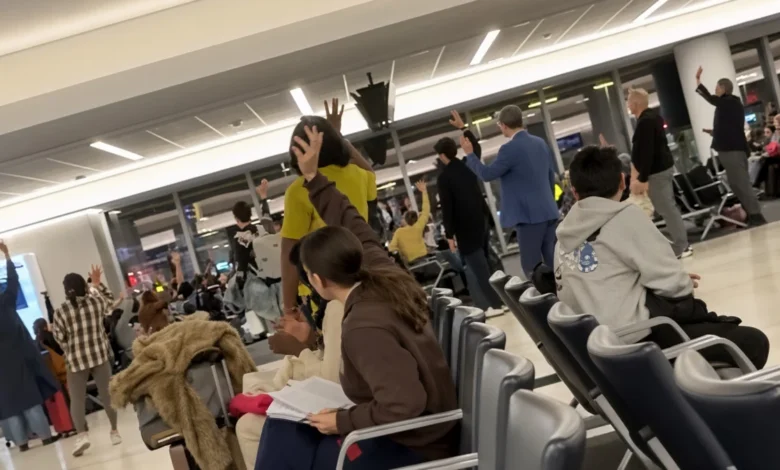
In a bizarre display of democratic decision-making at the gate, passengers on a recent flight—believed to be a Delta Air Lines departure from New York’s LaGuardia Airport—were presented with a choice that highlighted the growing tensions surrounding animal travel in commercial aviation. Following an incident on a previous flight in which a dog urinated in the cabin, the flight captain provided those waiting to board with two options: endure a delay while the aircraft underwent a proper cleaning, or board immediately and accept the presence of the lingering odor. According to footage shared on social media by passenger Jennifer Coffey, the pilot opted to settle the impasse through a simple show of hands.
This incident serves as a striking example of the increasing friction between airline operational efficiency, passenger comfort, and the evolving regulations governing service and emotional support animals. As airlines struggle to balance the "on-time performance" metrics that dictate their internal success with the basic sanitation standards expected by travelers, the cabin has become an unpredictable environment where the presence of pets can lead to significant logistical challenges.
The Anatomy of an In-Flight Sanitation Crisis
The incident at LaGuardia is not an isolated event but rather the latest in a string of reported sanitation issues involving animals in cabin spaces. When a biological incident occurs—whether it be urination, defecation, or an animal becoming ill—airlines are faced with a complex set of protocols. Federal aviation safety regulations generally mandate that an aircraft must be clean and safe for passengers, but the definition of "clean" often leaves room for interpretation by ground staff and flight crews under pressure to depart.
In this instance, the pilot’s decision to put the matter to a vote suggests a conflict between the airline’s rigid scheduling pressures and the practical reality of the cabin environment. A typical deep clean of an aircraft interior requires a specialized crew, which can trigger a cascade of delays that ripple through an airline’s hub operations. If a flight is delayed at LaGuardia, that aircraft might miss its slot, affecting subsequent flights in cities across the country. Conversely, choosing to board passengers into an environment compromised by animal waste invites immediate passenger dissatisfaction and potential health concerns.
Chronology of Escalating Animal-Related Disruptions
The history of animal-related cabin incidents reveals a pattern that has become increasingly frequent over the last decade. Historically, pets were kept in carriers in the cargo hold, but the rise of "service animal" claims—which do not require the animal to be crated—has fundamentally altered the cabin ecosystem.

- Mid-2023: A traveler on a Delta flight from Fort Lauderdale to Los Angeles documented a six-hour flight plagued by the smell of dog diarrhea. The incident caused significant distress, and the passenger was subsequently offered a nominal amount of SkyMiles as compensation, which many industry analysts viewed as insufficient for the level of discomfort endured.
- Late 2024: A passenger on a flight from New York JFK to Austin reported a two-hour delay caused by a non-service dog whose paperwork was flagged. The situation was compounded by a refueling shift change, illustrating how even minor pet-related compliance issues can lead to multi-hour operational failures.
- January 2025: Reports surfaced regarding a flight from Atlanta to Miami where a passenger was allegedly handed paper towels by cabin crew to clean up a mess left by a previous animal passenger. The aircraft was eventually removed from service, but not before the initial, inadequate attempt at remediation caused outrage among the passengers onboard.
These incidents demonstrate that the "clean-up" protocols are inconsistent. In some cases, the aircraft is removed from service for deep cleaning; in others, the crew attempts to mitigate the issue internally, often with limited resources.
The Regulatory Landscape and the Service Animal Debate
The core of the issue lies in the Department of Transportation’s (DOT) current regulations regarding service animals. Under the Air Carrier Access Act (ACAA), airlines are required to accommodate service dogs. However, the definition of what constitutes a "service animal" has been a point of contention for years. While the DOT has tightened rules to distinguish between trained service animals and emotional support animals—the latter of which airlines are no longer required to accept—the burden of verification often falls on gate agents who are poorly equipped to challenge a passenger’s claim.
When a dog is misidentified as a service animal, it is permitted to sit on the floor of the cabin or at the passenger’s feet rather than in a hard-sided carrier. This freedom of movement is a primary factor in the increased frequency of "accidents" onboard. A dog confined to a carrier is significantly less likely to soil a carpeted cabin floor than one tethered to a seat.
Passenger Reactions and the "Veil of Ignorance"
The reaction from the public to the LaGuardia incident was sharply divided, reflecting a broader societal split regarding pet ownership. Commenters on various platforms expressed views ranging from "dog people" who felt the smell was a non-issue, to those who demanded full refunds and a replacement aircraft.
One critical aspect of the debate is the "veil of ignorance" regarding the location of the mess. Because airlines rarely disclose the exact seat numbers affected by an animal accident during the boarding process, passengers are effectively playing a game of Russian Roulette. If a passenger is assigned a seat directly over the affected area, their flight experience is compromised, while a passenger five rows back may never notice the issue. This uncertainty leads to a lack of trust in the airline’s transparency.
Economic and Operational Implications for Airlines
From an operational standpoint, these incidents create a "cascading delay" effect. When a captain decides to delay for cleaning, they are essentially opting to pay the cost of a late departure. If they choose to fly, they risk customer service complaints, potential legal liability if a passenger suffers a health reaction, and the cost of cleaning the aircraft at the next stop anyway.

Delta Air Lines and other major carriers have faced mounting pressure to standardize their response to these incidents. A spokesperson for a major airline, speaking generally on the condition of anonymity, noted that "maintaining a hygienic environment is a top priority, but we are also bound by the realities of a tight flight schedule. Each incident is assessed individually, and we aim to prioritize the health and safety of our passengers above all else." However, the reality on the ground—as evidenced by the video of the captain’s vote—often falls short of this ideal.
Broader Societal and Industry Trends
The increase in pet travel is a demographic trend that airlines have been slow to accommodate structurally. As more travelers treat pets as essential companions, the demand for pet-friendly cabin space has skyrocketed. Yet, the physical infrastructure of a commercial aircraft—narrow aisles, limited floor space, and carpeted flooring—is inherently ill-suited for the biological realities of animals.
The industry is now at a crossroads. Airlines may eventually be forced to invest in non-porous, easily sanitized cabin materials, or alternatively, adopt much stricter enforcement of service animal documentation. Until then, the burden remains on the flight crews to make impossible decisions under extreme time pressure.
For the passengers at LaGuardia, the choice was binary: a delayed departure or a compromised environment. While the vote favored an immediate departure, the incident serves as a poignant reminder that in the high-stakes, high-pressure environment of modern air travel, the line between convenience and chaos is often thinner than anyone would like to admit. As the debate continues, it is clear that the current approach—relying on the consensus of the passengers—is a symptom of a larger, systemic struggle within the aviation industry to adapt to the changing nature of its clientele.