France Confronts a Student-Led Uprising as Climate Change Exposes Institutional Decay

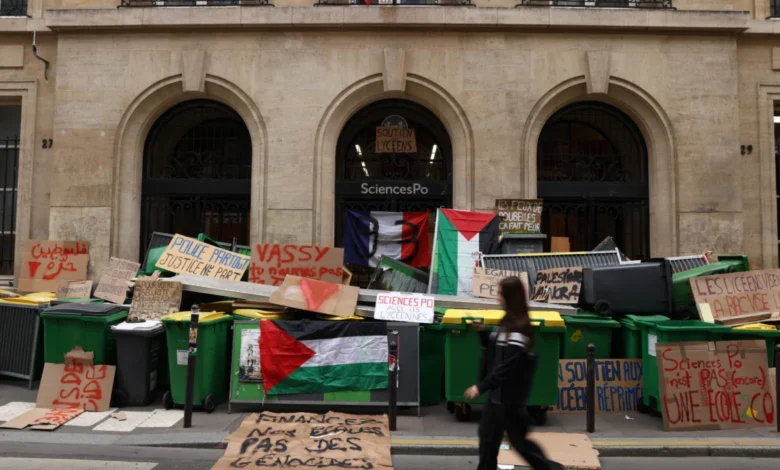
The streets of Paris and major provincial cities across France have become the epicenter of a historic youth-led protest movement, as thousands of students barricade schools to demand structural reforms to a national education system struggling under the weight of an unprecedented climate crisis. The unrest, which has persisted for four weeks, represents a volatile intersection of deteriorating public infrastructure and a growing sense of existential dread among the nation’s youth. What began as localized complaints regarding classroom conditions has metastasized into a nationwide challenge to the government’s failure to adapt to rising global temperatures.
A Chronology of the Escalation
The current unrest is not a sudden eruption but the culmination of mounting frustration. In early June 2026, as France entered its second consecutive major heat wave of the year, student attendance began to drop as classroom conditions became untenable. By mid-June, reports of heat-related illnesses—including fainting spells and nosebleeds—surged across public schools.
The turning point occurred in late September 2026, when the return to school coincided with continued unseasonable warmth. Students, particularly in the Paris suburbs, began organizing through social media to blockade school entrances with waste bins and placards. By early October, the movement had gained significant momentum, drawing support from university students at prestigious institutions like Sciences Po. The government’s response, characterized by a rapid deployment of police, has resulted in approximately 8,000 arrests over a three-week period, with 85 percent of those detained being minors. This heavy-handed approach has arguably fueled further resentment rather than quelling the protests.
The Infrastructure Crisis
At the heart of the students’ grievances is a fundamental incompatibility between 19th- and 20th-century school architecture and 21st-century environmental realities. Many of France’s public schools were designed to maximize natural light and retain heat for energy efficiency during harsh winters. However, in a warming climate, these structures have effectively become "greenhouse classrooms."
Engineering experts, such as Marie-Hélène Azam of the National Institute of Applied Sciences, point to the issue of "thermal inertia." These heavy masonry buildings absorb solar radiation during the day and release it at night, preventing the structures from cooling down even after the sun sets. When consecutive heat waves strike, the internal temperature of these buildings remains dangerously high, compounding the risk of heat exhaustion for students who spend six to eight hours a day in classrooms without adequate ventilation or modern climate control.
Supporting Data and Public Health Impact
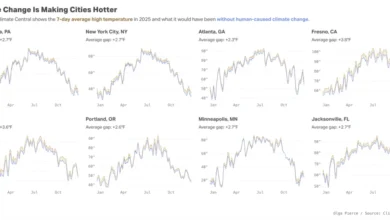
The urgency of the students’ demands is backed by stark mortality and climate data. 2026 has been designated the hottest year on record for France. During the summer months, the country recorded an estimated 8,000 excess deaths directly attributable to heat-related factors. In June alone, national health statistics indicated an 11 percent increase in mortality compared to the 2025 baseline.
These figures have provided a visceral backdrop to the protests. For the students, the health statistics are not abstract numbers but reflections of their own lived experiences. The lack of air conditioning, which has long been a policy choice to avoid the "urban heat island" effect—where AC units dump hot air into the streets, further warming the city—is now being viewed by the youth not as an environmental precaution, but as a form of state negligence.

Official Responses and Government Policy
The regional government of Île-de-France, which holds jurisdiction over high school facilities, has attempted to address the optics of the situation by highlighting its fiscal commitment. A spokesperson for the region noted that $1.2 billion was allocated this year for construction and renovation projects, including upgrades to roofing and window systems. Additionally, $1.1 million was spent during the peak heat waves to establish temporary exam centers and provide basic relief equipment, such as misting fans.
However, these measures have been roundly rejected by student organizers as "band-aid solutions" that fail to address the core problem of systemic climate adaptation. Critics argue that the reliance on temporary measures during crises is indicative of a government that prioritizes short-term fiscal containment over long-term public safety. The Ministry of Education has remained cautious, calling for "calm and dialogue" while maintaining that security must be restored at schools affected by blockades.
Broader Societal Implications
The protests extend beyond the physical state of school buildings. For the generation participating in these demonstrations, the heat is a proxy for a broader failure to secure their future. Many students explicitly link their current discomfort to the climate policies of previous generations, creating a narrative of "generational betrayal."
The involvement of high-profile figures such as Greta Thunberg, who recently visited schools in Northern Paris, has further internationalized the movement. Thunberg’s assertion that "this generation has been growing up with a sense of hopelessness" resonates with the students who view their protest as an act of survival.
From a sociological perspective, this movement is a significant departure from typical student activism. While previous French student protests often focused on specific labor laws or educational funding, this movement integrates environmentalism, public health, and social equity. The students are not merely asking for better chairs or cleaner bathrooms; they are questioning the viability of the current socio-economic model.
Analytical Outlook
The coming months will be a litmus test for the French government’s ability to navigate climate-driven civil unrest. If the administration continues to rely on policing to handle what is fundamentally a crisis of infrastructure and environmental policy, it risks alienating a demographic that is increasingly aware of its collective political power.
Furthermore, the economic implications are significant. Retrofitting thousands of schools across France to meet modern climate standards would require a monumental, multi-year investment. Yet, the cost of inaction—measured in student health outcomes, educational disruption, and ongoing civil disorder—is rapidly rising. As the climate continues to shift, the "greenhouse classroom" problem is likely to become a template for similar crises in other European nations.
For now, the barricades remain. The students, having grown up under the constant shadow of climate change warnings, are no longer content to wait for administrative cycles to catch up with the pace of environmental change. As one student noted, the realization that they are living in a world that is becoming progressively more dangerous—largely due to actions taken before they were born—has created a rupture in the social contract that will not be easily repaired. Whether through substantive infrastructure reform or a radical shift in how the state addresses youth concerns, the current unrest is a clear signal that the status quo is no longer sustainable.
Related posts: