How an Engineer Built a Four-Seater Aircraft in His Garden During the Covid-19 Pandemic

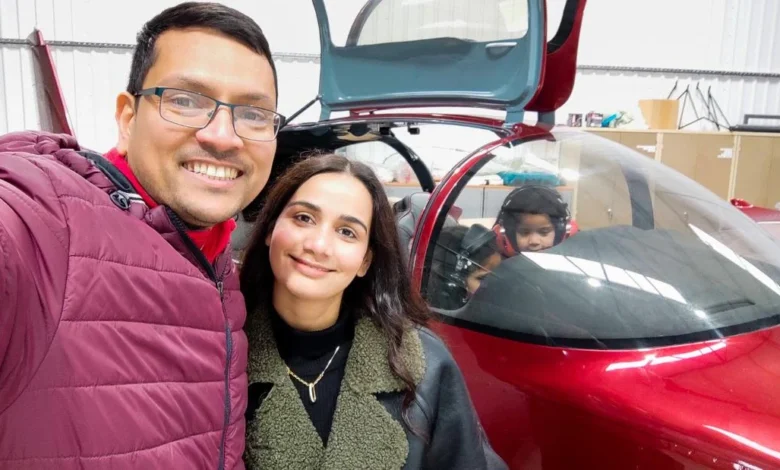
For most, the global lockdowns of 2020 were a period of stasis, marked by remote work and enforced domestic isolation. For Ashok Aliseril Thamarakshan, a mechanical engineer based in Essex, England, the pandemic became the catalyst for a monumental engineering undertaking: the construction of a four-seater, home-built aircraft from the ground up. What began as a personal quest for family mobility evolved into a testament to amateur aviation, sophisticated DIY engineering, and the enduring appeal of light aircraft ownership.
The Genesis of a High-Flying Ambition
Aliseril’s journey into the skies did not begin in a cockpit, but through the proximity of his residence to a UK airfield. Having lived near an aviation hub for over a decade, his interest in flight remained dormant until his wife, Abhilasha, gifted him a 30-minute flying experience for his birthday. The brief excursion to the Isle of Wight served as the turning point. Aliseril discovered that flight was not merely a mechanical wonder, but a tangible utility—a means of reclaiming time and geography.
By 2019, he had secured his private pilot’s license. However, the realities of modern family life soon clashed with the limitations of the light aviation market. Most available rental aircraft were aging two-seaters, ill-equipped for a family of four. When he explored the market for pre-owned four-seater planes, he found himself discouraged by the prospect of operating vintage models from the 1960s and 70s. For an engineer, the lack of intimate knowledge regarding the maintenance history and structural integrity of an older machine was a non-starter. He opted instead for a path less traveled: the construction of a modern kit aircraft.
Selecting the Platform: The Sling TSi
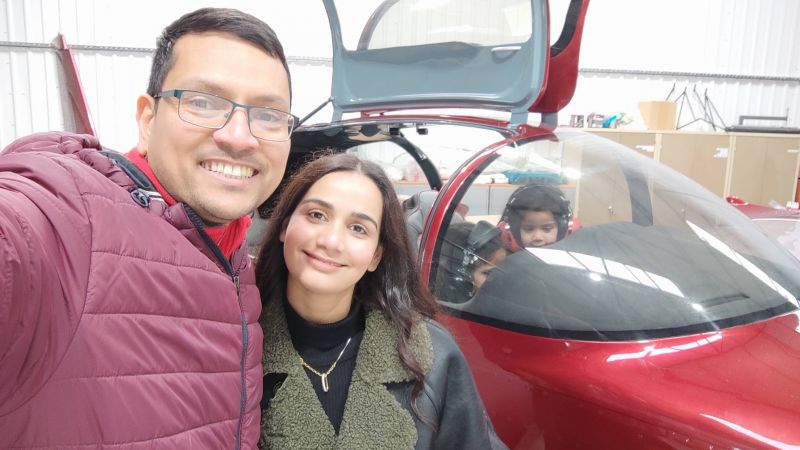
After exhaustive research, Aliseril identified the Sling TSi, a high-performance, four-seater kit aircraft manufactured by the South African firm Sling Aircraft. Known for its robust design, efficiency, and modern avionics, the TSi was engineered specifically for amateur assembly. In January 2020—just before the onset of international travel restrictions—he traveled to Johannesburg to conduct a test flight. Satisfied with the aircraft’s handling and capability, he placed an order for the kit. By the time the components arrived in the UK, the nation had descended into a strict Covid-19 lockdown, effectively grounding Aliseril’s original plan to enlist professional help from colleagues.
The Pandemic Project: Construction and Regulation
With his professional network sidelined by social distancing mandates, Aliseril converted his back garden into a makeshift aeronautical workshop. The project was not a solitary endeavor conducted in the dark; it was a rigorous, monitored process overseen by the Light Aircraft Association (LAA), a body that acts on behalf of the UK Civil Aviation Authority (CAA) to ensure the safety and airworthiness of home-built aircraft.
The construction process followed a strict regulatory framework. Every major milestone, from the assembly of the tail and wings to the complex integration of the fuselage, required inspection and sign-off from LAA representatives. Throughout the 18-month build, the aircraft underwent approximately 12 formal inspections. This oversight is critical in the world of amateur aviation, as "experimental" or "amateur-built" status is only granted once the regulator is satisfied that the aircraft meets all safety requirements.
The labor was intensive, often requiring the assistance of his family. His wife, Abhilasha, provided crucial support for tasks requiring two sets of hands, while his eldest daughter, Tara, assisted with the meticulous process of prepping the various aluminum components. The project reached its final stages in 2021, when Aliseril moved the partially completed frame to a hangar near Cambridge for the engine installation and final assembly.

The First Flight and Psychological Thresholds
In January 2022, the aircraft—christened G-Diya after his youngest daughter—was finally ready for its maiden voyage. For a builder, the first flight represents a profound psychological transition. As Aliseril noted, a build is referred to as a "project" until the moment it takes to the air; thereafter, it is classified as an aircraft.
The test flight was conducted by an experienced pilot to ensure the integrity of the design under stress. For Aliseril, standing on the tarmac, the 20-minute flight was a moment of intense anxiety and eventual relief. Subsequent test flights allowed him to personally pilot the machine, pushing it through maneuvers that demonstrated its structural capacity. Upon final approval and the issuance of a "Permit to Fly" in May 2022, the project was officially deemed airworthy.
Economic Viability and Collaborative Ownership
One of the most significant barriers to entry in private aviation is the cost of ownership, which includes hangar fees, insurance, maintenance, and the initial purchase price of the kit. The total cost for the G-Diya build amounted to approximately £180,000 ($203,000). To mitigate the financial burden, Aliseril adopted a model of shared ownership. By partnering with three other pilots, the financial responsibility is distributed, reducing the cost to the equivalent of an SUV.
This arrangement provides more than just financial relief; it fosters a community. Shared ownership ensures that the aircraft is utilized regularly, which is beneficial for the engine’s health, and provides a network of peers who share knowledge, maintenance duties, and flight experiences. Furthermore, the efficiency of the Rotax engine—consuming only 20 liters of unleaded fuel per hour—makes the cost of travel comparable to that of a conventional passenger vehicle, albeit with the speed and efficiency of aerial transit.

The Broader Impact: Freedom and Future Generations
Since its maiden flight, G-Diya has logged over 300 hours in the air. The Aliseril family has utilized the plane for numerous trips across the UK and into mainland Europe, including a memorable journey to Bergerac, France, and flights as far north as Norway. The aircraft has successfully bridged the gap between a hobbyist’s dream and a practical, reliable mode of transportation.
The success of the project has not gone unnoticed. Through their social media presence, the family has documented the utility and joy of their home-built aircraft, sparking interest among aviation enthusiasts and potential builders. Aliseril advocates for a shift in perspective regarding home-built aircraft, suggesting that with the right tools, detailed instructional manuals—which he likened to "Ikea-style" assembly guides—and a hands-on approach, building an aircraft is an attainable goal for many.
Implications for Amateur Aviation
The rise of high-quality kit aircraft like the Sling TSi, coupled with the success stories of builders like Aliseril, suggests a shift in the landscape of general aviation. As commercial travel becomes increasingly complex and standardized, the allure of personal, small-scale aviation is growing.
The regulatory framework provided by the LAA and the CAA serves as a robust safety net, allowing individuals to engage in sophisticated engineering projects without compromising public safety. However, the primary implication is one of accessibility. By demonstrating that an engineer can build a safe, efficient, and long-range aircraft in a residential setting, Aliseril has highlighted a path for future aviators to bypass the high entry costs of traditional aircraft ownership.

As the industry looks toward more fuel-efficient and technologically advanced light aircraft, the "do-it-yourself" model remains a vital component of the aviation ecosystem. It fosters a culture of deep technical understanding, encourages the growth of aviation communities, and offers a level of personal freedom that is increasingly rare in the modern age. Aliseril’s story stands as a testament to the fact that, even in a world of high-tech commercial giants, the spirit of individual ingenuity and the dream of flight remain as potent as ever.