NYCFC Maintains Business as Usual Amid Manchester City Financial Scandal and Stadium Construction Milestones

New York City Football Club (NYCFC) executives have firmly asserted that operations within the Major League Soccer (MLS) franchise remain entirely unaffected by the severe regulatory challenges facing its English Premier League sister club, Manchester City. Following a historic independent commission ruling last month that found Manchester City guilty of more than 100 breaches of financial regulations, questions immediately surfaced regarding potential collateral damage to the broader City Football Group (CFG) portfolio. However, during a media hard-hat tour of the club’s future home in Queens, NYCFC Chief Operating Officer Jennifer O’Sullivan moved quickly to dispel any notions of internal disruption, emphasizing that local operations, sponsorship agreements, and infrastructure development are proceeding precisely as planned.
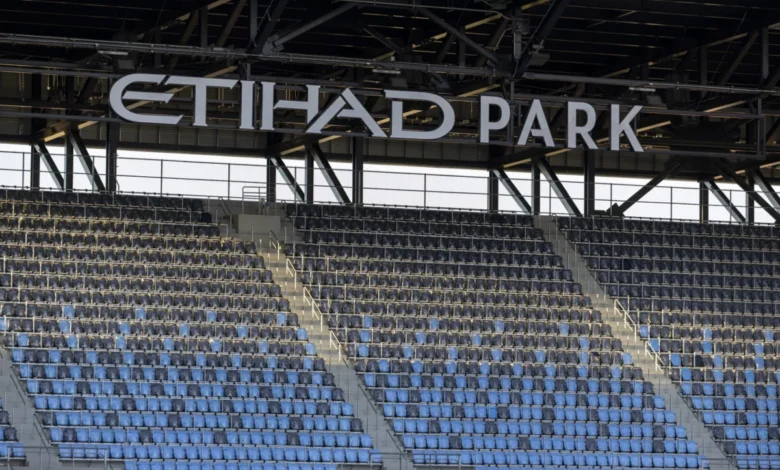
The reassurance from club leadership provides a stabilizing narrative for a franchise that is simultaneously managing a massive milestone in its organizational history: the construction and upcoming debut of its dedicated soccer-specific stadium, Etihad Park. As the club targets an opening match date of July 17, 2027, the intersection of international soccer governance, multi-club ownership models, and local real estate development has thrust NYCFC into a complex global spotlight.
Financial Misconduct and the Global Reach of City Football Group
The controversy stems from an exhaustive investigation conducted by an independent commission into Manchester City’s financial practices over a multi-year period. The charges, exceeding 100 counts, primarily involve the failure to provide accurate and up-to-date financial information, non-compliance with Premier League Profit and Sustainability Rules (PSR), and a lack of cooperation with league investigators regarding sponsorship revenues and managerial compensation.
Because Manchester City and NYCFC share a common parent organization—the Abu Dhabi-backed City Football Group, which oversees a vast network of professional soccer clubs across multiple continents—observers naturally questioned whether regulatory penalties handed down in English football could ripple across the Atlantic. Multi-club ownership models have become increasingly prevalent in modern sports economics, allowing conglomerates to share scouting networks, administrative resources, and commercial strategies. Yet, this interconnectedness also introduces systemic risk, where reputational damage or regulatory sanctions experienced by a flagship asset can theoretically threaten the stability or perception of subsidiary entities.
Despite these global complexities, NYCFC leadership has insisted that the operational firewall between the Major League Soccer franchise and its European counterpart remains robust. O’Sullivan’s public declarations underscore a strategy of compartmentalization, ensuring that local commercial partnerships and fan trust in the New York market are insulated from foreign legal and regulatory battles.
MLS Stance and Regulatory Independence
Any concerns regarding regulatory fallout in North America were formally put to rest by Major League Soccer Commissioner Don Garber. Speaking at the Front Office Sports “Tuned In” summit in Midtown Manhattan, Garber addressed the situation directly, making it clear that the league office has no intention of launching an investigation into NYCFC’s ownership group as a result of the proceedings in England.
Garber’s remarks highlighted the strict jurisdictional boundaries governing North American professional sports leagues. “MLS is looking at how owners act in accordance with our rules here in Major League Soccer,” Garber stated during the summit. He added a broader perspective on the nature of international sports investment: “We’re not in the business of looking at what our team owners do in other leagues, and frankly, I don’t think any league would view what other owners do when they have multiple investments throughout other sports.”

This hands-off approach aligns with established precedents in American sports governance, where leagues evaluate franchises based strictly on local compliance, financial transparency with domestic regulators, and adherence to single-entity league structures. By separating domestic oversight from international legal disputes, MLS has effectively shielded its franchises from the unpredictable turbulence of European soccer politics.
Progress at Etihad Park: A Transforming Timeline
While global headlines focus on governance and financial compliance in the UK, the most tangible narrative for NYCFC supporters in the Tri-State area remains the physical manifestation of their new home. For more than a decade since the club’s founding in 2013, NYCFC has played its home matches across various venues, primarily Yankee Stadium and Citi Field, often leading to scheduling conflicts and suboptimal pitch dimensions for soccer.
The realization of Etihad Park in the Willets Point neighborhood of Queens represents a monumental turning point. The stadium project, a cornerstone of a larger multi-phase redevelopment plan in the borough that includes affordable housing, a public school, and a hotel, has progressed steadily through regulatory approvals and construction phases.
During the recent media tour, O’Sullivan provided a definitive timeline for the remaining phases of the project. Construction crews are reportedly meeting every critical benchmark, keeping the venue on schedule for its grand opening on July 17, 2027. The stadium, designed to host soccer-specific events with intimate sightlines and modern amenities, will bear the name Etihad Park under a high-profile naming rights agreement. Questions regarding whether the Premier League scandal might jeopardize this vital commercial sponsorship were met with absolute confidence by club executives, who reiterated that the partnership remains strong and fully operational.
Economic and Strategic Implications for NYCFC
The resilience demonstrated by NYCFC leadership highlights the maturation of Major League Soccer clubs as independent economic entities. Even within a global network like City Football Group, individual franchises must maintain viable local business models, secure independent commercial revenue streams, and cultivate deep community roots to survive and thrive.
From a commercial perspective, the timing of the stadium opening is critical. Etihad Park is expected to drastically alter NYCFC’s revenue potential, shifting the club away from rental agreements at baseball stadiums and toward a vertically integrated revenue model encompassing ticket sales, premium hospitality, stadium-hosted entertainment events, and direct merchandise distribution. The stability of the club’s sponsorship portfolio, anchored by brands willing to associate with the new venue, suggests that corporate partners view the New York soccer market as a distinct, high-value asset insulated from overseas regulatory disputes.
Furthermore, the steadfast backing from both club executives and league leadership serves to reassure players, technical staff, and supporters. In professional sports, perception often influences performance; by projecting absolute operational calm, NYCFC has successfully neutralized potential distractions that could otherwise derail sporting ambitions on the pitch.
As the countdown to the July 2027 opening game continues, the organization’s focus remains squarely on roster construction, youth development through its academy system, and the structural completion of its historic new home. While the legal and financial chapters of the Manchester City investigation will continue to unfold in European courts and independent disciplinary panels, the day-to-day reality in New York remains resolutely focused on growth, construction, and the future of soccer in the five boroughs.