
The devastating tragedy that unfolded at Silver Rail Elementary School in Bend, Oregon, has once again thrust the United States into a painful and deeply polarized national debate over gun violence, school safety, and the limits of legislative reform. What began as a peaceful Thursday afternoon in the tight-knit Pacific Northwest community abruptly transformed into a horrific active-shooter scenario, leaving three children and one teacher dead, and critically injuring two others. The swift and decisive actions of an armed community member who intervened and killed the 16-year-old assailant ultimately prevented further bloodshed, according to local law enforcement. However, the ripple effects of the violence have immediately resonated far beyond Deschutes County, igniting renewed calls from high-ranking Democratic lawmakers for strict federal gun control measures while highlighting the enduring vulnerabilities of American educational institutions.
As federal investigators, local police departments, and forensic teams continue to piece together the harrowing details of the incident, the community of Bend is left grappling with profound grief. The attack underscores the terrifying reality that even communities removed from major metropolitan centers are not immune to the epidemic of mass shootings plaguing the nation. With educational facilities increasingly serving as flashpoints for systemic societal fractures, the Silver Rail Elementary tragedy has revived urgent questions concerning mental health intervention, firearms accessibility among minors, and the delicate balance between community self-defense and legislative regulation.
Chronology of Terror: How the Tragedy Unfolded
The sequence of events on Thursday, October 15, unfolded with terrifying speed, leaving little time for standard safety protocols before lives were irrevocably altered. According to Bend Police Chief Mike Krantz, the emergency response began precisely at 12:59 p.m. local time. The initial distress call originated not from inside the school, but from a motorist traveling near the campus who reported being targeted and fired upon multiple times by an individual wielding a long gun.
Within moments of the initial shots fired outside, dispatchers at the regional 9-center were overwhelmed by a wave of incoming calls reporting that an active shooter had breached the perimeter of Silver Rail Elementary School. The assailant, identified subsequently as a 16-year-old male, had forced his way into the locked facility. Investigators later confirmed that the teenager utilized a shotgun legally owned by his mother to carry out the assault.
Law enforcement response times were remarkably swift. Officers arrived at the school grounds within three minutes of the initial 911 dispatch. As police entered the building to neutralize the threat and secure the perimeter, they made a critical discovery: an armed bystander, whose identity has not been publicly released to protect their safety and privacy, had already confronted the teenage gunman. The community member discharged their firearm, striking and killing the suspect before he could inflict further casualties.

Police Chief Krantz and retired law enforcement experts, such as former FBI agent Jason Pack, have since emphasized that the intervention of the armed bystander likely averted a much higher death toll. Because the school was locked, the suspect’s mobility was momentarily constrained, but his access to classrooms inside presented an immediate and catastrophic threat that was cut short by the civilian intervention.
Casualties and Immediate Aftermath
The human cost of the Silver Rail Elementary shooting is immeasurable. Police confirmed that three children—ranging in age from early to late childhood—and one adult teacher lost their lives during the rampage. The victims included children aged 5, 8, and 11, representing the youngest and most vulnerable demographics of the student body. Additionally, two other individuals—a 7-year-old child and a 54-year-old teacher—sustained critical injuries and were rushed to regional medical centers, where teams of trauma surgeons fought to save their lives.
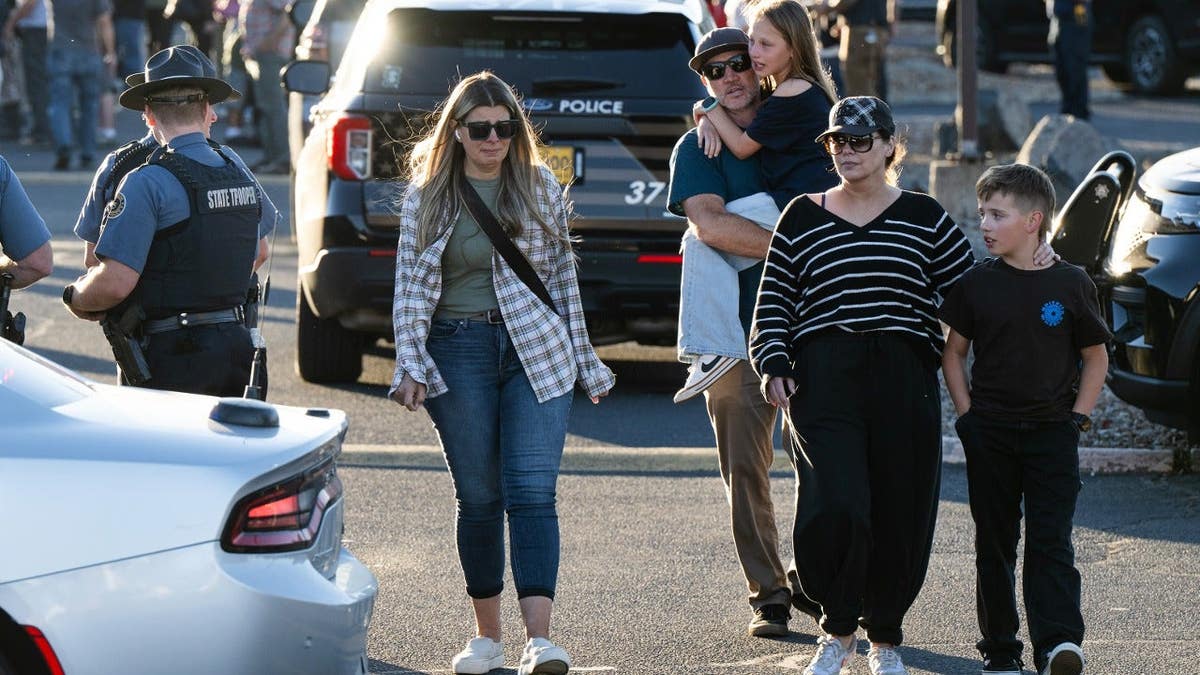
Silver Rail Elementary School, situated roughly 125 miles southeast of Portland, serves a diverse population of approximately 467 students spanning kindergarten through fifth grade. In the immediate wake of the shooting, chaos gave way to orderly, heartbreaking emergency protocols. Terrified students were evacuated and transported by school buses to a nearby designated church, which served as a family reunification center. There, anxious parents rushed to find their children, resulting in emotional reunions characterized by tears, tight embraces, and children clutching stuffed animals and comfort items brought from home.
In solidarity with the victims and to allow the community space to mourn, the Bend-La Pine school district took the swift decision to cancel all classes, athletic fixtures, and extracurricular activities across all 32 schools in its district for the following day. Makeshift memorials quickly began appearing outside the school gates, featuring floral arrangements, handwritten notes, and candles. By Thursday evening, hundreds of community members, local leaders, and grieving families gathered for a solemn candlelight vigil to honor the lives cut short and to seek solace in collective grief.
Political Fallout and Renewed Legislative Debates
As families bury their dead and the injured fight for recovery, the political landscape has predictably cleaved along familiar ideological lines, though the intensity of the debate has been ratcheted up by the nature of the event. The revelation that the 16-year-old shooter gained access to a family member’s firearm has supercharged arguments surrounding secure storage laws, parental liability, and federal firearms restrictions.
Oregon’s congressional delegation and state leadership were among the first to respond. Sen. Ron Wyden, who has represented Oregon in the United States Senate for nearly three decades, delivered one of the most pointed legislative demands following the shooting.

"The best way to honor these victims is to at long last pass common-sense gun laws that reduce the risks of more children, parents, teachers and staff forced to live in fear of similar nightmares for their schools," Wyden declared in a formal statement.
His sentiment was echoed by Rep. Suzanne Bonamici, D-Ore., who stressed the psychological toll modern school life is taking on families. "The epidemic of gun violence in schools across America must come to an end," Bonamici said. "No parent should have to wonder if their child will come home at the end of the day. Children deserve to feel safe—and be safe—in school."
Rep. Janelle Bynum, a Democrat representing Oregon’s 5th Congressional District—which encompasses Bend—attended the emotional evening vigil. Visibly shaken by the tragedy in her own backyard, Bynum delivered a passionate critique of legislative inaction during an interview with local NBC affiliate KTVZ 21.
"When are we going to step up and say enough of killing our babies? When are we going to say that we need safe schools, that we need to make sure that people who should not have firearms don’t have them? When are we going to stop making excuses? When are we going to practice that same bravery that that bystander had?" Bynum asked rhetorically.
While Oregon Democrats such as Sen. Jeff Merkley and Governor Tina Kotek issued statements focusing primarily on condolences and the societal scourge of violence without explicitly detailing new regulatory proposals immediately, federal lawmakers from other states felt no such hesitation.
Sen. Martin Heinrich of New Mexico argued that legislative half-measures enacted in the wake of previous tragedies—such as the federal Bipartisan Safer Communities Act passed after the Uvalde, Texas, elementary school massacre, which introduced enhanced background checks for buyers under 21—had proven insufficient. "Much more must be done. Not a single child should be lost to gun violence. Ever," Heinrich posted on social media.

Similarly, Sen. Elizabeth Warren of Massachusetts pointed to the frequency of modern American tragedies, noting that the Bend shooting marked one of dozens of similar incidents recorded within a single calendar year. "No family should ever have to suffer like this—and there have been over 50 school shootings just this year," Warren wrote. "Congress must do much more to prevent gun violence."
The Broader Context of School Security and Legal Battles
The tragedy in Bend occurs against a backdrop of intense legal and constitutional friction nationwide regarding the Second Amendment. Even as progressive lawmakers push for universal background checks, red-flag laws, and bans on specific categories of firearms, the judicial branch continues to scrutinize state-level gun restrictions. Just prior to the Oregon shooting, federal courts were weighing the constitutionality of various state bans on semiautomatic weapons, and the Department of Justice has actively engaged in legal challenges targeting restrictive firearm statutes in states like Virginia and California.
For gun rights advocates and opponents of sweeping federal gun control, events like the Silver Rail Elementary shooting elicit a complex mix of sorrow and strategic defense of the Second Amendment. Many conservative commentators and gun owners emphasize the role of the armed civilian bystander, arguing that the incident validates the premise that "good guys with guns" remain a critical deterrent when law enforcement seconds away from an active scene cannot physically be everywhere at once. They contend that the failure lies not in the legality of firearm ownership per se, but in issues of individual mental health breakdown, familial negligence regarding secure storage, and institutional security failures.
Conversely, public safety experts point out that relying on armed bystanders is an erratic and dangerous substitute for systematic prevention. Security analysts note that hardening schools with advanced access controls, visitor management systems, and armed resource officers can mitigate risk, but stopping active shooters before they breach school doors requires robust mental health screening, strict red-flag interventions, and stringent enforcement of safe gun storage laws to keep lethal weapons out of the hands of troubled minors.
Unanswered Questions and the Road Ahead
As the town of Bend attempts to transition from acute crisis response to long-term healing, investigators face a mountain of unanswered questions. Local police have stated that they have yet to determine whether the teenage gunman had any prior association with Silver Rail Elementary School, whether he had attended classes there during his younger years, or what specific grievances or psychological triggers motivated him to target an elementary school filled with children.
Furthermore, the legal fallout for the owner of the weapon—the suspect’s mother—remains to be seen. In an era where prosecutors are increasingly willing to hold parents criminally liable for failing to secure firearms utilized by their children in mass shootings—as seen in high-profile cases like the Oxford, Michigan, and Georgia high school shooting trials—investigators will closely examine whether criminal negligence charges are warranted.
For the students, teachers, and parents of the Bend-La Pine school district, the immediate future will be dedicated to grief counseling, trauma recovery, and structural safety reviews. Schools across the district are slated to implement phased reopening plans with heightened counseling resources and increased law enforcement presence to reassure families. Yet, the emotional scars left by the events of October 15 will endure indefinitely.
Ultimately, the tragedy at Silver Rail Elementary School serves as a grim and agonizing reminder of the deep divisions fracturing American society. It encapsulates the nation’s ongoing struggle to reconcile individual constitutional rights with the collective imperative to protect its youngest citizens. As politicians trade arguments over legislation and communities bury their dead, the fundamental question posed by local leaders in Bend hangs heavily over the entire nation: How many more children must perish before a sustainable consensus on school safety and gun violence prevention can be achieved?