Flávio Bolsonaro leads in Brazil presidential election sparking global climate and democracy concerns

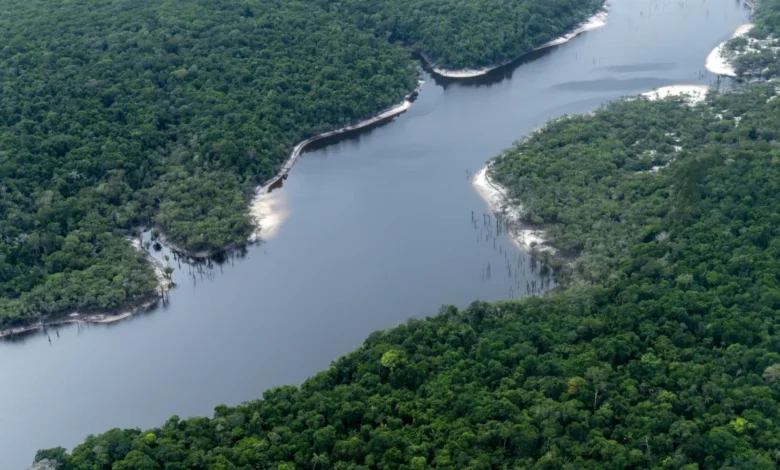
The first round of Brazil’s 2026 presidential election has concluded with a result that has sent shockwaves through international environmental circles and domestic political institutions. Flávio Bolsonaro, the eldest son of former president Jair Bolsonaro, secured 47 percent of the vote, narrowly outpacing the incumbent president, Luiz Inácio Lula da Silva, who garnered 44.2 percent. As Brazil moves toward an October 25 runoff, the outcome suggests a potential resurgence of the far-right movement that defined the nation’s governance from 2019 to 2023, raising urgent questions regarding the future of the Amazon rainforest, the stability of Brazil’s democratic institutions, and the country’s role in global climate policy.
A Political Dynasty and the Shadow of the Past
The ascent of Flávio Bolsonaro represents more than a standard electoral challenge; it is a calculated effort to restore the political legacy of his father, Jair Bolsonaro. The former president, currently serving a prison sentence following a high-profile conviction for plotting a military coup and attempting to dismantle democratic oversight, remains a central figure in his son’s campaign. Flávio has made no secret of his intentions, openly promising that should he attain the presidency, his first actions would include a pardon for his father and the appointment of the elder Bolsonaro to a senior role within his administration.
This potential restoration has alarmed observers who recall the administrative tenure of the elder Bolsonaro. During his four-year term, Brazil witnessed a 59.5 percent increase in deforestation rates within the Amazon basin—an ecological loss equivalent to the destruction of approximately two billion trees. The prospect of returning to a governance model that prioritized extractive industrial expansion over environmental stewardship has prompted outcry from global climate scientists and indigenous rights organizations.
Chronology of the 2026 Election Cycle
The path to the current political impasse began months ago as Brazil navigated a polarized climate. The timeline of the 2026 cycle highlights a consistent struggle between incumbent efforts to stabilize the economy and a growing populist surge.

- September 2026: Reports emerge indicating that while the Lula administration successfully reduced deforestation rates by nearly 50 percent, the achievement failed to translate into significant voter enthusiasm in rural and agricultural sectors, which have increasingly pivoted toward the Liberal Party.
- Early October 2026: The campaign reaches its peak with intense debates centered on inflation, public security, and the future of agricultural land use.
- October 4, 2026: The first round of voting occurs. Flávio Bolsonaro exceeds polling expectations, while pro-environment candidates, including veteran advocate Marina Silva, face significant electoral losses, signaling a shift in legislative power.
- October 5–7, 2026: International observers and environmental agencies analyze the results, noting the victory of numerous "Bolsonarists" in state-level races across the Amazon region.
- October 25, 2026: The scheduled date for the final runoff between Flávio Bolsonaro and Luiz Inácio Lula da Silva.
Economic Drivers and the Shift in Voter Sentiment
A critical factor in the current electoral landscape is the changing economic composition of the Brazilian electorate. Despite the Workers’ Party’s historical success in poverty alleviation and education, the rise of a new class of entrepreneurs and small-to-medium-scale farmers has altered the political calculus. These groups, often empowered by government subsidies provided during the previous decades, now perceive environmental regulations as an obstacle to further growth.
The expansion of Pentecostalism in Brazil has also played a pivotal role in the shift. As this religious movement gains ground, particularly in the Amazonian interior, its theological emphasis on individual prosperity and active engagement in worldly affairs has provided a cultural framework that often aligns with the Liberal Party’s pro-industry platform. This shift has distanced many voters from the traditional institutional influence of the Catholic Church, which has historically advocated for stronger environmental conservation.
The Legislative Landscape and Environmental Policy
The threat to the Amazon is compounded by the composition of the newly elected National Congress. The legislature is now heavily populated by lawmakers sympathetic to the "Bolsonarista" ideology, which advocates for the deregulation of protected lands. In the Amazonian state of Pará, for example, the election of Daniel Santos—a figure previously fined $275,000 for unauthorized deforestation—highlights the growing influence of actors who prioritize the expansion of mining, logging, and cattle ranching.
The implications for the Amazon are profound. Environmental analysts warn that with the potential loss of the Supreme Court as a check on legislative power, the legal barriers preventing land grabbers from encroaching on indigenous territories are becoming increasingly fragile. The "hate cabinet," a group allegedly led by Carlos Bolsonaro and linked to the dissemination of disinformation via encrypted messaging apps, remains a potent political instrument, having successfully targeted environmentalists and climate scientists as primary obstacles to the nation’s economic progress.
Global Geopolitical Implications
The Brazilian election does not exist in a vacuum; it is part of a broader, global trend of rising populist and nationalist movements that challenge international environmental agreements. The influence of "Trumpism"—a brand of politics characterized by skepticism toward climate science and a rejection of multilateral environmental oversight—has found a receptive audience in Brazil.

The Bolsonaro family’s overt admiration for this model, evidenced by their public support for US-led protectionist trade policies and their calls for external economic pressure on the current Brazilian government, suggests a deepening alignment with international actors who prioritize short-term resource extraction over long-term planetary health. As the United States and China continue their rivalry over global energy resources, Brazil’s political trajectory will likely determine whether it becomes a key partner in global climate mitigation or a frontier for unrestricted resource depletion.
Analysis: The Risk to Democratic Stability
The primary concern for political scientists remains the integrity of the Brazilian electoral system itself. The chaotic environment within the judiciary, coupled with the rhetoric surrounding the potential return of the former president, raises fears that a victory for Flávio Bolsonaro could result in a fundamental restructuring of state institutions.
For incumbent president Lula da Silva, the path to victory in the runoff is narrow. Historical data shows that no candidate who has led after the first round in a Brazilian presidential election has ever lost the final vote. Lula’s challenge is to capture the support of the millions of voters who abstained or cast blank ballots, as well as to pivot his messaging to address the concerns of a populace that is clearly weary of current economic stagnation.
However, the structural challenges are immense. Most of the minor candidates eliminated in the first round were from the right, and their voter base is expected to consolidate behind the Bolsonaro ticket. Should the current trend hold, the result will likely represent a permanent shift in the Brazilian power structure, effectively ending the period of environmental reform initiated by the current administration and signaling a period of significant uncertainty for both the Amazonian ecosystem and the endurance of Brazil’s democratic experiment.
Future Outlook
As the nation prepares for the final vote on October 25, the international community watches with bated breath. The Amazon rainforest, often cited as a critical "tipping point" for the global climate, remains the most vulnerable asset in this political struggle. If the current trajectory continues, the next four years may prove to be the most consequential in the history of the region. The question of whether Brazil will choose to prioritize the protection of its biodiversity and its democratic institutions, or opt for a path of accelerated extractivism, will ultimately be decided by the voters in the coming weeks. The outcome will resonate far beyond the borders of Brazil, serving as a bellwether for the survival of the global climate movement in an era of resurgent nationalism.
Related posts: