The Escalating Crisis of Black Lung Disease and the Battle for Miner Benefits in Appalachia

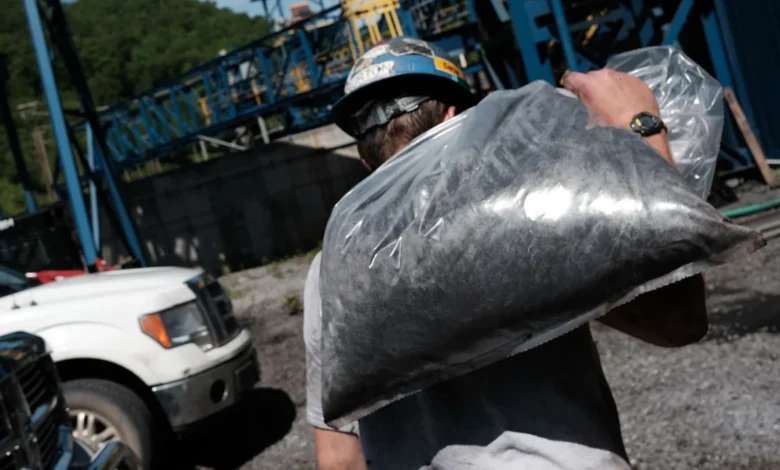
For 38 years, Josh Armes descended into the subterranean darkness of coal mines across West Virginia and Virginia, a grueling career that ultimately cost him the ability to breathe without the assistance of a machine. Now 74 and living in Grundy, Virginia, Armes represents the human face of a surging public health crisis. Diagnosed with coal workers’ pneumoconiosis (CWP)—the clinical term for black lung disease—he has spent the last four years tethered to an oxygen tank, his daily life defined by the relentless struggle for air and an equally exhausting legal battle against the very industry that once employed him.
The story of the Armes family is not an anomaly; it is a systemic symptom of a broken benefits pipeline. Since 2014, when a coal operator challenged his federal black lung benefits, Armes has been trapped in a state of administrative limbo. His case, marked by a decade of appeals and counter-appeals, highlights the structural vulnerabilities that leave aging miners impoverished and gasping for air while they fight to secure the medical compensation promised to them by the federal government.
A Half-Century of Declining Health
The federal black lung benefits program was established in 1969, an era when the toll of mining on human physiology was finally being forced into the national consciousness. The program was designed to provide monetary compensation and medical coverage to miners permanently disabled by the inhalation of coal dust. However, data from the last decade reveals that the promise of the 1969 act is increasingly failing to materialize for the people who need it most.
Recent findings published in the American Journal of Respiratory and Critical Care Medicine paint a grim picture: black lung disease is currently at its highest prevalence in nearly 50 years. Among veteran underground coal miners in central Appalachia, the rate of the disease has surged to 32.5 percent. This resurgence is not merely a result of older miners finally succumbing to decades-old damage; it is a modern, aggressive form of the disease. Modern mining techniques, which often require cutting through silica-rich rock to reach thinner coal seams, have introduced higher concentrations of crystalline silica dust into the air. This silica is significantly more toxic than coal dust alone, causing faster, more severe lung scarring.
The Anatomy of an Appeals Process
The path to obtaining benefits is a gauntlet of bureaucratic and financial obstacles. According to a Government Accountability Office (GAO) report released in May 2026, the complexity of the claims process is often weaponized by mine operators to stall or deny payouts. Between 2013 and 2024, approximately 40 percent of all approved claims by the Department of Labor were disputed, almost exclusively by the coal companies.
For families like the Armes’, the process is financially ruinous. Crystal Armes, Josh’s daughter, notes that the burden of proof rests entirely on the miner. To secure benefits, a claimant must navigate a labyrinthine process that requires out-of-pocket payments for specialized medical testing, the retention of expert legal counsel, and the stamina to withstand years of litigation.
The GAO report suggests that this is a feature, not a bug, of the current system. Miners interviewed for the report frequently expressed the belief that mine operators are engaged in a "war of attrition," waiting for applicants to die or run out of resources before their claims can be finalized. The statistics support this sentiment: the median length of an appealed claim is three years, and among 53,000 cases closed between 2013 and 2024, at least 11 took more than a decade to resolve. In 390 instances, miners who were initially approved for benefits had their awards revoked following an appeal, often leaving them legally obligated to pay back benefits they had already spent on medical necessities.
Regulatory Deadlock and the Silica Rule
The legislative and regulatory environment surrounding miner safety has become a focal point of intense political conflict. In April 2024, a landmark federal rule aimed at curbing silica dust exposure was passed, promising to mandate engineering and ventilation controls in mines. However, the implementation of this rule has been effectively frozen.
Congressional Republicans blocked funding for the rule in June 2024, and the Mine Safety and Health Administration (MSHA) under the current administration has indicated a reluctance to enforce it. The agency has cited "pending judicial review" as the rationale for an indefinite delay, a move that critics describe as a cynical maneuver to avoid corporate regulation.
Rebecca Shelton, director of policy for the Appalachian Citizens’ Law Center, has been a vocal critic of this inaction. "If the administration actually cared about protecting coal miners from black lung, we’d have a strong silica rule in place right now," she stated. "Instead, they are hiding behind a ridiculous legal process to delay action while miners get sick and die."
The United Mine Workers of America (UMWA) has been equally critical. Brian Sanson, president of UMWA International, emphasized that the delay in enforcing safety standards is a direct death sentence for thousands of workers. "Every day that federal regulators drag their feet and sit on this rule, another working father, mother, husband, wife, sister, or brother contracts an incurable, fatal disease," Sanson said. "A company’s profit margin cannot take precedence over a miner’s right to draw a breath."
The Economic and Human Cost
The human toll is staggering: between 2020 and 2023, more than 1,700 miners died from black lung disease. While the economic argument for coal remains a staple of political discourse in the region, the hidden costs—borne by taxpayers and the families of the miners themselves—are rarely accounted for in those conversations.
When asked for comment, the White House directed inquiries to the Department of Labor. A spokesperson for the MSHA stated that the agency continues to "vigorously enforce the permissible exposure limit of 100 micrograms per cubic meter" while awaiting the resolution of pending litigation. Critics argue that this limit is woefully outdated and insufficient to protect miners from the high-silica environments common in modern, thin-seam mining.
For the Armes family, the macro-level policy debates are secondary to the daily struggle of living with a progressive, incurable disease. Crystal Armes summarizes the collective frustration felt by many in mining communities: "We’re hardworking, everyday Americans who go to work every day, pay our taxes, try to do the right thing, and then, we can’t get what was promised us."
Implications for the Future
The current trajectory suggests that without intervention, the prevalence of black lung will continue to climb. As the industry faces economic pressure and the depletion of easily accessible coal, the reliance on more invasive mining methods will likely intensify, further increasing the concentration of toxic dust.
The legislative proposals introduced by a coalition of Democratic senators, including Mark Warner and John Fetterman, aim to close the gaps in the benefit system by simplifying the claims process and limiting the ability of operators to endlessly appeal settled awards. However, these bills face significant hurdles in a polarized Congress where the coal industry maintains considerable lobbying influence.
As the legal battles continue, the reality on the ground remains unchanged for thousands of retired miners. The "black lung" epidemic serves as a stark reminder that the true cost of energy production is often measured not in dollars per ton, but in the lost health and dignity of the workforce. For Josh Armes and thousands like him, the wait for justice is not just a legal inconvenience—it is a race against time, where the final, tragic outcome is far too often determined by the clock rather than the law.
Related posts: