More than a year into President Donald Trump’s sweeping federal immigration crackdown, a comprehensive new survey reveals that rural voters across the United States remain deeply divided over whether these aggressive policy measures have ultimately benefited or harmed their local communities. The findings from the Associated Press-KFF survey, conducted among more than 2,000 rural voters, illustrate a complex political and economic landscape where foundational support for the Make America Great Again (MAGA) movement clashes with the day-to-day realities of local labor markets, small-town demographics, and personal relationships.
According to the August survey, rural sentiment is split into thirds regarding the overall impact of the administration’s immigration enforcement. Approximately one-third of respondents reported that the policies have had a positive effect on their communities, while an equal share described the impact as negative. The remaining thirty percent indicated that the federal actions have had no noticeable local impact at all. This sharp division underscores the unique vulnerabilities and dependencies rural regions experience, highlighting a distinct tension between ideological loyalty to a populist agenda and the vital role immigrants play in sustaining rural economies.
Background Context and the Evolution of Federal Enforcement
The aggressive posture of the Trump administration’s second-term immigration policy traces its roots directly to the 2024 presidential campaign trail, where sweeping promises of mass deportations, enhanced border security, and rapid expulsions formed the cornerstone of the Republican platform. Following his inauguration, President Trump mobilized federal agencies to execute a multi-pronged enforcement strategy, moving swiftly to target undocumented individuals across both urban centers and rural enclaves.
Historically, rural America has experienced decades of demographic decline, characterized by the outward migration of young adults seeking educational and professional opportunities in metropolitan areas. For many small towns, immigrants—both documented and undocumented—have served as an essential demographic and economic lifeline. They fill critical labor shortages in agriculture, manufacturing, healthcare, and service industries, effectively preventing local school districts, healthcare facilities, and small businesses from closing down entirely.
Despite these economic contributions, the political appeal of strict immigration enforcement remains potent among rural conservatives. President Trump’s emphasis on national sovereignty, border integrity, and the rule of law resonated deeply with rural voters seeking systemic change. However, the operational reality of mass deportations—encompassing not only hardened criminals but also long-term community members, family breadwinners, and seasonal agricultural workers—has initiated a painful reckoning within various rural communities.
Personal Stories: The Human Toll and Political Backlash
The friction between broad federal mandates and local human impact is vividly illustrated by individual stories of rural residents who are grappling with the consequences of the crackdown.
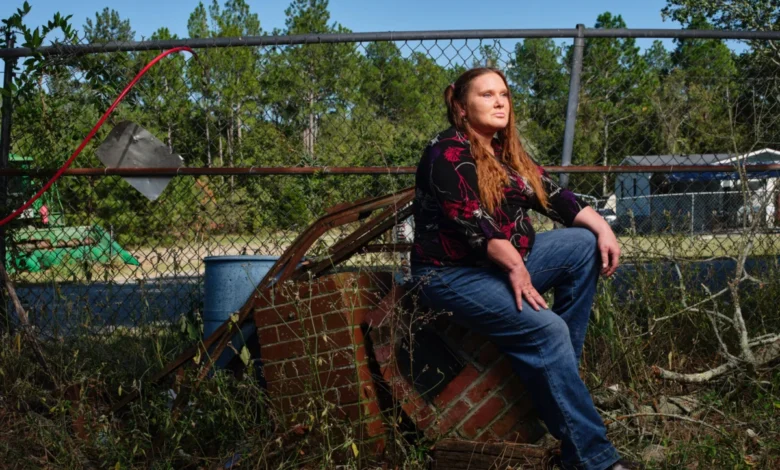
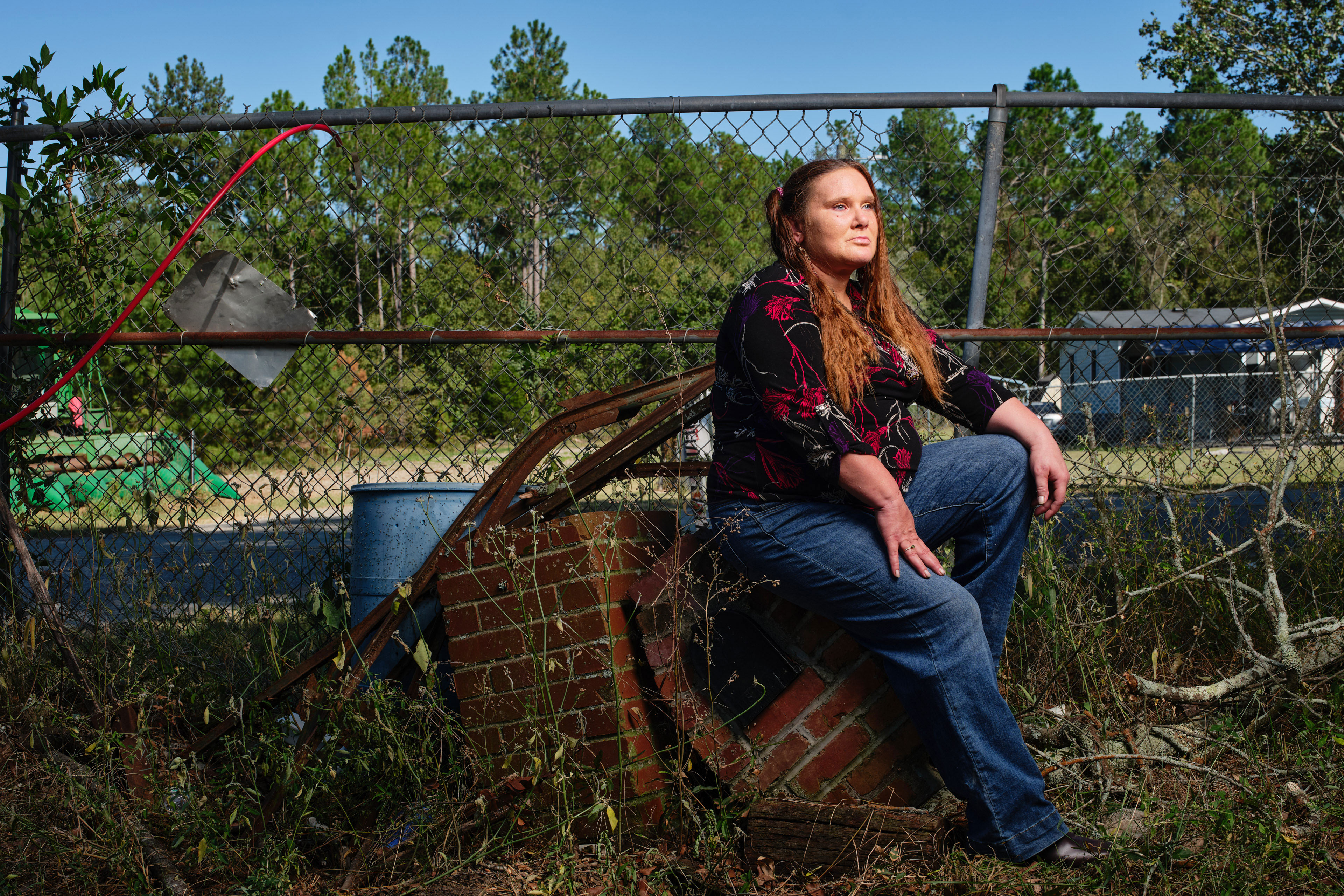
Laura Leigh Taylor, a 37-year-old farmer residing in Smithville, Georgia—a small community of roughly 600 residents—voted for Donald Trump in the 2024 presidential election. Like many of her neighbors, Taylor supported the broader conservative platform, but she now openly disapproves of the expansive scope of the administration’s immigration sweep. Her disillusionment crystallized after a friend’s hardworking father, a pillar of their local network who had no criminal record, was swept up and deported.
"I understand getting rid of the rapists and the murderers," Taylor reflected. "लेकिन all the people that fell in between, that really weren’t doing nothing but taking care of their family, they got torn from their families."
This firsthand experience has prompted Taylor to reconsider her political alignment entirely. Looking ahead to the upcoming midterm elections, she plans to cast her ballot for Democratic Senator Jon Ossoff. She noted that the Democratic campaign has been more vocal about the human cost of families being uprooted by federal enforcement. "Just because of that simple fact, I’m going to go with him," she stated.
A similar sentiment echoes in Racine, Ohio, where 56-year-old Jeff Miller, a Republican hydro blaster and vacuum technician, has generally supported the administration’s overarching economic and regulatory agenda. However, Miller faced personal turmoil when a close friend and exemplary worker was deported after a work permit expired. While Miller maintains that the country is heading in the right direction, he advocates for a less aggressive approach or specific exemptions for model workers. "There’s kind of an up-and-down thing because I lost a really good friend over that," Miller noted.
Albert Martinez, a 70-year-old Army veteran and Democrat living in San Diego, Texas, who previously cast a ballot for Trump in 2016, expressed profound dismay over the current trajectory of federal enforcement. While supporting the removal of violent criminals, Martinez argued that the administration has "gone amok" by targeting innocent members of the workforce. "They started doing everybody across the board," Martinez said, highlighting the removal of construction workers, restaurant staff, hotel employees, and taxpayers. "Innocent kids and women… It’s insane."
Economic Realities and the Agricultural Dependency
The survey data underscores a profound paradox within rural America: while voters support strict border enforcement, they simultaneously recognize the indispensable contributions of immigrants to local economic stability.
Roughly 70% of rural voters view legal immigrants as "very" or "somewhat" important to their local economies, with nearly identical figures reported for temporary and seasonal agricultural workers. Hundreds of thousands of seasonal laborers arrive in the United States annually under H-2A visas, predominantly originating from Mexico, to sustain crop production and harvesting. Rural voters with direct ties to farming and agribusiness are overwhelmingly more likely to emphasize the critical necessity of these temporary workers.
Shannon Monnat, director of the Center for Policy Research at Syracuse University and president of the Rural Sociological Society, emphasized that immigration has functioned as a vital demographic buffer for rural regions facing persistent population loss. "For a lot of small towns, immigrants are the reason the school and hospital stayed open and the county didn’t shrink," Monnat explained.
Even regarding undocumented immigrants, the economic calculus is nuanced. Although rural voters are far less likely to view unauthorized immigrants as beneficial, 45% still acknowledge that they maintain at least some level of importance within local commercial ecosystems.
Healthcare Burdens and Expert Analysis
The debate over immigration frequently intersects with discussions surrounding the allocation of public resources, particularly healthcare infrastructure in rural areas.
John Thomas, a 55-year-old resident of Liberty, Kentucky, who recently secured disability benefits following a severe back injury sustained in 2008, voiced strong support for Trump’s deportation policies. Thomas contends that undocumented immigrants place an undue financial strain on the healthcare system, arguing that administrative regulation is necessary to safeguard resources for native-born Americans. "They’ve been taking from everybody," Thomas asserted. "People that really need this stuff can’t get it because of them."
However, public health and economic experts challenge this perception. David Grabowski, a professor of healthcare policy at Harvard Medical School, pointed out that empirical research consistently demonstrates that immigrants utilize less healthcare services on average than native-born Americans. Furthermore, many immigrants actively contribute to the tax base and comprise a significant share of the domestic healthcare workforce. "It is hard to argue that they are placing an undue burden on the system," Grabowski noted.
MAGA Base Solidarity and Ideological Divide
Despite localized concerns and personal frustrations voiced by some citizens, President Trump retains fierce, unyielding backing from his core rural constituency: Republicans who identify with the MAGA movement.
The survey indicates that approximately 40% of rural voters identify as MAGA Republicans, compared to about 10% who identify as traditional Republicans without the MAGA designation. Among rural MAGA Republicans, roughly two-thirds report that the administration’s immigration policies have exerted a direct positive impact on their communities. Furthermore, about half of this demographic believes that the federal government has "not gone far enough" in executing deportations, while the remaining half considers the current pace "about right." This core group is roughly twice as likely as non-MAGA rural Republicans to perceive immediate local benefits from the federal crackdown.
Katherine Reed, a 27-year-old Republican and MAGA supporter living in Mount Pleasant, Texas, expressed strong satisfaction with the administration’s actions. While acknowledging that her local community has historically experienced low crime rates, Reed believes that national enforcement measures have successfully enhanced overall safety across the United States. "It’s made life for people a lot safer," Reed said, emphasizing her belief in the legal process. "I want really amazing people to become Americans. That’s the whole point of America."
Political Implications for the Midterms
As the nation approaches midterm elections, immigration remains a prominent topic of discussion, though it competes with other pressing kitchen-table issues. Approximately three-quarters of rural voters deem it "extremely" or "very" important for candidates to address immigration, trailing behind concerns over the cost of living, healthcare expenses, and government program oversight.
At the same time, rural voters display a distinct threshold regarding federal overreach. Only about 40% of rural respondents believe the Trump administration has "gone too far" in restricting legal immigration or executing unauthorized deportations. This figure stands notably lower than the 55% recorded among the general U.S. adult population in a parallel September AP-NORC poll, signaling that rural communities retain a higher tolerance for stringent federal enforcement measures despite the localized economic friction and human dilemmas exposed by the crackdown.
About the Survey
The KFF-AP Rural Voters Survey was conducted online and via telephone between August 12 and August 24, surveying 2,241 registered voters residing in rural areas across the United States. Rural areas were defined using codes 5 through 10 of the U.S. Department of Agriculture’s 2020 Rural-Urban Commuting Area classifications. The methodology utilized a combination of the probability-based SSRS Opinion Panel and a registration-based sample sourced from the L2 voter file. The overall survey results carry a margin of sampling error of plus or minus 3 percentage points, accounting for design effects and weighting adjustments, with wider margins applicable to specific sub-group analyses. The research was jointly designed, executed, and analyzed by KFF researchers in collaboration with The Associated Press.