Colorado Housing Development Serves as Testing Ground for Mass-Market Geothermal Heating and Cooling


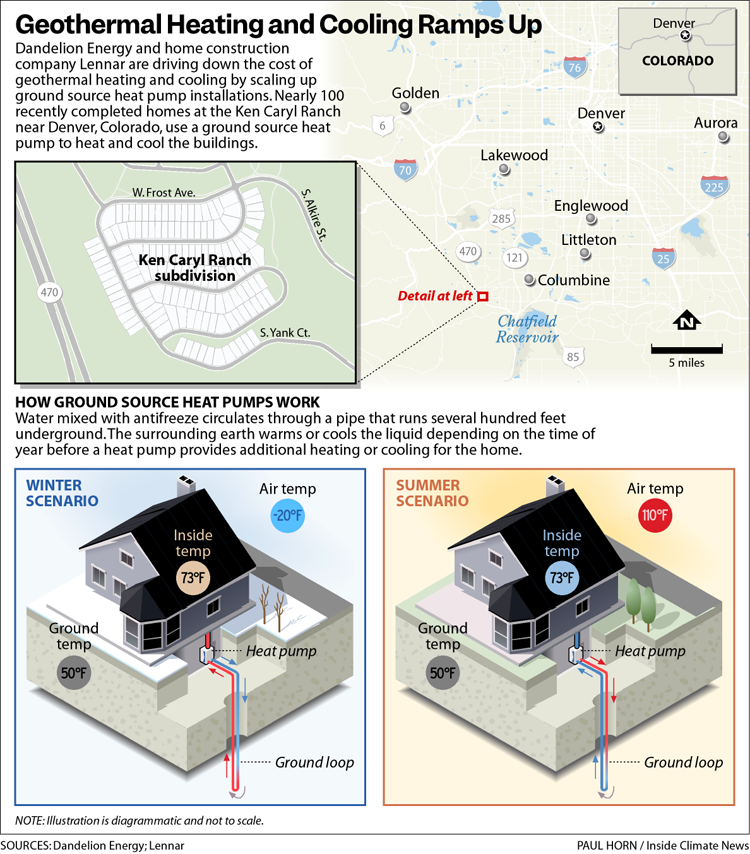
A residential housing development situated at the foot of Colorado’s Front Range is currently functioning as the proving ground for an innovative corporate partnership that could radically reshape home climate control throughout the United States. Dandelion Energy, a geothermal technology startup that spun out of Alphabet’s experimental research incubator X, has joined forces with Lennar, one of the nation’s largest volume homebuilders, to complete the construction of nearly 100 homes outfitted with advanced ground-source heat pump systems.
This project, located within the Ken Caryl Ranch development in Littleton, Colorado, represents a significant departure from traditional building practices. Instead of relying on standard natural gas infrastructure or conventional air-source heat pumps, these residences draw upon the earth’s stable subterranean temperatures to provide highly efficient climate conditioning. By streamlining installation methods and shifting geothermal technology away from custom, luxury construction toward large-scale suburban developments, the initiative aims to slash installation costs and drastically reduce the carbon footprint associated with residential energy use.
The collaboration comes at a critical juncture for domestic energy policy and municipal climate targets. As state and federal regulators push for aggressive decarbonization across the building sector, utilities and developers are actively searching for solutions that can electrify communities without overwhelming the power grid during extreme weather events. The success of the Littleton project points toward a potential blueprint for mainstreaming geothermal energy across the American housing market.
Mechanics and Innovation of Modern Ground-Source Systems
Ground-source heat pumps function by leveraging the constant temperatures found just beneath the Earth’s surface, which typically hover around 50 degrees Fahrenheit year-round in the Denver area. In a standard installation, a series of closed-loop polyethylene pipes are inserted into vertical boreholes drilled several hundred feet deep. Water or a water-glycol mixture is circulated through these pipes, absorbing thermal energy from the earth during the winter months to heat the home, or transferring excess indoor heat back into the ground during the summer to provide cooling.
While the fundamental thermodynamic principles of geothermal energy are well-established, widespread adoption has historically been hindered by prohibitive upfront capital expenditures. Historically treated as a bespoke, high-end amenity for custom-built luxury estates, a typical ground-source installation requires meticulous engineering and expensive drilling operations that can easily exceed $10,000 for the borehole work alone, with total system costs frequently climbing to $25,000 or more per single-family residence.
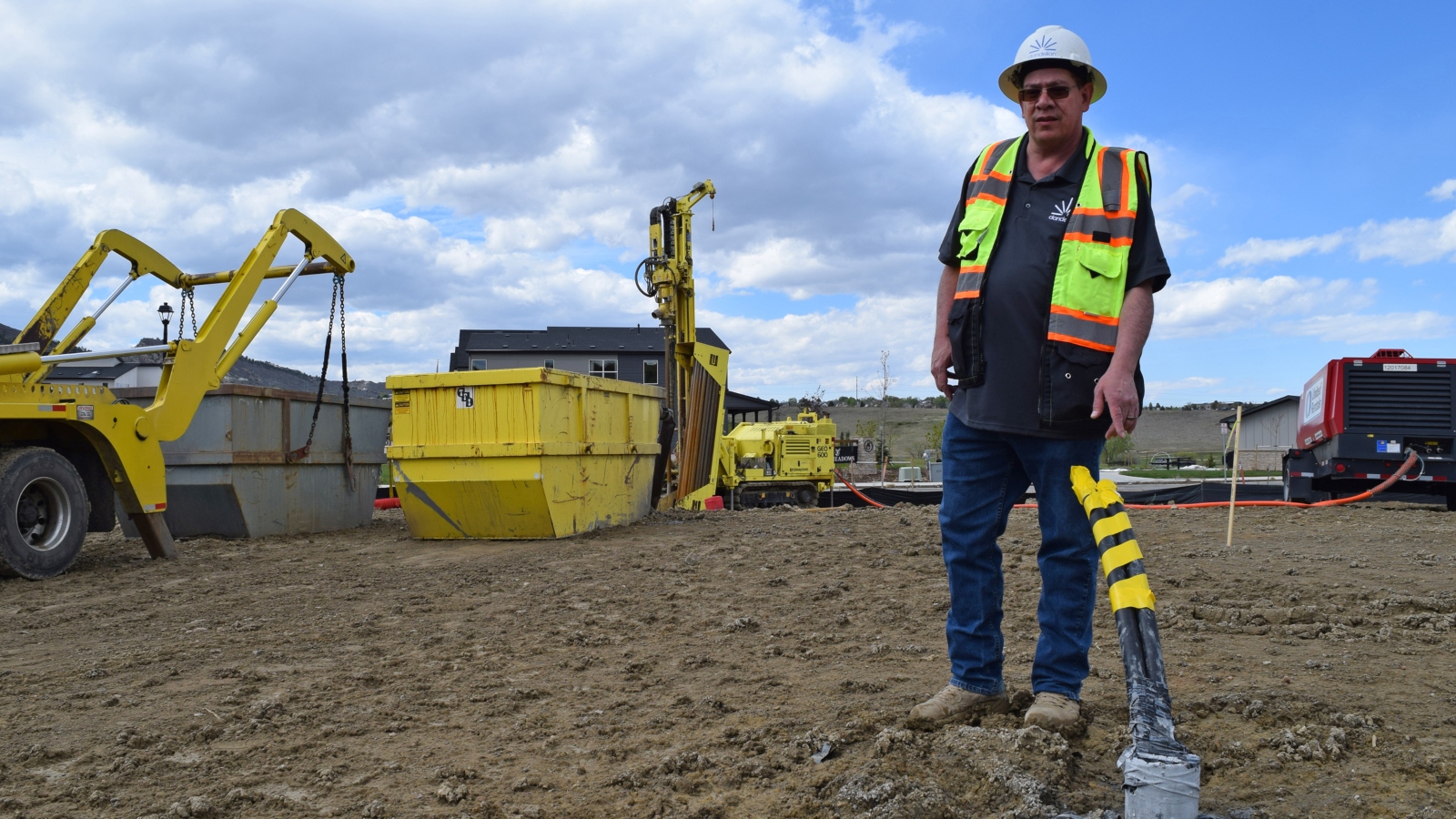
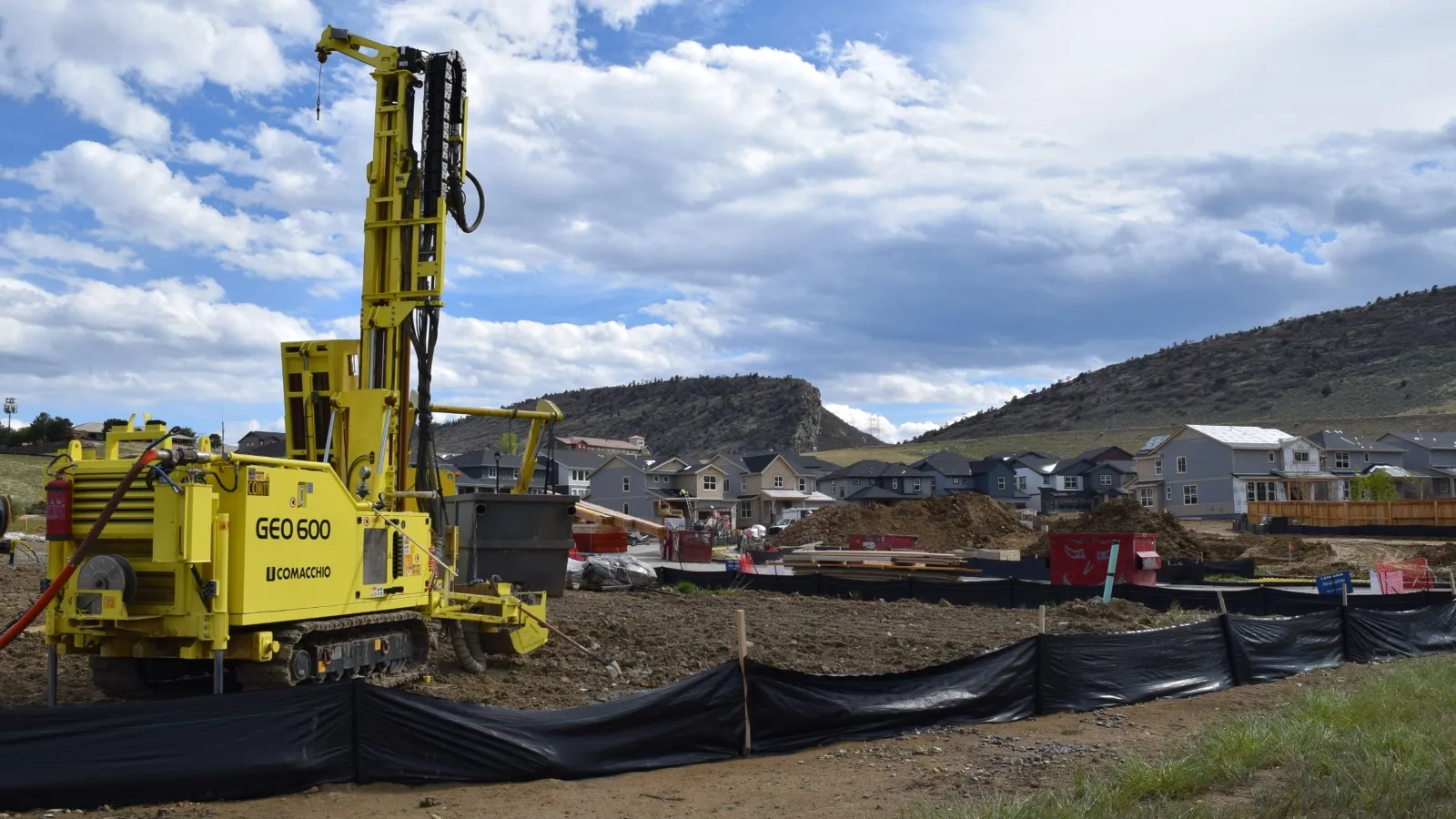
Dandelion Energy has sought to overcome these economic barriers by reimagining the logistics of installation. Working in tandem with Lennar at Ken Caryl Ranch, Dandelion deployed lightweight, mobile drilling rigs designed to navigate rapidly from lot to lot across a sprawling subdivision. By performing the drilling and pipe insertion phases en masse before the home foundations are poured, the startup’s operational crews can complete boreholes for one or more homes per single working day. This high-volume approach eliminates the massive logistical overhead and transit downtime traditionally associated with moving heavy machinery to isolated, single-building construction sites.
Furthermore, integrating the geothermal infrastructure at the master-planning stage removes the need for individual building redesigns and avoids the expensive retrofits often required when trying to adapt existing HVAC systems to renewable thermal energy. The resulting infrastructure seamlessly feeds into a basement-mounted heat pump, creating a unified climate control system tailored specifically for new suburban tract housing.
Performance Metrics and Grid Reliability Advantages
The operational efficiency of ground-source heat pumps offers distinct advantages over prevailing residential heating and cooling technologies, particularly during extreme meteorological events. According to Dandelion Energy CEO and Chairman Dan Yates, the system developed for the Lennar partnership operates with exceptional efficiency, consuming significantly less electricity than even top-tier air-source heat pumps.
This efficiency differential becomes especially pronounced during severe winter cold snaps. When outdoor ambient temperatures plummet, air-source heat pumps must work exponentially harder to extract heat from freezing outside air, leading to a sharp surge in household electricity consumption. In contrast, because ground-source systems draw heat from the thermally stable subterranean environment, their energy draw remains relatively constant regardless of surface weather conditions. During peak winter heating demand periods, Dandelion’s subterranean systems consume approximately one-quarter of the electricity required by standard air-source heat pumps.

Industry experts note that this characteristic addresses a major bottleneck in the transition toward all-electric housing. While electric heat pumps are vital for reducing direct fossil fuel combustion in homes, a sudden, widespread adoption of air-source units can severely strain regional power grids during winter polar vortex events. By simultaneously electrifying homes and flattening peak electricity demand, ground-source heat pumps offer a dual benefit that utility planners have long sought.
These technical findings align with broader federal analyses. A comprehensive 2025 report published by the U.S. Department of Energy (DOE) projected that if ground-source heat pump adoption scales to 7 million American households by 2035, the resulting reduction in winter peak energy demand would exceed 40 gigawatts nationwide. Such a reduction translates into an estimated $4 billion in annual savings in systemic electric grid operational and capacity costs.
Scaling Up: The Roadmap for National Expansion
The completion of the nearly 100 homes at Ken Caryl Ranch represents Phase One of a much larger strategic roadmap. The project forms a foundational component of a broader multi-year initiative launched by Dandelion and Lennar in 2025, which aims to deploy geothermal heating and cooling systems across more than 1,500 new homes throughout Colorado over a two-year timeframe. Beyond the Centennial State, Dandelion’s corporate trajectory targets an ambitious national scale-up, with aspirations to supply geothermal infrastructure to 10,000 homes annually in the coming years.
Despite the rapid momentum of geothermal startups, ground-source systems still account for a minor percentage of total residential installations in the United States. Data compiled by BloombergNEF indicates that approximately 3.6 million air-source heat pumps were sold nationwide last year, outpacing traditional natural gas furnace sales for the fourth consecutive year. Meanwhile, the total national inventory of homes equipped with ground-source heat pumps stands at slightly over 1 million, with annual new installations hovering around the 100,000 mark.
However, recent academic research suggests that the physical and economic barriers limiting geothermal adoption are shrinking. A study published in the journal iScience evaluated national weather patterns, regional energy tariffs, geological subsurface conditions, and financial incentives across the continental United States. The research team concluded that ground-source heat pumps are technically viable everywhere and possess commercial economic potential across all 50 states.
"It is technically possible everywhere, and there is economic potential across all states," stated Juliet Simpson, a former research engineer at the National Laboratory of the Rockies and lead author of the iScience study.
Despite widespread potential, practical hurdles remain. Juliet Simpson and other industry observers note that physical space constraints in densely populated urban centers, complex local permitting frameworks, and high initial equipment costs continue to challenge widespread deployment. Overcoming these barriers requires a coordinated alignment of private-sector cost-reduction strategies, supportive public policies, and utility-driven financial incentives.
Policy Support, Utility Integration, and Economic Tailwinds
In Colorado and a growing number of other jurisdictions, state policies and utility programs are actively smoothing the financial runway for residential geothermal adoption. Xcel Energy, the largest gas and electric utility provider in Colorado, operates an energy efficiency incentive program designed to offset the capital expenses associated with sustainable building practices. Under this initiative, the utility provides approximately $25,000 per home for new construction projects that integrate high-efficiency ground-source heat pumps.
For major residential subdivisions featuring hundreds of homes, these utility contributions translate into seven-figure financial rebates for developers. These programs serve a dual purpose for utility providers: they assist Xcel in meeting its internal corporate climate obligations while ensuring compliance with Colorado’s Clean Heat Standard. Enacted under state legislation (Senate Bill 21-264), the standard legally mandates a 22 percent reduction in greenhouse gas emissions from the building sector by 2030 compared to 2015 levels.
Additional legislative measures in Colorado further tilt the economic calculus against fossil fuel infrastructure. The state enforces a $2,000 direct tax credit for ground-source heat pump installations and maintains regulatory frameworks that require homebuilders to finance the installation of new natural gas distribution service lines—costs that developers can bypass entirely by designing all-electric, geothermal-equipped communities.
Will Toor, executive director of the Colorado Energy Office, emphasized that these synchronized policies are intentionally engineered to steer the housing market toward high-efficiency electric climate control while actively discouraging the expansion of long-term fossil fuel reliance in new neighborhoods.
The policy momentum is not restricted to Colorado. Other state governments and regional grid operators are rolling out targeted support frameworks. In Maryland, state energy officials established the Maryland Ground Source Heat Pump Advantage Pilot Program, complementing Dandelion Energy’s recent announcement to integrate the technology into 129 newly constructed homes in the state. Furthermore, commercial-scale ground-source heat pump initiatives are currently eligible for robust federal clean energy tax credits, which can cover 30 percent or more of total system installation expenses.
Jessica Silber-Byrne, senior manager of thermal energy networks for the Building Decarbonization Coalition, pointed out that the convergence of public subsidies, private innovation, and tightening municipal building codes has created an unprecedented economic environment for the sector.
"The economics just look better and better," Silber-Byrne said. "There is a combination of both incentives and market signals that suggest that this is about to really take off."
As the residential development at Ken Caryl Ranch transitions from a construction site into an established neighborhood, industry analysts will closely monitor the operational performance and resident satisfaction data. If Dandelion Energy and Lennar can successfully demonstrate that mass-market geothermal deployment is both financially viable for homebuilders and operationally superior for homeowners, the project could serve as the catalyst that finally propels subterranean heating and cooling out of the luxury niche and into the American mainstream.