A Crisis of Breath: The Decade-Long Legal Battle for Black Lung Benefits in Central Appalachia

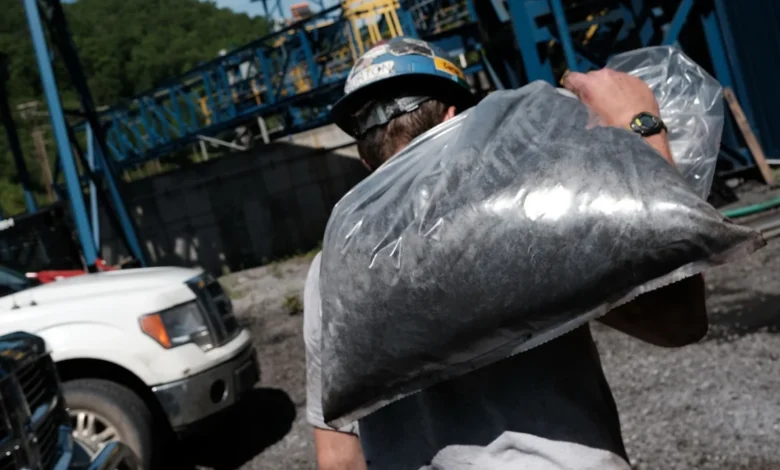
For thirty-eight years, Josh Armes navigated the subterranean passages of West Virginia and Virginia, extracting the coal that powered the nation’s electrical grid. Today, at 74, his world has shrunk to the radius of his oxygen tubing. Diagnosed with coal workers’ pneumoconiosis (CWP)—the progressive, incurable condition colloquially known as black lung disease—Armes is a living testament to the human cost of energy production. His story, however, is not merely one of physical decay; it is a harrowing case study in bureaucratic obstruction, as he and his family have spent twelve years trapped in a labyrinthine appeals process, fighting to maintain the federal benefits intended to sustain those broken by the industry.
The federal black lung benefits program, established under the Federal Coal Mine Health and Safety Act of 1969, was designed as a social contract between the state, the industry, and the workforce. It promised that miners disabled by the inhalation of coal mine dust would be afforded medical care and financial security. Yet, for thousands of families across the Appalachian coalfields, this promise has been eroded by a pattern of protracted litigation, where coal operators systematically challenge and delay claims, often until the claimant passes away.
The Anatomy of an Appeal
The struggle faced by the Armes family is emblematic of a broader, systemic failure. According to a comprehensive report released in May by the Government Accountability Office (GAO), between 2013 and 2024, approximately 40 percent of claims approved by the Department of Labor were subsequently disputed, largely by mine operators. For families like the Armes, the legal threshold for proving disability is steep, expensive, and emotionally draining.
"They can appeal it, get a different judge, and it’s stripped away from you," says Crystal Armes, Josh’s daughter, who has become an advocate in the wake of her father’s struggle. "They fight you at every single step of the way. They send you from one doctor to another, requiring constant testing and travel. It is a war of attrition."
The GAO report underscores the stark reality of this "attrition" strategy. Between 2013 and mid-August 2024, 390 miners who were initially granted benefits saw their awards revoked following an appeal. This forced these families into the precarious position of owing back-payments to the government, creating a climate of fear that discourages many from even initiating a claim. The median wait time for an appealed claim is now three years or longer, with some cases dragging on for more than a decade—a timeframe that, for many aging miners, exceeds their life expectancy.
A Public Health Emergency Reborn
The surge in black lung cases marks a grim milestone for the mining industry. Data published last month in the American Journal of Respiratory and Critical Care Medicine reveals that the prevalence of CWP among veteran underground coal miners in central Appalachia has reached 32.5 percent, the highest rate documented since 1978.
Medical experts point to a specific, identifiable culprit: the nature of the dust itself. As the most accessible, thicker coal seams have been depleted, miners are now forced to cut through harder rock surrounding the coal, which is rich in silica. When pulverized, this rock releases silica dust, which is significantly more toxic and fibrogenic than coal dust alone. This "silica-heavy" environment causes rapid, aggressive lung scarring, leading to the development of complicated pneumoconiosis—the most severe form of the disease—at a much younger age than in previous generations.
Between 2020 and 2023, federal records indicate that more than 1,700 coal miners succumbed to black lung-related illnesses. The irony, according to labor advocates, is that the technology to prevent this exposure exists, yet the regulatory framework required to implement it has been stalled by political maneuvering.
The Regulatory Impasse
In April 2024, the federal government moved to finalize a new, more stringent silica dust rule aimed at protecting miners. However, the implementation of this standard has been effectively neutralized. The current administration has signaled that enforcement of the rule is "indefinitely delayed" pending judicial review, a move described by critics as a procedural smoke screen.
The Appalachian Citizens’ Law Center has been a vocal critic of this delay. Rebecca Shelton, the organization’s director of policy, argues that the administration’s focus on legal process over health standards is a deliberate choice. "If the administration actually cared about protecting coal miners from black lung, we would have a strong silica rule in place right now," Shelton stated. "Instead, they are hiding behind a ridiculous legal process to delay action while miners get sick and die."
The United Mine Workers of America (UMWA) has similarly demanded the immediate unfreezing of the rule. Brian Sanson, president of the UMWA, issued a stark warning: "A company’s profit margin cannot take precedence over a miner’s right to draw a breath. Every day that federal regulators drag their feet, another working father, mother, husband, wife, sister, or brother contracts an incurable, fatal disease."
Official Stance and Accountability
When queried about the status of the rule and the ongoing delays, representatives for the Mine Safety and Health Administration (MSHA) maintained a rigid, legalistic stance. In an email statement, an agency spokesperson noted, "Until pending litigation and limited rulemaking on respirable crystalline silica are resolved, MSHA continues to vigorously enforce the permissible exposure limit of 100 micrograms per cubic meter."
Industry proponents often argue that the cost of compliance with stricter silica standards—which include engineering controls, improved ventilation, and mandatory air monitoring—would impose a significant financial burden on an already struggling industry. However, labor advocates contend that the true cost is currently being paid by the miners themselves, in the form of medical bills, lost wages, and shortened lives.
The Broader Socioeconomic Implications
The implications of this crisis extend far beyond the individual health outcomes of miners in Virginia and West Virginia. It raises fundamental questions about the role of federal oversight in industries where economic output is prioritized over labor safety. The "black lung crisis" is, in many ways, a microcosm of the tension between industrial sustainability and public health.
The financial burden of the current system is not solely borne by the miners. Because coal operators frequently contest claims, the burden often shifts to the Black Lung Disability Trust Fund, which is financed by an excise tax on coal. If companies successfully avoid paying the medical costs of their employees, the public trust is further strained, potentially leading to future funding deficits.
Furthermore, the cycle of poverty created by the disease exacerbates the economic fragility of coal-dependent regions. When a primary breadwinner is forced to spend a decade fighting for benefits, the entire family unit suffers. As Crystal Armes noted, the expectation that a family must navigate high-level litigation while dealing with a terminal diagnosis is fundamentally unjust. "We’re hardworking, everyday Americans who go to work every day, pay our taxes, and try to do the right thing," she said. "And then, we can’t get what was promised to us."
Conclusion: A Looming Legacy
The resurgence of black lung disease is not a historical accident; it is a direct consequence of mining deeper, more difficult seams without adequate updated protections. As the legal battles continue to stall and the death toll rises, the debate over silica dust regulation remains a central point of contention in American labor policy.
For families like the Armes, the legislative and legal debates are abstractions; their reality is defined by the hiss of an oxygen tank and the wait for a letter from the Department of Labor. As of late 2026, there is little indication that the stalemate will break. The question remains whether the government will prioritize the long-term health of its workforce or continue to allow the current, slow-moving administrative disaster to persist. For thousands of miners, time is a luxury they no longer possess, and the air they breathe—the very thing they sacrificed for their livelihoods—has become the source of their ultimate undoing.
Related posts: