CNN Political Briefing Navigating the Complexities of the American Political Landscape Ahead of the 2026 Midterms

The contemporary American political ecosystem is undergoing a profound and rapid transformation, marked by intense legislative gridlock, shifting electoral maps, and internal party realignments. At the forefront of documenting and analyzing these seismic shifts is the CNN Political Briefing podcast, hosted by CNN Political Director David Chalian. Bringing listeners directly into the rooms where key decisions are made, Chalian—alongside prominent lawmakers, seasoned journalists, and political strategists—has provided a critical roadmap for understanding the volatile dynamics shaping Washington, D.C., and state capitals across the nation. As the country prepares for the pivotal 2026 midterm elections, the podcast’s recent slate of episodes offers an exhaustive look at the friction points defining modern American governance, from fractured congressional majorities and high-stakes government shutdowns to historic municipal elections and unprecedented legal battles.
Internal Republican Strife and Leadership Crises in the House
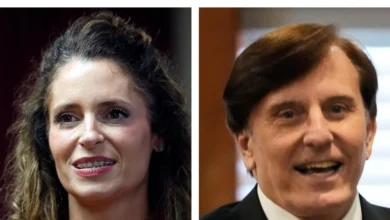
The House of Representatives has increasingly become a theater of intra-party ideological combat, a reality underscored by growing discontent within the Republican conference. California Republican Representative Kevin Kiley recently voiced sharp criticisms regarding the trajectory of House leadership, explicitly stating that Speaker Mike Johnson has failed to adequately guide the caucus through legislative hurdles. This open dissent reflects a broader vibe shift among congressional Republicans as they look toward the 2026 midterms and a future landscape that must eventually navigate politics beyond President Donald Trump.
Compounding these legislative headaches are aggressive state-level redistricting efforts. In California, new district lines passed by voters at the urging of Democratic Governor Gavin Newsom have placed GOP incumbents like Kiley in precarious positions, potentially altering their career trajectories entirely. This collision between state-level electoral engineering and federal legislative dysfunction highlights the immense pressure facing Republican lawmakers as they try to defend a razor-thin House majority.
The political vulnerability of the GOP is not confined to Capitol Hill; it extends to the highest levels of the executive branch. Discussions led by political analysts, such as POLITICO’s Jonathan Martin, have raised questions about whether President Trump is beginning to experience a premature lame-duck period. Cracks in the traditionally impenetrable bond between Trump and his MAGA base have occasionally surfaced—most notably when the president reversed course on the release of the Epstein files to appease party critics, as well as facing persistent discontent from supporters over his messaging priorities. Critics within and outside the base argue that the administration has frequently sidelined pressing domestic concerns, such as inflation, cost-of-living pressures, and consumer affordability, in favor of a prominent focus on foreign affairs. These strategic friction points threaten to complicate the party’s messaging as both chambers of Congress gear up for an unforgiving electoral battleground.
Legislative Gridlock: The Anatomy and Fallout of Government Shutdowns
Few events test the resilience of congressional leadership and the discipline of political parties quite like a federal government shutdown. Throughout the autumn of 2025, Washington braced for and subsequently endured extended fiscal stalemates that paralyzed federal agencies and fueled a relentless partisan blame game.
The strategic calculus behind these shutdowns has exposed deep ideological divides within both major parties. From the Democratic perspective, progressive lawmakers such as California Representative Ro Khanna argued that holding firm on core social and economic investments was non-negotiable, even as the shutdown dragged into its third and fourth weeks. Conversely, Democratic campaign strategists, including Democratic Congressional Campaign Committee Chair Suzan DelBene, viewed the fiscal showdowns through the lens of the 2026 midterms, aiming to frame the Republican-led House as inherently dysfunctional and incapable of basic governance.
On the other side of the aisle, battleground Republicans like New York Representative Mike Lawler—representing a district previously won by Democratic presidential nominee Kamala Harris—contended that Democrats fundamentally miscalculated their political leverage. Lawler and other vulnerable GOP incumbents argued that voters would ultimately hold the party controlling the executive branch and congressional negotiation tables accountable for economic disruptions. This high-stakes legislative brinkmanship ultimately culminated in fragile compromises, leaving both parties searching for a definitive winning message ahead of the midterm cycle.
The battle lines drawn during these fiscal standoffs have provided rich analytical material for party veterans. Former Virginia Governor and Democratic National Committee Chair Terry McAuliffe weighed in on the intra-party debates that followed the resolution of the longest government shutdown in U.S. history. McAuliffe suggested that despite internal disagreements over tactics, the overarching political climate—catalyzed by controversial administration policies—remains fertile ground for Democrats seeking to reclaim congressional majorities.
Municipal Earthquakes and the Evolution of Urban Politics

While national headlines focus on Washington, local and municipal elections have served as laboratories for progressive innovation and conservative counter-strategies. The 2025 election cycle featured high-stakes contests in New York City, New Jersey, and Virginia, drawing intense focus from national correspondents such as Jeff Zeleny and Eva McKend.
Perhaps no single local race captured the national imagination quite like the New York City mayoral contest, which saw a dramatic realignment of political norms. Zohran Mamdani, a previously little-known state assemblyman, achieved a historic and unexpected victory, catapulting himself to the center of the national progressive conversation. Spectrum News NY1 Political Anchor Errol Louis analyzed how Mamdani completely rewrote the Gotham political playbook, successfully appealing to working-class urban voters disillusioned with traditional municipal governance.
The race also underscored the steep uphill battle faced by the Republican Party in overwhelmingly Democratic strongholds. Curtis Sliwa, the GOP standard-bearer in America’s largest city, mounted his second consecutive mayoral run despite Democrats outnumbering Republicans by a margin of six to one. Facing a crowded and chaotic field that included Mamdani and disgraced former Governor Andrew Cuomo, Sliwa campaigned against immense pressure from within his own party to step aside. His bid highlighted the persistent challenges—and occasional unique pathways—for urban conservatism in an era of deep polarization.
Unprecedented Legal Frontiers and Historical Precedents
Beyond elections and fiscal battles, the American justice system has navigated uncharted territory, testing the boundaries of executive power and accountability. The prosecution of former FBI Director James Comey stands as one of the most extraordinary chapters in modern legal and political history.
In discussions analyzing this landmark case, former federal and state prosecutor Elie Honig placed the prosecution within a broader historical context, drawing parallels from the Nixon era to the present day. Honig’s insights, drawn from extensive examinations of the Department of Justice’s historical relationship with the presidency, emphasize the delicate balance between the rule of law and political interference. The legal challenges surrounding high-profile figures like Comey reflect a judiciary increasingly caught in the crosshairs of intense partisan polarization, setting precedents that will likely reverberate through American jurisprudence for decades.
Chronology of Key Political Developments (Fall 2025)
- Late September 2025: Washington braces for a looming fiscal deadline, with DCCC Chair Suzan DelBene outlining the Democratic strategy to leverage the impending budget crisis for the 2026 midterms.
- Early October 2025: A federal government shutdown officially begins. Representative Mike Lawler argues that Democrats have miscalculated the public backlash, while legal analyst Elie Honig discusses the historical implications of the James Comey prosecution.
- Mid-October 2025: As the shutdown enters its third week, progressive Representative Ro Khanna outlines Democratic red lines and non-negotiable policy positions to break the stalemate.
- Late October 2025: The 2025 municipal and gubernatorial campaigns in New York City, New Jersey, and Virginia enter their home stretch. Republican mayoral candidate Curtis Sliwa defends his campaign against pressure to withdraw.
- Early November 2025: Election Day results stun political observers. Zohran Mamdani secures a historic victory in the New York City mayoral race, while CNN correspondents Jeff Zeleny and Eva McKend break down key takeaways from the trail. Former DNC Chair Terry McAuliffe assesses the aftermath of the government shutdown and lays out a blueprint for the 2026 midterms.
- Mid-to-Late November 2025: Political analysts examine potential cracks in the MAGA coalition, evaluating President Trump’s handling of affordability concerns, messaging strategy, and shifting positions on high-profile investigations.
- Early December 2025: Congressional friction spills into public view as California Republican Representative Kevin Kiley publicly criticizes Speaker Mike Johnson’s leadership, highlighting the internal anxiety gripping the GOP ahead of the midterm cycle.
Broader Impact and Implications for the Future of American Governance
The convergence of legislative dysfunction, state-level map manipulation, shifting urban electorates, and historic legal battles paints a picture of a nation at a political crossroads. As documented through the analytical lens of the CNN Political Briefing, the decisions made by political actors today will directly dictate the balance of power in Washington and statehouses nationwide for years to come.
The Republican Party faces an existential identity crisis: managing internal divisions between traditional conservatives and the populist MAGA base, all while confronting aggressive Democratic gerrymandering and voter mobilization efforts. Simultaneously, the Democratic Party continues to grapple with its own ideological spectrum, attempting to bridge the gap between establishment pragmatists and an ascendant progressive wing capable of sweeping major urban centers like New York City.
Ultimately, these intersecting storylines demonstrate that the American political landscape is far from static. Whether examining the micro-level dynamics of a congressional district boundary shift or the macro-level implications of a federal budget shutdown, the path to the 2026 midterms will be defined by how political leaders adapt to an electorate increasingly demanding both economic relief and structural accountability.
Related posts: