The Long Shadow of the Coal Mine: A Crisis of Black Lung Disease and Legal Limbo for American Miners

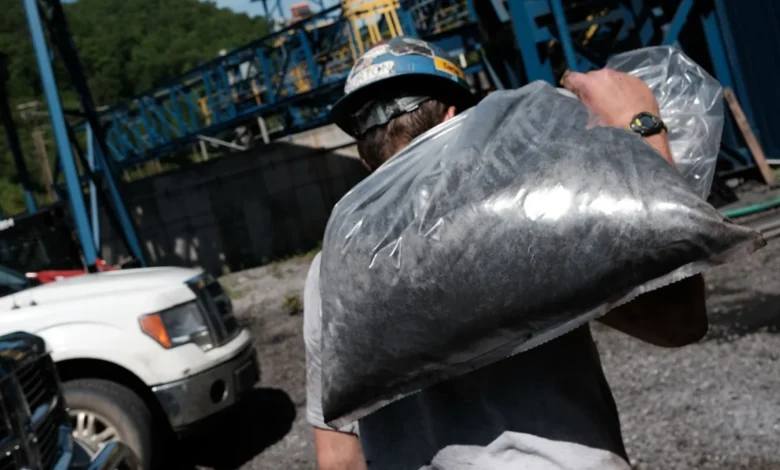
For 38 years, Josh Armes navigated the subterranean darkness of coal mines in West Virginia and Virginia, a career defined by physical labor and the constant inhalation of particulate matter. Today, at 74, his reality is defined by the tether of an oxygen tank, the constant struggle for breath, and a 12-year legal battle against the very industry that shaped his life. Armes, a resident of Grundy, Virginia, suffers from coal workers’ pneumoconiosis (CWP), colloquially known as black lung disease. While his medical condition is irreversible and documented by clinical specialists, his struggle to secure federal benefits—a program established by Congress in 1969 to serve as a safety net for those broken by the industry—has become a protracted, multi-decade ordeal.
The plight of the Armes family is not an isolated incident; it is a systemic symptom of a deepening public health crisis within the Appalachian coalfields. As cases of black lung disease reach a 50-year high, the bureaucratic machinery tasked with providing relief is increasingly bogged down by aggressive litigation from coal operators, leaving thousands of retired miners in a state of precarious financial and physical instability.
A Surge in Occupational Disease
The resurgence of black lung disease is a grim milestone in American industrial health. Recent data published in the American Journal of Respiratory and Critical Care Medicine indicates that nearly one-third of veteran underground coal miners in central Appalachia are currently suffering from some form of CWP. This prevalence rate has not been observed since 1978.
The shift in the composition of dust—specifically the increasing presence of silica dust—is widely cited by medical experts as a primary driver of the spike. Modern mining techniques often require cutting through rock to access thinner coal seams, which releases significantly more hazardous crystalline silica than traditional coal dust. When inhaled, these fine particles cause rapid and aggressive scarring of the lung tissue, leading to disability and premature death. Between 2020 and 2023 alone, federal data indicates that over 1,700 coal miners lost their lives to complications arising from this disease.
The Anatomy of a Broken System
The federal black lung benefits program was intended to function as a streamlined mechanism for providing compensation and medical coverage to disabled miners. However, the operational reality has diverged sharply from that legislative intent. A May 2026 report from the Government Accountability Office (GAO) highlights a landscape characterized by profound inefficiency and adversarial obstruction.
According to the GAO findings, between 2013 and 2024, approximately 40 percent of all approved claims were subsequently disputed, largely by coal operators utilizing their legal resources to stall or reverse the awarding of benefits. For claimants like Josh Armes, this process has meant years of administrative hearings, medical re-evaluations, and the constant threat of having their benefits stripped away after they have been awarded.
The financial burden on the families of miners is immense. Because the burden of proof rests heavily on the claimant, families are often forced to front the costs of specialized medical testing and legal counsel while awaiting a resolution that can take years, or even decades. The GAO report identified that the median length of an appealed claim is at least three years, with some cases dragging on for over a decade.
Chronology of Legislative and Administrative Stasis
The path to current tensions can be traced through a series of legislative and regulatory developments:
- 1969: The Federal Coal Mine Health and Safety Act is passed, establishing the black lung benefits program to provide financial support to disabled miners.
- April 2024: The Mine Safety and Health Administration (MSHA) finalizes a rule intended to lower the permissible exposure limit for respirable crystalline silica.
- June 2024: Congressional opposition halts the necessary funding for the enforcement of the new silica dust rule, effectively neutralizing its impact.
- Early 2026: The Trump administration’s Department of Labor announces an indefinite delay in the enforcement of the silica rule, citing the need for judicial review.
- May 2026: The GAO releases a report exposing the systemic gaps in the benefits program and the prevalence of operator-led appeals that effectively bankrupt or demoralize beneficiaries.
The Regulatory Impasse
The decision by the current administration to put the silica dust rule on "indefinite hold" has drawn sharp criticism from public health advocates and labor unions. The United Mine Workers of America (UMWA) has been particularly vocal, arguing that the delay is a direct abandonment of the workforce in favor of corporate profitability.
"Someone’s life is forever changed. A company’s profit margin cannot take precedence over a miner’s right to draw a breath," stated Brian Sanson, president of UMWA International. Critics argue that the administration is leveraging the legal system to avoid implementing protections that would require costly engineering and ventilation upgrades in mines.
The Department of Labor, when approached for comment, maintains that it is constrained by ongoing litigation. "Until pending litigation and limited rulemaking on respirable crystalline silica are resolved, MSHA continues to vigorously enforce the permissible exposure limit of 100 micrograms per cubic meter," a spokesperson stated. However, health advocates note that this limit is significantly higher than the levels recommended by the medical community to prevent the onset of severe CWP.
Implications for the Future of Mining Communities
The implications of this standoff extend beyond the individual health of the miners. For towns in West Virginia, Virginia, and Kentucky, the failure of the black lung benefits program undermines the socioeconomic stability of the entire region. When miners are forced to rely on personal savings or charitable assistance because their federal benefits are tied up in court, the local economy suffers, and the generational trust in government-sponsored safety nets is eroded.
Furthermore, the legal strategy adopted by some coal operators—characterized by some observers as "waiting for the miner to die"—has created a climate of deep cynicism. As families like the Armes’ navigate the labyrinthine appeals process, the sentiment expressed by Crystal Armes reflects a broader frustration: "We’re hardworking, everyday Americans who go to work every day, pay our taxes, try to do the right thing, and then, we can’t get what was promised us."
A Call for Structural Reform
Legislative efforts are currently underway to address these inequities. A coalition of Democratic senators, including Mark Warner, John Hickenlooper, Tim Kaine, and John Fetterman, has introduced legislation aimed at increasing the accessibility of the benefits program and streamlining the adjudication process. The proposed changes include provisions to limit the ability of coal operators to appeal after initial findings of disability and to provide more robust assistance to claimants in navigating the evidentiary requirements.
However, in the current political environment, the path for such legislation remains narrow. As the debate continues in Washington, the reality in the coalfields remains unchanged: the dust continues to settle, the cases continue to mount, and a generation of miners is left to wait for a resolution that, for many, will come too late. The challenge for policymakers is not merely one of bureaucratic adjustment, but a fundamental question of moral and economic obligation to the workers who provided the energy that powered the nation’s industrial expansion. Without a swift move to enforce safety standards and simplify the path to care, the human cost of coal will continue to be paid, in installments of breath and blood, by the very people the law was intended to protect.