Salt-N-Pepa Ask Second Circuit to Reinstate Copyright Ownership Lawsuit Against Universal Music Group

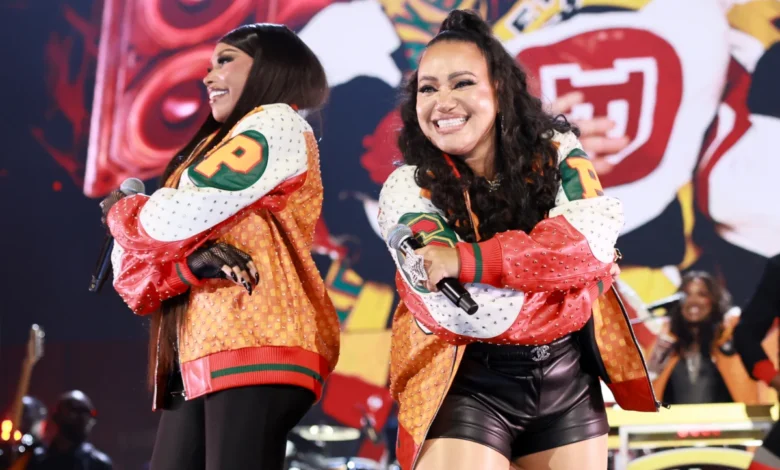
The pioneering hip-hop duo Salt-N-Pepa are officially turning to the federal appeals court in their ongoing legal battle to reclaim the copyrights to their classic catalog. Attorneys representing the legendary group—consisting of founding members Cheryl "Salt" James and Sandra "Pepa" Denton—urged a panel at the 2nd U.S. Circuit Court of Appeals in New York to overturn a lower court decision that previously dismissed their lawsuit against Universal Music Group (UMG). The case hinges on complex interpretations of federal copyright termination provisions, contractual language from decades-old recording agreements, and the fundamental question of who truly owns the master recordings that defined the golden era of 1980s and 1990s hip-hop.
The appeal marks the latest chapter in a high-stakes legal confrontation that could have widespread repercussions for legacy artists, major record labels, and the broader music industry regarding copyright reclamation rights. As streaming revenues continue to dominate the modern music economy, artists across various genres are increasingly scrutinizing vintage contracts to recapture ownership of their foundational works. For Salt-N-Pepa, the legal dispute represents a quest not only for financial restitution but also for enduring control over cultural touchstones that helped propel hip-hop into the mainstream global consciousness.
Chronology and Origins of the Legal Dispute
The roots of the current legal battle stretch back decades to the formation and meteoric rise of Salt-N-Pepa in the mid-1980s. Emerging from Queens, New York, James and Denton teamed up with DJ Spinderella (Deidre Roper) to create a formidable force in a male-dominated genre. Their early releases, including iconic tracks like "Push It," "Let’s Talk About Sex," and "Shoop," shattered commercial barriers and earned the group crossover appeal, multi-platinum certifications, and a permanent place in music history, culminating in their induction into the Rock & Roll Hall of Fame.
However, the creation of these iconic records was governed by recording agreements signed during the nascent commercial stages of hip-hop, an era when artists routinely signed deals with record labels under unfavorable conditions or with limited legal representation. Under Section 203 of the United States Copyright Act, Congress provided a statutory mechanism for authors and creators to terminate grants of copyright transfers and reclaim ownership of their works after a specified period—typically 35 years—provided they follow precise statutory notice and procedural requirements.
Attempting to exercise these statutory rights, Salt-N-Pepa initiated legal action against UMG to reclaim the copyrights to their first four studio albums. The core of their legal strategy relied on the assertion that the Copyright Act’s termination provisions empower them to take back the works they originally created. UMG swiftly pushed back against the lawsuit, setting the stage for a judicial showdown in the Southern District of New York.
In January 2026, Senior U.S. District Judge Denise Cote delivered a significant blow to the group by granting UMG’s motion to dismiss the lawsuit. Judge Cote ruled that Salt-N-Pepa had transferred ownership of their first four albums to their original record label and, crucially, had never legally owned the copyrights themselves under the precise definitions of the contracts attached to the complaint. According to the district court’s interpretation of the agreements, the statutory right of termination could not be invoked because the foundational transfer requirements specified in the Copyright Act were not met by the plaintiffs in the manner required by law.
Arguments Before the Second Circuit
Undeterred by the district court’s dismissal, Salt-N-Pepa escalated the matter to the 2nd U.S. Circuit Court of Appeals. Representing the rap duo is high-profile intellectual property attorney Richard Busch, a lawyer renowned for securing landmark verdicts in major music copyright trials, including the famous 2015 "Blurred Lines" lawsuit involving Marvin Gaye’s family, Robin Thicke, and Pharrell Williams.
During oral arguments before the appellate panel, Busch contended that Judge Cote fundamentally misapplied both statutory law and the explicit language of the foundational recording agreements. Busch argued that the lower court ignored vital definitions and provisions within the contracts that supported the artists’ position.
"We are applying fundamental principles of law and the actual language of the agreements, while the district court and UMG have done the opposite, ignoring crucial language and definitions of the agreement," Busch argued before the appellate judges. He maintained that the lower court’s reading of the contracts creates an untenable standard that undermines the explicit protections and legislative intent of the Copyright Act’s termination provisions, which were specifically designed by lawmakers to protect creators from unfavorable historical deals.
Conversely, counsel for Universal Music Group defended the lower court’s reasoning, urging the appellate panel to affirm the dismissal. Richard Mandel, an attorney with Cowan, Liebowitz & Latman representing UMG, argued that Judge Cote’s legal analysis was entirely sound and anchored in the plain text of the contractual documents.
"Judge Cote correctly granted UMG’s motion to dismiss because, under the plain language of the agreement annexed to the complaint, there was no grant of copyright executed by plaintiffs—a fundamental requirement of the termination provision of the Copyright Act," Mandel asserted to the appellate judges. UMG’s legal defense rests heavily on the premise that because the initial agreements did not constitute a "grant of copyright" executed by the artists in the statutory sense, the termination provisions simply do not apply, leaving the label as the rightful holder of the master recordings.
Legal Analysis and Broader Industry Implications
The legal battle between Salt-N-Pepa and Universal Music Group extends far beyond the financial interests of the individual parties, touching upon systemic issues within the modern music business. As legacy catalogs appreciate exponentially in value—frequently trading hands for tens or hundreds of millions of dollars in corporate acquisitions—copyright ownership has become one of the most contentious battlegrounds in the entertainment industry.
The U.S. Copyright Act’s termination right was enacted by Congress as part of the Copyright Act of 1976, taking effect in 1978, with the specific intent of correcting the historical imbalance where creators frequently signed away their life’s work for modest upfront payments before knowing its true long-term value. As those initial 35-year windows mature, an increasing number of legacy artists—ranging from rock icons to pioneering hip-hop acts—are attempting to exercise these reversionary rights.
However, complex litigation frequently arises over the precise characterization of the works. Record labels often argue that many classic recordings were created as "works made for hire," a legal designation that strips creators of termination rights, or argue that the original contractual language does not meet the technical definition of a copyright "grant" subject to termination.
If the 2nd Circuit decides to reverse Judge Cote’s dismissal and reinstate Salt-N-Pepa’s lawsuit, it could send a powerful signal to major record labels that courts are willing to scrutinize legacy contracts rigorously in favor of protecting artists’ statutory reversion rights. Such a ruling could embolden other pioneering hip-hop and R&B artists from the 1980s and 1990s to challenge corporate ownership of their master recordings. Conversely, an affirmation of the lower court’s ruling would reinforce the legal standing of major labels, affirming that meticulous, restrictive drafting of historical recording agreements can effectively insulate corporate owners from statutory copyright reclamation efforts.
Next Steps in the Appellate Process
The three-judge panel of the 2nd U.S. Circuit Court of Appeals is currently reviewing the written briefs and oral arguments presented by both legal teams. A formal written decision is expected in the coming months. Depending on how the appellate court rules, the case could either be "pushed back" to the trial court for renewed discovery and proceedings, brought to a definitive end, or potentially petitioned for review before the Supreme Court of the United States if constitutional or federal statutory interpretations warrant higher scrutiny.
As the legal proceedings unfold, the case remains a watershed moment for hip-hop heritage, illustrating the enduring complexities of matching twentieth-century recording contracts with twenty-first-century statutory rights. For Salt-N-Pepa, the outcome will determine whether they can finally reclaim ownership of the foundational music that cemented their status as cultural icons.
Related posts: