CNN Political Briefing Podcast Explores Shifting Alliances, Congressional Tensions, and the Road to the 2026 Midterms

The American political landscape is undergoing a profound and rapid transformation, driven by high-stakes legislative standoffs, contentious municipal elections, and shifting dynamics within both major political parties. Through the lens of the CNN Political Briefing podcast, hosted by CNN Political Director David Chalian, political observers have been granted an inside look at the machinations shaping Washington, D.C., and key states across the nation. As lawmakers prepare for the critical 2026 midterm elections, a series of recent episodes have highlighted deep fractures within congressional leadership, evolving strategies among Democrats, and the complex realities facing municipal leaders from New York City to California.
This comprehensive review examines the major political narratives captured by Chalian and his high-profile guests, synthesizing months of interviews, legislative battles, and electoral milestones that are defining the current era of American politics.
Intraparty Dissension and Leadership Challenges in Congress
As the Republican Party navigates its majority status in the House of Representatives, internal friction has increasingly bubbled to the surface. One of the most striking developments featured on the podcast involved California Republican Representative Kevin Kiley, who offered a blunt assessment of House Speaker Mike Johnson, alleging that the leadership has “failed to lead” on key legislative priorities.
Rep. Kiley’s critique underscores a broader "vibe shift" currently underway within the GOP conference. As conservative lawmakers look ahead to the 2026 midterm elections—and contemplate a political future that eventually extends beyond President Donald Trump—disagreements over legislative strategy, fiscal discipline, and messaging have intensified. Compounding these federal tensions, Kiley himself faces unique local pressures following the implementation of new congressional district lines in California, which were advanced by state Democrats under the urging of Governor Gavin Newsom.
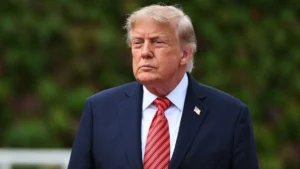
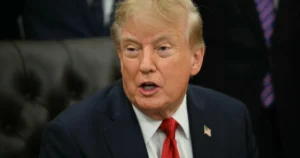
Simultaneously, the relationship between the broader MAGA base and President Trump has faced rare moments of friction. Discussions on the podcast, featuring insights from political analysts such as POLITICO’s Jonathan Martin, have explored whether the administration is beginning to experience a traditional lame-duck period. Analysts point to strategic pivots—such as a recent reversal by Trump on the long-debated Epstein files in an effort to realign with party purists—as evidence of delicate negotiations within the coalition. Furthermore, some core supporters have expressed private and public concerns regarding the administration’s primary focus on foreign affairs at the expense of domestic pocketbook issues, particularly inflation and the rising cost of living.
The Legislative Standoff: Anatomy of a Historic Government Shutdown
The autumn of 2025 was dominated by one of the most prolonged and contentious government shutdowns in United States history, a fiscal standoff that paralyzed Washington for weeks and triggered an intense partisan blame game. The CNN Political Briefing podcast provided a front-row seat to the legislative warfare, interviewing key figures from both sides of the aisle to dissect the strategy behind the stalemate.
Representing the progressive wing of the Democratic Party, California Representative Ro Khanna joined the program to outline what his caucus viewed as non-negotiable principles during the shutdown negotiations. Khanna detailed the strategic lines drawn by Democrats as they sought to protect federal social programs and healthcare funding against Republican spending cuts.
Conversely, Republican lawmakers argued that the opposition had fundamentally miscalculated the political fallout of the closure. Representative Mike Lawler—a vulnerable Republican representing a battleground district that former Vice President Kamala Harris won—argued on the podcast that Democrats committed a critical tactical error by allowing the shutdown to materialize, believing it would ultimately damage the legislative majority’s standing with suburban voters.
On the other side of the aisle, Representative Suzan DelBene (D-WA), serving as the Chair of the Democratic Congressional Campaign Committee (DCCC), laid out her party’s roadmap for capitalizing on the fiscal impasse. DelBene emphasized that the primary objective for Democrats was to harness voter frustration to recapture the House majority in 2026. This sentiment was echoed by veteran Democratic strategist and former Virginia Governor Terry McAuliffe, who visited the studio to offer a broader prescription for the party. McAuliffe argued that strategic friction and public debates surrounding government funding ultimately serve as a catalyst for grassroots mobilization, positioning the party to leverage populist grievances heading into the midterms.

Municipal Earthquakes: The 2025 Elections in New York, New Jersey, and Virginia
While Washington remained gridlocked, off-year elections in the fall of 2025 provided vital clues about the mood of the American electorate. The municipal races in New York City, alongside gubernatorial and legislative contests in New Jersey and Virginia, served as a national bellwether.
Chief among these contests was the extraordinary mayoral race in New York City, a city where registered Democrats outnumber Republicans by a margin of six to one. The political equilibrium of Gotham was upended by the emergence of Zohran Mamdani, a state assemblyman whose progressive campaign successfully rewrote the local political playbook. Errol Louis, Political Anchor for Spectrum News NY1, analyzed Mamdani’s meteoric rise for podcast listeners, explaining how an outsider candidate managed to capture the national imagination by focusing on housing affordability, tenant rights, and economic inequality.
The race also featured high drama for the city’s Republican standard-bearer, Curtis Sliwa, who mounted his second consecutive bid for mayor following his 2021 run against Eric Adams. Sliwa campaigned against a formidable field that included Mamdani and disgraced former New York Governor Andrew Cuomo, all while facing intense pressure from within his own political circles to exit the race. In a candid interview with Chalian, Sliwa reflected on the unique challenges of running as a conservative in a heavily Democratic metropolis and the lessons learned from a lifetime of civic engagement in New York.
To capture the broader electoral map, CNN correspondents Jeff Zeleny and Eva McKend brought their reporting from the campaign trails in New York City, New Jersey, and Virginia. Their final-stretch analysis highlighted how local issues—ranging from state-level tax policies to educational curricula—interacted with national political currents, offering early warning signs for both parties regarding suburban voter behavior.
The Intersection of Politics and the American Judiciary
Beyond electoral politics and legislative battles, the intersection of the American legal system and federal governance remained a recurring theme on the podcast. A notable episode featured former federal and state prosecutor Elie Honig, author of When You Come at the King: Inside DOJ’s Pursuit of the President, From Nixon to Trump. Honig provided historical context for what he described as an extraordinary chapter in American justice: the prosecution of former FBI Director James Comey.
Placing the high-profile legal proceedings into a broader historical framework, Honig and Chalian examined the delicate boundaries between executive authority, Department of Justice independence, and the rule of law. The discussion underscored how legal investigations involving high-ranking political figures have become an enduring fixture of modern political discourse, carrying profound implications for institutional trust and public governance.
Broader Impact and Implications for the 2026 Midterms
The cumulative insights gathered across these episodes of the CNN Political Briefing podcast point to a volatile and highly competitive political environment as the United States approaches the 2026 midterm elections.
Several key structural takeaways emerge from this analysis:
- Vulnerability of Congressional Incumbents: With internal party rebellions—such as those voiced by Rep. Kiley against Speaker Johnson—and aggressive redistricting efforts by state legislatures (exemplified by California’s map changes), sitting members of Congress face heightened job insecurity from both primary challengers and general election opponents.
- Economic Anxiety as a Determining Factor: Voter dissatisfaction with inflation, housing costs, and affordability remains a potent political undercurrent. Both parties are acutely aware that failure to address these pocketbook issues risks severe electoral retribution at the ballot box.
- The Rise of Asymmetric Local Movements: The success of progressive insurgents like Zohran Mamdani in New York City demonstrates that traditional party gatekeepers are increasingly vulnerable to grassroots campaigns that tap directly into urban economic anxieties.
- The Persistence of Institutional Friction: Ongoing battles over government funding, investigative oversight, and the judiciary indicate that institutional norms will remain under stress, serving as central themes in campaign messaging for the foreseeable future.
As David Chalian and his guests continue to monitor the political landscape, the overarching narrative is clear: the consensus-driven politics of the past have been replaced by an era of intense ideological polarization, localized disruptions, and continuous campaign maneuvering. The outcome of these cascading conflicts will ultimately determine the balance of power in Washington and redefine the trajectory of American democracy for the remainder of the decade.