Operatic Primates: How Madagascar’s Indri Lemurs Master High Notes Using Human-Like Vocal Mechanics

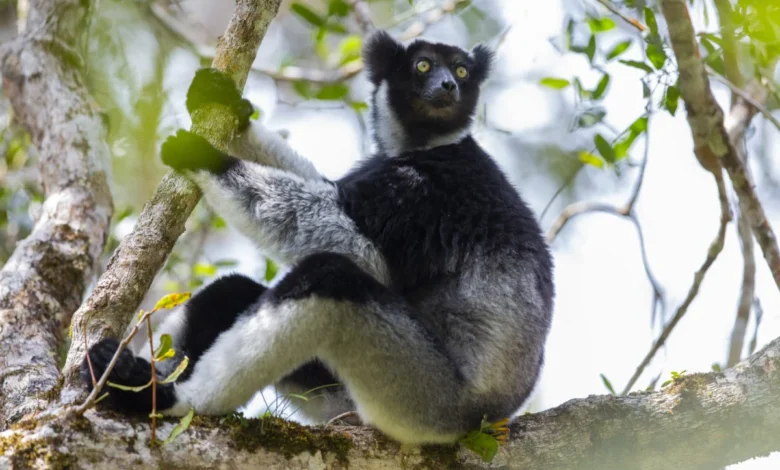
High above the dense, humid canopy of Madagascar’s rainforests, an eerie, resonant sound pierces the air. Resembling a cross between a frantic emergency siren and a complex, haunting melody, this vocalization belongs to the indri (Indri indri), the world’s only known singing lemur. These arboreal primates rely on their haunting chorus to establish territory, warn neighboring clans of danger, and reinforce social cohesion within family units. However, recent bioacoustic and behavioral research has revealed a startling biological parallel: to hit their highest and most penetrating notes, indris utilize a vocal technique remarkably similar to that of trained human opera singers.
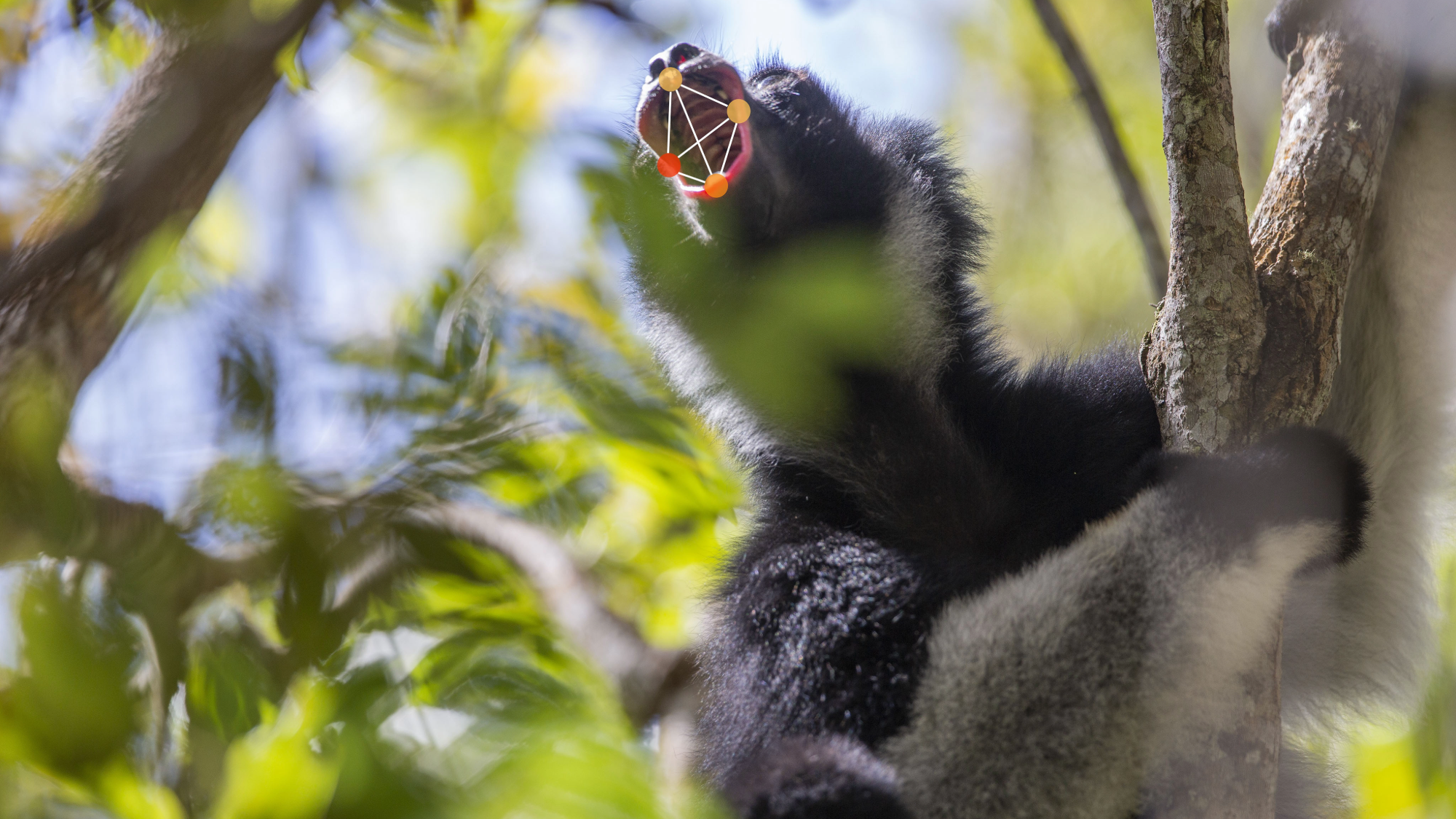
Published in the journal PLOS Computational Biology, a study conducted by an international team of researchers explores the mechanics behind the lemur’s song. By utilizing advanced, markerless motion-tracking technology on wild populations, scientists have discovered that the indri’s mouth movements scale in direct proportion to the pitch of its call. The higher the note, the wider the animal opens its mouth—a precise physiological coordination previously thought to be exclusive to humans and select trained vocalists.
The Mechanics of the Canopy Chorus: Formant Tuning in Primates
To understand the magnitude of this discovery, researchers point to the physical limitations of sound projection in dense tropical environments. Thick foliage, high humidity, and dense undergrowth rapidly absorb and scatter acoustic waves. For an animal relying on acoustic signals for survival, ensuring that a call carries across vast distances of rainforest is critical.
In human vocal pedagogy, professional singers are trained to execute a process known as formant tuning. As a singer ascends the musical scale toward higher frequencies, they systematically widen their oral cavity. This action aligns the resonant frequencies of the vocal tract with the harmonics of the voice, effectively amplifying the sound and projecting it outward without requiring an exponential increase in physical energy.
For decades, scientists assumed this sophisticated acoustic adjustment was a unique evolutionary adaptation tied to human speech, language, and artistic performance. However, field observations of the indri suggest otherwise. When analyzing the physical posture of the lemurs during their morning choruses, researchers noted a meticulous synchronization between body and voice. Every time the pitch of an indri’s song escalated, its mouth opened wider in exact synchronization, frame by frame. This fine-tuned coordination allows the lemur’s call to penetrate the thick rainforest canopy, reaching neighboring groups miles away.
Methodology: Combining Field Audio with Markerless Motion-Tracking
The research team—comprising primatologists, bioacoustics experts, and naturalists—tackled the challenge of studying wild primates without disrupting their natural behaviors. Traditional laboratory settings are entirely unsuited for studying the indri, a species that famously fails to thrive or sing in captivity. Consequently, all data collection had to occur deep within the native forests of Madagascar, primarily focused around regions like the Maromizaha forest.
Over the course of the observational campaigns, the team gathered 83 high-definition video recordings featuring 19 wild indris. Rather than relying on traditional audio spectrograms alone, the researchers integrated cutting-edge markerless pose-estimation software. This computational tool allows scientists to track specific anatomical points—such as the precise upper and lower lip positions—on animals moving freely in the wild.

By mapping these facial movements against simultaneous audio recordings, the team could quantify the exact geometry of the indri’s mouth at every millisecond of its performance. The results confirmed a robust, statistically significant correlation: mouth-opening surface area expands predictably as vocal frequency increases. This methodological breakthrough bridges the gap between acoustic output and physical morphology, offering a template for how scientists might study vocal production in other wild, free-ranging species.
An Evolutionary Convergence Across 74 Million Years
The implications of this study extend far beyond behavioral ecology, touching on the fundamental timelines of mammalian evolution. Humans and indri lemurs diverged from a common mammalian ancestor approximately 74 million years ago. Despite this vast evolutionary distance and the stark differences in brain structure, social organization, and ecological niches, both lineages independently arrived at the same physical solution to a universal acoustic problem.
This phenomenon, known as convergent evolution, occurs when unrelated species develop similar traits or physiological mechanisms in response to comparable environmental pressures. Just as birds and bats independently evolved wings to navigate the skies, humans and indri lemurs appear to have independently optimized their vocal tracts to manipulate sound waves over distance.
While human opera singers utilize formant tuning for artistic expression and acoustic projection in grand concert halls, the indri employs the exact same acoustic strategy to navigate the acoustic barriers of the jungle canopy. This discovery challenges long-held assumptions regarding the exclusivity of complex vocal-tract modulation among primates, suggesting that the underlying physics of sound amplification may constrain and shape vocal evolution across diverse mammalian branches.
Broader Impacts on Conservation and Bioacoustics
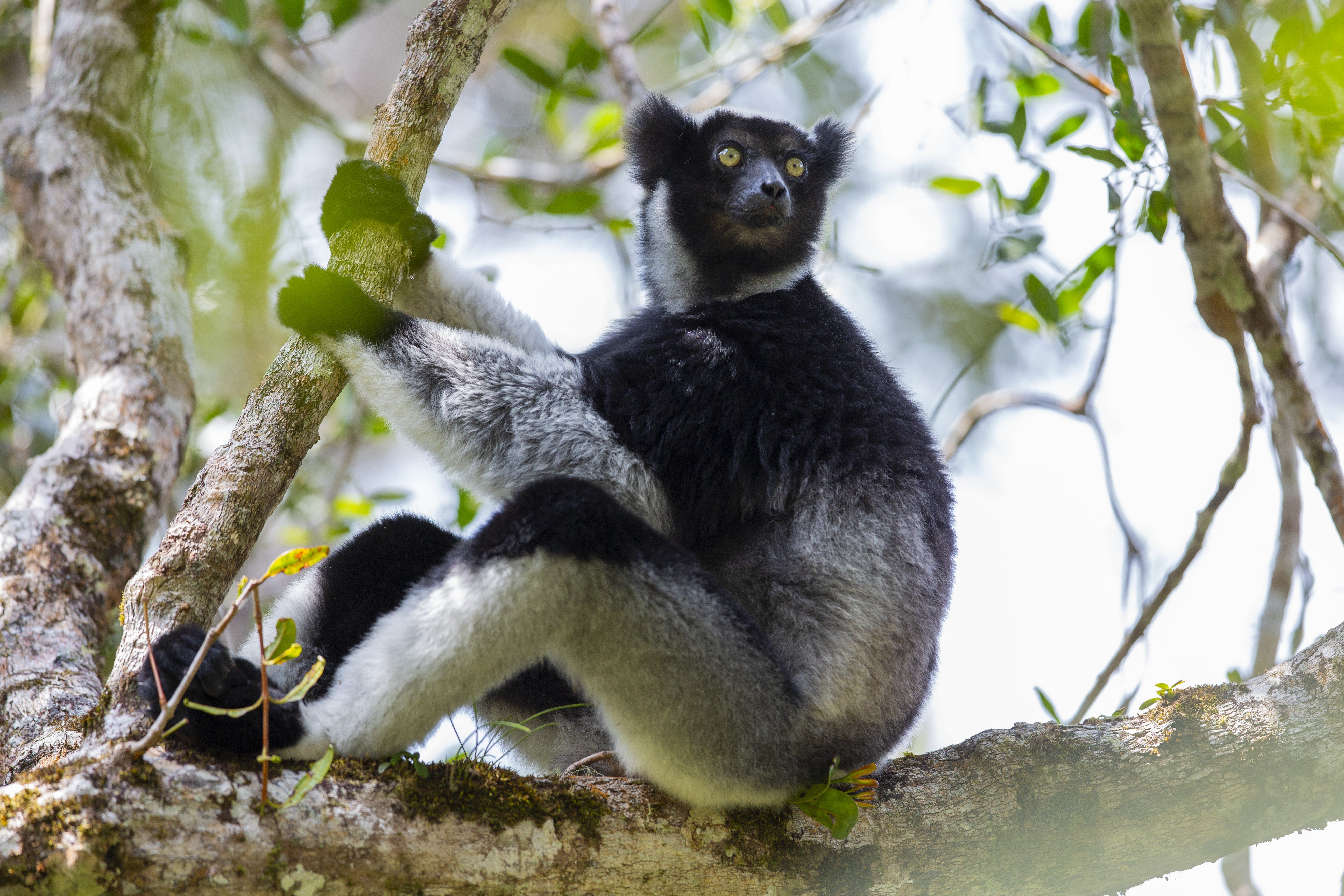
As researchers continue to decode the complex vocalizations of the indri, the findings arrive at a critical juncture for the species’ survival. Indri indri is currently classified as critically endangered by the International Union for Conservation of Nature (IUCN). Driven by severe habitat fragmentation, slash-and-burn agriculture, and illegal logging within their native Madagascar, wild populations are facing unprecedented pressure.
Conservationists emphasize that understanding the indri’s social communication networks is vital for designing effective management and protection strategies. Because these singing lemurs rely heavily on acoustic signals to maintain territorial boundaries and locate conspecifics, habitat degradation that disrupts acoustic transmission can severely impact their social structures and reproductive success.
Furthermore, the successful application of markerless motion-tracking technology in remote, untamed environments marks a significant milestone for behavioral science. Researchers suggest that this non-invasive analytical framework can be readily adapted to study vocal communication, physical gesturing, and behavioral adaptations in a wide array of other elusive wildlife species, opening new frontiers in evolutionary biology and ethology.
Future research aims to explore whether other lemur species exhibit similar vocal tract adjustments, or if this operatic mastery is an isolated evolutionary masterpiece unique to the indri. For now, the song of the indri stands as a powerful reminder of the hidden complexities of the natural world—where a lemur perched high in a Malagasy tree employs the precise physics of an opera singer to make its voice heard across the ages.
Related posts: