In the rapidly evolving landscape of modern conflict, the Black Sea has become a laboratory for the future of naval warfare, witnessing what is now confirmed as the world’s first recorded engagement between two uncrewed surface vessels (USVs). On September 12, a Ukrainian Sargan-3000 drone boat successfully intercepted and neutralized a Russian Orcan explosive USV, marking a significant milestone in the history of robotic combat. This incident signals a transition from asymmetric warfare—where drones primarily targeted static infrastructure or manned ships—to a sophisticated new paradigm of machine-on-machine maritime engagements.
Chronology of the Engagement
The operation, which was facilitated by Ukraine’s Defense Intelligence (GUR) and the Ukrainian Navy, unfolded in the strategically vital waters of the Black Sea. According to reports from official Ukrainian channels and independent naval analysts, the engagement followed a period of intense maritime surveillance.
Ukrainian intelligence assets first detected the Russian Orcan drone—a vessel specifically engineered for kamikaze-style attacks—as it maneuvered through the waves. The Russian drone, described by experts as a “jet ski type” platform, was designed with a stealthy profile and a high-speed water jet propulsion system intended to close the distance to Ukrainian port infrastructure or naval assets before detonating a high-explosive payload.
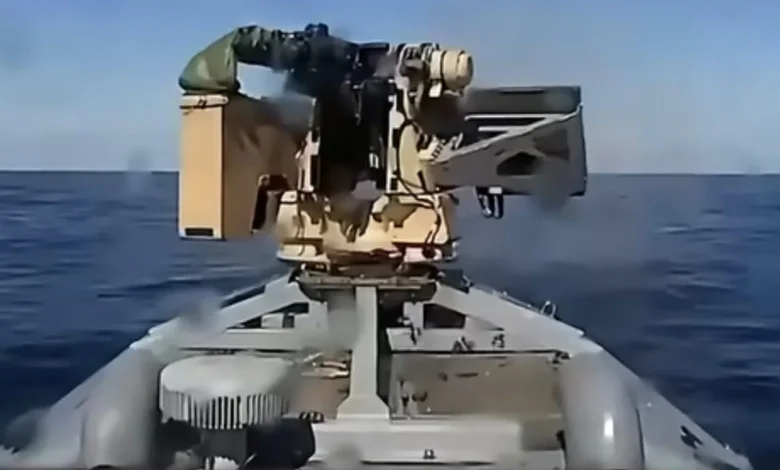
Upon positive identification, Ukrainian operators deployed a Sargan-3000 USV to intercept the threat. The Sargan-3000, unlike its target, is not merely an explosive delivery system; it represents a more versatile class of surface drone equipped with a remote-controlled weapon station (RCWS). The ensuing chase culminated in a tactical engagement approximately one kilometer from the target’s intended trajectory. Video footage released by the Ukrainian Navy illustrates the precision of the engagement, showing the Sargan-3000 utilizing its mounted 12.7 mm machine gun to systematically dismantle the Russian drone. The strike initially targeted the communications antenna, effectively “blinding” the Russian operator, before sustained fire caused the vessel to suffer catastrophic damage and sink.
The Technological Evolution of the Black Sea Conflict
The deployment of USVs in the Black Sea has fundamentally altered the strategic calculus for the Russian Black Sea Fleet. Since the early months of the full-scale invasion, Ukraine has faced a significant disadvantage in conventional naval power, possessing no major surface combatants capable of challenging the Russian fleet head-on. In response, Kyiv invested heavily in indigenous drone technology, creating a fleet of USVs that have forced the Russian Navy to withdraw its assets from forward-operating bases like Sevastopol.
The Orcan drone, the Russian vessel neutralized in this engagement, represents Moscow’s attempt to mirror this successful Ukrainian strategy. These explosive USVs are often integrated into a broader intelligence, surveillance, and reconnaissance (ISR) network. Analysts note that these boats frequently operate in tandem with aerial platforms, such as the Iranian-designed Geran-2 series. The flying drones provide the "eyes" for the maritime drones, relaying target data and assisting in communication relay to overcome the inherent signal-attenuation challenges of operating a drone boat far from the coastline.
The Ukrainian Sargan-3000, by contrast, is a more sophisticated platform. By mounting a Kongsberg-designed remote weapon station, Ukraine has transformed the drone from a simple suicide platform into a multi-role combatant capable of reconnaissance, patrol, and, as demonstrated on September 12, counter-drone operations.
Comparative Analysis: The Rise of Autonomous Interceptors
The combat effectiveness of the Sargan-3000 highlights the growing importance of the "loitering interceptor" role in naval warfare. For months, military observers had anticipated the inevitability of USV-on-USV combat. As noted by naval analyst H.I. Sutton, this engagement is a direct continuation of the trends observed in the air domain, where quadcopter drones have been used to hunt and destroy other drones, and on the ground, where robotic vehicles are increasingly tasked with clearing minefields or engaging infantry.
The technical specifications of these vessels highlight the lopsided nature of this specific encounter. The Russian Orcan is designed for speed and impact, prioritizing the payload-to-cost ratio. It is a disposable tool. The Sargan-3000, however, is designed for survivability and precision. The inclusion of a 12.7 mm machine gun allows the operator to maintain a standoff distance, minimizing the risk of the drone being caught in the blast radius of an exploding enemy vessel. This tactical advantage proved decisive, as the Ukrainian drone remained unscathed throughout the exchange.
Implications for Global Naval Doctrine
The success of the Ukrainian operation has profound implications for naval doctrine worldwide. Navies across the globe are currently struggling to address the threat posed by cheap, mass-produced drones. Traditionally, naval defense systems were designed to counter high-value targets like anti-ship cruise missiles or manned aircraft. The cost of using a multi-million-dollar interceptor missile to destroy a drone boat costing a fraction of that price is strategically unsustainable.
This engagement offers a cost-effective alternative: using drones to fight drones. By delegating the intercept mission to uncrewed systems, commanders can clear maritime lanes and defend critical infrastructure without putting human sailors in the direct line of fire. Furthermore, the use of remote weapon stations on autonomous vessels suggests that future naval battles may increasingly involve "swarms" that include both offensive explosive drones and defensive "guardian" drones.
However, the proliferation of such technology also introduces new risks. As these systems become more autonomous, the potential for escalation increases. The integration of artificial intelligence into targeting systems—allowing drones to identify, track, and engage enemy craft with minimal human intervention—is the next logical step in this technological arms race. International observers and humanitarian groups have already begun to express concerns regarding the accountability of autonomous weapon systems in the maritime domain.
Official Responses and Future Outlook
While the Russian Ministry of Defense has remained characteristically silent regarding the specific details of the lost drone, the incident has been widely celebrated by Ukrainian officials as a triumph of domestic engineering and tactical innovation. The United24 media platform, acting as a window into the Ukrainian war effort, underscored that this event is not merely an isolated victory but a demonstration of the "asymmetric superiority" Ukraine has managed to carve out in the Black Sea.
The strategic reality is that the Black Sea is no longer a sanctuary for conventional naval vessels. The successful defense of maritime corridors against drone-based threats has become a priority for all nations with significant coastlines. Following the September 12 engagement, it is expected that both Russia and Ukraine will accelerate the development of counter-USV technologies. This will likely involve the integration of more sophisticated sensors, electronic warfare suites, and perhaps even autonomous kinetic interceptors capable of operating in high-sea states.
As the war in Ukraine persists, the "naval drone duel" will likely be studied in military academies for decades to come. It serves as a stark reminder that the traditional boundaries of naval warfare have been permanently breached. The future of maritime security will be defined not by the tonnage of a navy’s capital ships, but by the agility, autonomy, and technological sophistication of its uncrewed fleet.
In conclusion, the destruction of the Russian Orcan by a Ukrainian Sargan-3000 is a watershed moment. It marks the shift from drones as a tactical novelty to drones as a foundational component of naval strategy. As both sides continue to refine their autonomous capabilities, the Black Sea will remain the primary testing ground for a new, colder, and more precise form of warfare—one where robots serve as the primary combatants in the struggle for maritime control. The era of the uncrewed naval engagement has arrived, and the tactical lessons learned on that September day are already being integrated into the defense strategies of nations far removed from the conflict.