Trump Administration Repeals Biden-Era Carbon Regulations to Revitalize Domestic Coal Industry

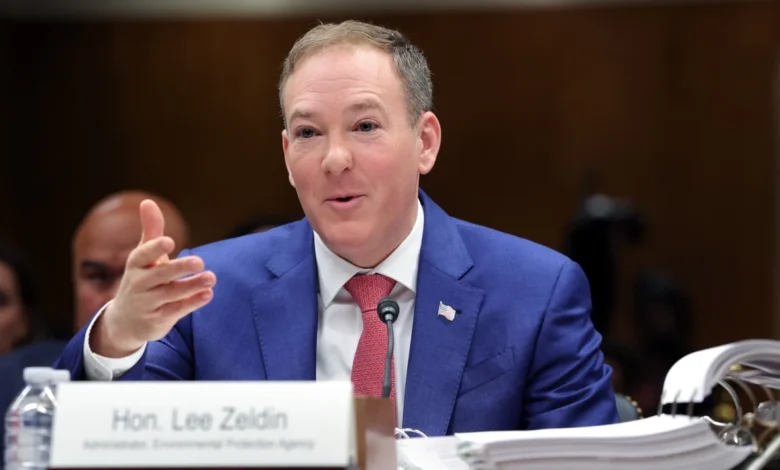
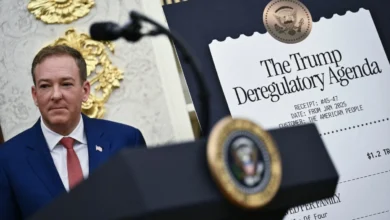
The Environmental Protection Agency (EPA), under the direction of Administrator Lee Zeldin, has officially moved to repeal the Biden administration’s 2024 power plant emission standards. This sweeping regulatory reversal marks a definitive shift in federal climate policy, signaling an end to the federal government’s attempt to mandate the retirement or technological retrofitting of the nation’s aging coal-fired power fleet. By removing the requirement that utilities either decommission coal plants by the mid-2030s or install carbon capture technology, the administration is effectively clearing the path for a resurgence in coal-based electricity generation across the United States.
A Two-Decade Tug-of-War on Climate Policy
The U.S. approach to coal-fired energy has been characterized by persistent legal and regulatory instability for nearly twenty years. The conflict began in earnest during the Obama administration, which sought to bypass legislative gridlock by drafting the Clean Power Plan—a regulatory framework designed to force a transition away from coal toward cleaner energy sources. That effort was ultimately hampered by intense industry pushback and, eventually, a landmark Supreme Court ruling that limited the EPA’s authority to unilaterally dictate the energy mix of the nation’s utility grid.
The Biden administration attempted to circumvent these legal hurdles by offering utilities a more flexible regulatory path, incentivizing retirement or the adoption of carbon capture and storage (CCS) systems. The Trump administration’s current repeal strategy, however, rejects the premise of these regulations entirely. By aligning its justification with the recent rollback of vehicle emissions standards—arguing that climate science remains unsettled and that regulatory compliance imposes an unnecessary financial burden on consumers—the EPA has signaled that it will no longer prioritize carbon mitigation as a central objective of its energy policy.
Chronology of Regulatory Shifts
The volatility of American climate policy is underscored by a series of legislative and executive actions that have defined the last two decades:
- 2015: The Obama administration unveils the Clean Power Plan, aiming to reduce power sector carbon emissions by 32% by 2030 compared to 2005 levels.
- 2017–2019: The Trump administration initiates the repeal of the Clean Power Plan, replacing it with the Affordable Clean Energy (ACE) rule, which offered more leniency to coal operators.
- 2022: The Supreme Court issues a ruling in West Virginia v. EPA, significantly curtailing the EPA’s ability to force a sectoral shift from coal to renewable energy.
- 2024: The Biden administration finalizes new, more narrow performance standards for existing coal plants, mandating emissions reductions that effectively require either plant closure or expensive CCS retrofitting by 2035.
- 2026: The Trump administration announces the full rescission of the 2024 standards, removing federal performance requirements for greenhouse gas emissions in the electricity sector.
The Role of Data Centers and AI in Coal Demand
A critical factor complicating the energy transition is the unprecedented surge in electricity demand driven by the expansion of artificial intelligence and large-scale data centers. While the 2024 Biden rule assumed that coal plants would continue to decline due to market pressures, the current reality has deviated from those projections. As energy-intensive tech infrastructure demands 24/7 "baseload" power, many utilities have found that existing coal assets provide a reliable, if dirty, solution to capacity shortages.
Industry giants, such as Southern Company, have explicitly cited the growth of data centers as the justification for extending the operational life of coal units that were previously scheduled for decommissioning. In Mississippi, for instance, plans to shutter major coal infrastructure by 2028 have been shelved in favor of continuing operations well into the 2030s. This pivot has drawn sharp criticism from environmental advocacy groups, who argue that the shift toward "AI-powered coal" undermines long-term climate goals and relies on unproven or failed carbon capture technologies.
Economic and Public Health Implications
The economic arguments presented by the administration—centered on the promise of "unleashing" domestic energy to lower consumer costs—are countered by significant public health data. Coal combustion remains a primary source of mercury, sulfur dioxide, nitrogen oxides, and fine particulate matter (PM2.5).
According to projections released by the EPA under the previous administration, the 2024 rule was expected to prevent over 1,200 premature deaths annually by 2035, alongside hundreds of thousands of asthma-related incidents. Beyond the human toll, the environmental impacts carry a staggering financial weight; researchers have estimated that the cumulative damages associated with air pollution and climate-related health complications resulting from prolonged coal reliance could reach $370 billion over the coming decade.
Economic Realities vs. Regulatory Policy
Despite the Trump administration’s efforts to provide a lifeline to the coal industry, market analysts suggest that the broader trajectory of the energy sector may be resistant to federal intervention. The fundamental economics of the energy market—driven by the historically low cost of natural gas and the declining cost of wind and solar—continue to make coal increasingly uncompetitive.
Kenneth Gillingham, a professor of environmental economics at Yale, notes that while the repeal creates a "clear signal" that allows coal plants to persist on the margins, it does not fundamentally reverse the technological obsolescence of the coal fleet. "We have more electricity demand than we did before, which is, on the margins, going to make it easier for a coal plant to stay on," Gillingham explains. "But the trend is pretty clear, and you can only fight markets so much."
The Legal and Future Landscape
The administration’s decision to remove the "regulatory stick" is expected to face immediate challenges in the federal court system. Environmental organizations and various state attorneys general are already preparing to contest the EPA’s justification for the repeal, specifically challenging the claim that the agency lacks the authority to regulate carbon as a pollutant in the electricity sector.
Furthermore, the administration’s recent attempt to mandate that certain coal plants remain operational—which was recently ruled unlawful by a federal court—suggests that the executive branch may face significant friction in its efforts to preserve coal assets. While the current policy provides a reprieve for operators of aging plants, it does not provide a long-term economic foundation for the coal industry.
As utilities face pressure from shareholders and lenders to meet their own internal net-zero targets and ESG (Environmental, Social, and Governance) commitments, many are expected to proceed with their transition plans regardless of the federal regulatory environment. The "whiplash" effect described by experts creates a climate of uncertainty, where long-term capital investments are increasingly difficult to plan.
Ultimately, the repeal of the Biden-era rule shifts the burden of the energy transition back to the states and the private sector. Whether this leads to a sustained, long-term revitalization of coal or merely a temporary reprieve for a struggling sector remains a point of intense debate among energy economists and policymakers. As the nation grapples with the dual pressures of rising energy demand from the digital economy and the escalating physical risks of climate change, the role of coal in the American grid stands at a critical, if increasingly isolated, crossroads.
Related posts: