The Aftermath of the Midterms: How the Shift in Congressional Power Will Reshape Hollywood and the Media Landscape

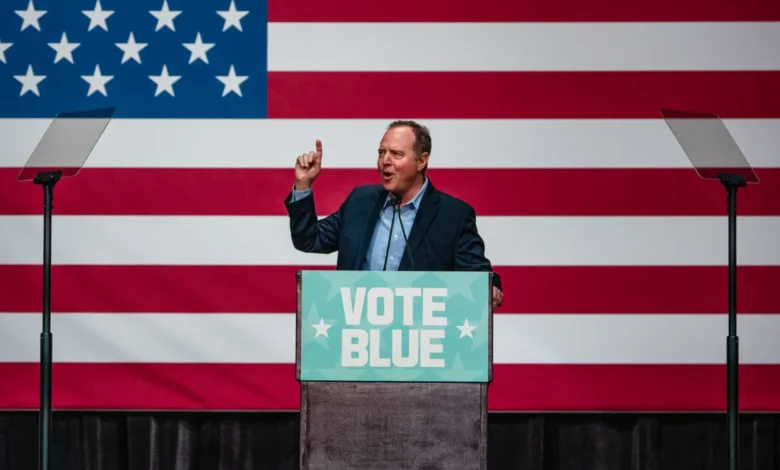
The Democratic surge in the recent midterm elections has fundamentally altered the legislative environment in Washington, creating a complex new reality for the entertainment and media sectors. While the national discourse has been dominated by debates over inflation, foreign policy in Iran, and the overarching referendum on President Trump’s executive agenda, the electoral shift carries profound, industry-specific implications. As the 119th Congress concludes and the 120th prepares to take shape, Hollywood studios, major broadcasters, and government relations professionals are recalibrating their strategies to navigate a landscape defined by new subpoena powers, potential funding reversals, and shifting tax priorities.
The Legislative Impasse: Federal Tax Incentives in Flux
For years, the film and television industry has prioritized the passage of a robust federal tax incentive. The proposed legislation—which gained surprising traction through a bipartisan coalition featuring unlikely allies such as President Trump and Representative Adam Schiff—was initially viewed as a legislative certainty. However, the seismic shift in the midterms has introduced significant uncertainty.
In September, Representative Schiff remarked that the "iron is very hot," urging swift action to secure the credits before the legislative calendar grew crowded. Yet, the current political atmosphere suggests a cooling effect. President Trump’s recent public ambivalence has further complicated the narrative. During a rally last Friday, the President openly questioned the necessity of these incentives, remarking to a skeptical crowd that Hollywood figures were lobbying him heavily. His hesitation—paired with the booing of the crowd—has signaled to industry insiders that the bipartisan goodwill previously enjoyed by the initiative may be eroding.
The data reveals a precarious path forward. Of the 31 original Republican cosponsors of the bill in the House and Senate, ten will not return to the next Congress. For the industry, this represents a significant loss of institutional memory and legislative capital. While Democratic leadership generally maintains a more favorable view of the arts and entertainment sector, a transition to a new Congress would necessitate starting the legislative process from scratch. Industry lobbyists are now weighing whether to push for a lame-duck session victory or to wait for the more favorable, albeit untested, environment of the upcoming term.
FCC Oversight and the Carr Doctrine
The change in congressional control does not grant Democrats authority over the Federal Communications Commission (FCC) directly, as the executive branch maintains appointment power. However, it significantly alters the oversight dynamic. Chairman Brendan Carr has spent the last two years under a Republican-led legislature with minimal scrutiny, using his position to challenge major broadcasters over content-related grievances. His vocal opposition to specific satirical segments—such as those on Jimmy Kimmel Live—and his formal inquiries into political commentary on programs like The View have drawn sharp criticism from media advocacy groups.
With the House now moving into the hands of a new majority, the FCC will likely face a barrage of oversight hearings. Democrats have signaled an intent to utilize subpoena power to investigate what they characterize as the "weaponization" of the FCC to suppress opposing viewpoints. The broader implication is a shift from the current "jawboning" model—where the agency uses informal pressure to influence broadcast content—to a more formalized, combative, and public investigative process. Industry experts suggest this could lead to a stalemate that leaves broadcasters caught in the crossfire of a partisan battle over the First Amendment.
The Future of Public Media: Rebuilding from the Ashes
Perhaps the most dramatic change in the media landscape occurred last year, when Congress stripped $1.1 billion from the Corporation for Public Broadcasting (CPB), effectively forcing the organization to cease operations. This move sent shockwaves through the public broadcasting system, leading to widespread budget cuts, station closures, and a fundamental reduction in the reach of PBS and NPR.
The change in congressional power offers a lifeline for those seeking to restore federal support for public media. However, the path to restoration is fraught with cultural and political peril. Conservative critics have long argued that public media functions as a vehicle for ideological indoctrination, and any attempt to re-fund the CPB will inevitably trigger a high-stakes debate over the role of government-subsidized news.
Advocacy groups, such as the National Federation of Community Broadcasters, are calling for a more modern approach. In a recent statement, CEO Rima Dael argued against simply recreating the status quo of 1967. Instead, the organization is pushing for a reimagined system that prioritizes multi-platform delivery—reaching audiences through air, internet, and mobile—to combat the rise of artificial intelligence-driven misinformation. The proposal suggests that federal investment should focus on "fact-based news and trusted local information," reflecting a broader effort to frame public media as a critical utility rather than a cultural luxury.
Investigations and the Shadow of Corporate Capitulation
The House Oversight Committee is poised to become the most influential entity in Washington for the media sector. Beyond policy, the committee is expected to leverage its investigative powers to examine the internal dynamics between major media conglomerates and the executive branch.
A primary focus of these potential inquiries involves the "media capitulations" of 2025. This includes a broad range of high-profile legal and corporate dealings:
- Documentary and Litigation Payouts: The committee may seek internal records regarding the "Melania" documentary deal and the financial settlements involving Trump’s litigation against CBS’s "60 Minutes" and George Stephanopoulos.
- Deplatforming Litigation: Investigations may probe how major tech firms—including Meta, YouTube, and Twitter (now X)—managed their content moderation policies in response to presidential pressure and subsequent lawsuits.
- Merger Oversight: The Ellison family’s efforts to secure federal approval for the Paramount-Skydance and Paramount-Warner Bros. mergers remain a point of intense interest. Legislators are expected to investigate whether political favors were exchanged for regulatory leniency.
The potential for these investigations is hampered by the inevitable invocation of executive privilege. Any attempt by Congress to obtain internal communications will likely result in protracted legal battles that could last through the remainder of the presidential term. Nevertheless, if successful, these investigations could expose a treasure trove of documentation revealing how the media landscape was navigated at the peak of the administration’s influence.
Analysis: A New Era of Media Accountability
The transition in Congress marks the end of a period of relative alignment between the media industry and the legislative branch. As Washington prepares for the next two years, the media sector finds itself in an unfamiliar position: caught between the need for bipartisan support on economic issues like tax credits and the threat of aggressive oversight on content and corporate behavior.
The data suggests that the "blue reality" of the coming term will create a dual-track experience for media executives. On one hand, there is the potential for policy restoration, particularly in the realm of public media funding and a more defensive posture against executive branch overreach. On the other, there is the undeniable risk of becoming the subject of partisan inquiry.
The industry’s challenge will be to balance the pursuit of its legislative priorities—specifically the tax incentives that are vital to production stability—against the necessity of maintaining operational independence. As the 120th Congress prepares to convene, the focus will remain on whether these institutions can navigate a climate of heightened scrutiny while securing the federal support required to maintain their influence in an increasingly fragmented digital economy. The next two years will be defined by these legislative maneuvers, legal standoffs, and the ongoing struggle to define the boundaries of corporate and political interaction in the modern media era.