Singapore Airlines Stands By Its 25 Percent Stake in Air India Despite Continued Financial Drag

Singapore Airlines (SIA) has reaffirmed its commitment to its 25.1% equity stake in Air India, choosing to maintain its strategic investment despite the carrier continuing to weigh heavily on its corporate financial results. The reaffirmation of support comes at a time when legacy airline partnerships face intense scrutiny over profitability, post-pandemic operational stabilization, and the sheer capital expenditure required to execute multi-year fleet overhauls and service modernizations.
For the six-month period ending September 30, Singapore Airlines announced a net profit of S$134 million ($104 million), representing a significant 44% decline compared to the corresponding period in the previous year. This earnings contraction occurred despite SIA generating record-breaking revenues of S$11.3 billion ($8.8 billion), driven by resilient global passenger volumes, robust premium-cabin demand, and strong cargo performance. However, the group’s bottom line was severely impacted by its share of financial losses stemming from its associated companies, predominantly driven
by Air India as the newly merged carrier navigates a massive structural turnaround program.
Financial Breakdown of the Half-Year Performance
During the first half of the fiscal year, SIA’s share of losses from associated companies totaled S$361.7 million ($281.5 million). To put this figure into perspective, the financial drag inflicted by Air India was nearly 2.7 times the size of SIA’s total net profit for the same six-month window.
Despite the staggering absolute value of these losses, executive leadership at Singapore Airlines has pointed to meaningful sequential improvements as evidence that Air India’s turnaround strategy is beginning to bear fruit. The S$361.7 million loss represents an improvement compared to the S$429.5 million ($334 million) in losses recorded during the same period a year earlier.
A closer examination of the financial timeline reveals that this recovery materialized entirely during the second quarter. In the three months leading up to September 30, SIA reported that its share of losses from associated companies was S$110 million ($85.6 million) lower than the figures registered in the corresponding quarter of the previous year. This second-quarter improvement actually exceeded the S$68 million improvement recorded for the half-year as a whole, indicating that losses during the initial quarter (April to June) had temporarily widened compared to the previous year. This quarterly rebound ultimately cushioned SIA’s overall half-year performance and reinforced confidence among the board of directors regarding the long-term viability of the partnership.
Background and Context of the SIA-Air India Partnership
The intertwining of Singapore Airlines and Air India represents one of the most ambitious cross-border airline consolidations in modern aviation history. Following the privatization of Air India by the government of India, the national carrier was acquired by the Tata Group in January 2022. Recognizing the need for deep operational expertise, global network integration, and world-class service standards, the Tata Group sought a strategic international partner.
In November 2022, SIA and Tata Sons announced a landmark agreement to merge Air India and Vistara—then a joint venture between SIA and Tata—with SIA injecting significant capital into the newly expanded entity. Under the terms of the transaction, SIA invested S$360 million ($267 million) to acquire a 25.1% stake in the enlarged Air India group.
The ultimate goal of this consolidation is to forge a formidable global aviation powerhouse capable of competing directly with the dominant Gulf carriers (such as Emirates, Qatar Airways, and Etihad) and major European legacy networks for lucrative traffic moving between the West, India, and Southeast Asia. However, transforming Air India into a premium, globally competitive carrier has required absorbing massive legacy inefficiencies, renegotiating complex vendor and labor contracts, and undertaking an unprecedented fleet modernization initiative.
The Fleet Modernization and Turnaround Chronology
Air India’s journey toward modernization has been defined by several critical milestones since its return to private ownership:
- January 2022: Tata Sons officially takes over management and ownership of Air India from the Government of India, inheriting an aging fleet, low aircraft utilization rates, and deeply ingrained operational challenges.
- November 2022: Singapore Airlines and Tata Sons announce the merger of Vistara into Air India, sealing SIA’s 25.1% equity investment in the consolidated carrier.
- February 2023: Air India places a historic, record-breaking dual-order for 470 aircraft from both Airbus and Boeing, signaling its intent to aggressively expand its international and domestic network.
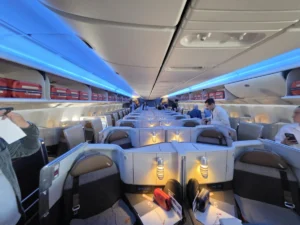
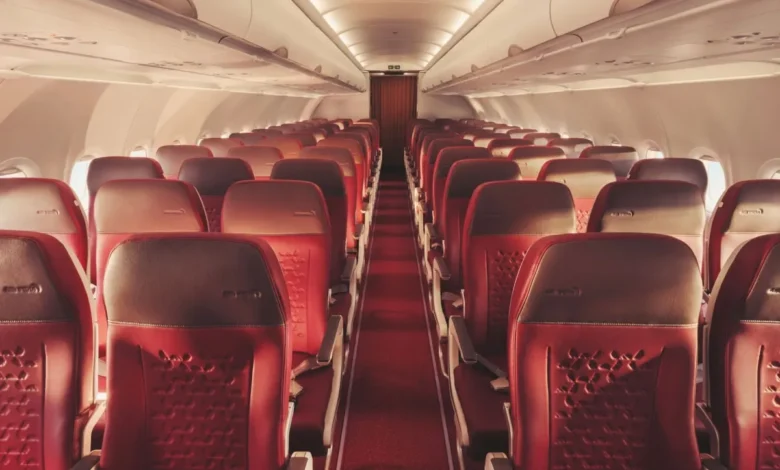
- Late 2023 through 2024: The airline initiates a comprehensive interior cabin retrofit program for its legacy widebody and narrowbody fleets—including the Airbus A320neo and Boeing 777 aircraft—aimed at introducing modern lie-flat business class seats, upgraded economy cabins, and state-of-the-art in-flight entertainment systems.
- November 2024: The formal operational merger of Vistara into Air India is completed, unifying frequent flyer programs, customer service platforms, and operating certificates into a single integrated airline group.
- Mid-2025 to Present: The combined airline navigates the heavy capital expenditure and transitional growing pains associated with harmonizing two distinct corporate cultures, maintenance schedules, and service standards, resulting in the ongoing financial losses reported by SIA.
Official Responses and Strategic Rationale
Speaking to analysts and investors during the financial results briefing, Singapore Airlines executives emphasized that the losses being absorbed from Air India are entirely in line with projections formulated at the onset of the partnership. Reorganizing an airline of Air India’s scale—which commands a dominant domestic market share in one of the world’s fastest-growing aviation markets while aiming for a premier international standing—requires patience and sustained financial backing.
Industry analysts note that Singapore Airlines views the Indian aviation market as an irreplaceable pillar of its long-term growth strategy. While Singapore’s home market is mature and geographically compact, India represents a massive, expanding demographic with surging middle-class wealth, rising disposable incomes, and an insatiable appetite for international travel. By securing a quarter-stake in India’s premier international flag carrier, SIA ensures that it remains deeply embedded in traffic flows originating from and terminating in Indian secondary and primary metros, feeding traffic back through its primary hub at Singapore Changi Airport.
Furthermore, the integration of Vistara into Air India has allowed SIA to protect and expand its corporate footprint in India. Vistara had built a strong reputation for premium service quality, and maintaining a direct equity stake ensures that these service standards permeate the broader Air India brand as the fleet retrofit program continues.
Fact-Based Analysis of Implications
The decision by Singapore Airlines to absorb hundreds of millions of dollars in associated losses without diluting its equity commitment carries several clear implications for the aviation sector:
- Capital Intensity of Airline Turnarounds: The financial drag reported by SIA underscores the immense capital required to modernize legacy airlines. Turnarounds of this scale cannot be achieved quickly; they demand multi-year horizons where heavy operational investments precede profitability.
- Strategic Value Outweighs Short-Term Pain: SIA’s willingness to sustain these losses demonstrates that long-term strategic positioning in high-growth emerging markets often supersedes short-term earnings volatility. The board views the Indian market as critical to defending SIA’s global competitive moat against regional rivals.
- Positive Trajectory in Second-Quarter Metrics: The deceleration of losses observed in the second quarter offers empirical support to management’s thesis that the worst of the post-merger integration costs and operational friction points are beginning to stabilize.
- Competitive Pressures on Global Hubs: As Air India gradually completes its cabin retrofits, takes delivery of its newly ordered widebody aircraft, and refines its network connectivity, it will increasingly contest traffic flows currently captured by Southeast Asian and Middle Eastern carriers. SIA’s partnership ensures it shares in the upside of this anticipated market capture.
Conclusion
Singapore Airlines’ steadfast holding of its 25.1% stake in Air India, despite a S$361.7 million earnings drag over the past six months, illustrates a calculated, long-term approach to international aviation strategy. While the short-term financial cost has notably compressed SIA’s net profits, sequential improvements observed in the second quarter suggest that the structural turnaround of India’s flag carrier is progressing along its projected trajectory. As Air India advances through its fleet modernization and post-merger integration phases, SIA’s foundational investment positions the Singaporean carrier to capture substantial value from one of the world’s most dynamic aviation landscapes.