Senator John Kennedy Urges President Trump to Prioritize Economic Affordability and Provide Transparency on Iran Conflict Ahead of Midterm Elections

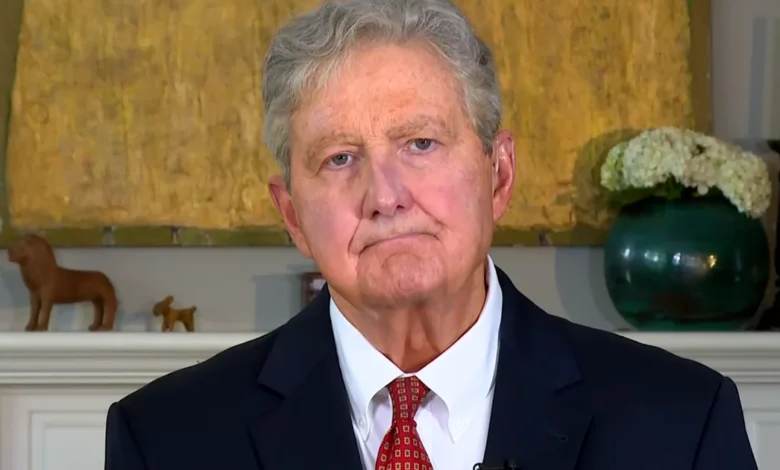
As the 2026 midterm elections draw near, Republican Senator John Kennedy of Louisiana has issued a pointed appeal to President Donald Trump, urging the administration to pivot its messaging toward the domestic cost of living. Speaking on CBS News’ "Face the Nation" on September 27, 2026, the senior senator highlighted a growing disconnect between the administration’s current focus and the primary anxieties of the American electorate. With political control of Congress hanging in the balance, Kennedy’s remarks underscore a strategic rift within the GOP regarding how best to navigate the dual pressures of an ongoing military intervention in Iran and persistent inflationary headwinds.
The midterm cycle, traditionally a referendum on the sitting president, appears poised to be exceptionally competitive. Senator Kennedy noted that during his recent campaign travels through critical battleground states, the feedback from voters has been remarkably consistent. "When moms and dads lie down to sleep at night and can’t," he stated, "they are worried about the cost of living." For many families, the erosion of purchasing power due to sustained energy price volatility has become the defining issue of the cycle. Kennedy cautioned that failure to address these concerns directly could jeopardize Republican prospects in November, as voters prioritize their immediate financial security over other policy debates.
The Intertwined Crisis: Iran and the Global Economy
Central to the economic discourse is the ongoing conflict with Iran, a situation that has direct, tangible consequences for the average American household. The blockade of the Strait of Hormuz—a vital artery for global oil transit—has created significant supply chain disruptions. Senator Kennedy acknowledged this linkage, noting that voters are increasingly aware of the connection between foreign policy decisions and their personal expenses. "They are a little worried about Iran because they don’t understand why, but they know the two are inextricably linked," he observed.
The economic reality is stark: oil serves as a foundational commodity for the broader economy, impacting everything from the cost of transportation and shipping to the price of plastic, fertilizer, and heating. With energy prices fluctuating in response to the blockade, the "painful" reality of higher fuel costs is manifesting at gas stations and grocery stores across the nation. While Kennedy defended the administration’s tactical decision-making, including the use of sanctions and the naval blockade, he urged the White House to provide greater clarity to the public. He advocated for a televised national address delivered either by President Trump himself, or by key administration officials such as Secretary of State Marco Rubio and Chairman of the Joint Chiefs of Staff, General Dan Caine.
The request for a "why, how, and when" strategy—explaining the rationale for the intervention, the metrics for success, and a roadmap for withdrawal—reflects a broader desire within the Republican caucus for a more cohesive communication strategy. Kennedy admitted that his advice is not always embraced by the President, noting, "the president doesn’t take orders from me, he barely takes suggestions," yet he remains committed to pushing for a more transparent public discourse to maintain party cohesion ahead of the midterms.
A History of Military and Economic Friction
The current tension surrounding the Iran conflict did not emerge overnight. Since the initial escalation earlier this year, the administration has maintained a policy of "maximum pressure," relying on economic isolation and maritime interdiction. However, as the conflict has entered its third quarter, the patience of both the international community and domestic stakeholders has been tested.
In July 2026, the first significant public calls for a policy review began to emerge from the Senate. Senator Kennedy’s initial request for a formal briefing from Secretary Rubio and General Caine was met with limited administrative response, leading to a mounting sense of urgency. The administration’s recent rejection of an Iranian proposal to reopen the Strait of Hormuz—labeled by the White House as a non-serious offer—has further entrenched the current stalemate. The U.S. government maintains that the offer failed to address the core security concerns that necessitated the blockade in the first place.
The Controversy of Publicly Funded Self-Promotion
Beyond the scope of foreign policy and economic management, Senator Kennedy also addressed a brewing controversy regarding the use of taxpayer funds for government-sponsored advertising. The issue centers on a new, high-visibility ad campaign that portrays the administration’s accomplishments. Critics, including several members of the Senate, have argued that these advertisements function as personal branding for the President rather than public information.
"I don’t think any public official, including President Trump or Kristi Noem or John Kennedy, should spend public money on private ads for themselves," the Senator remarked. This stance is consistent with his previous legislative oversight activities. Earlier in the year, Kennedy led a rigorous questioning of former Department of Homeland Security Secretary Kristi Noem regarding a $220 million advertising expenditure that prominently featured her image. That controversy served as a precursor to a wider debate regarding the ethics of government communication.
Furthermore, Kennedy weighed in on the ongoing debate surrounding the naming of public buildings, specifically the Kennedy Center. With the administration seeking to place the President’s name on high-profile landmarks, Kennedy suggested a legislative remedy: "I also think that we ought to have a rule that no politician can have a building named after him while he’s alive." By advocating for this standard, he hopes to depoliticize the naming process and reduce the frequency of controversies that distract from substantive policy debates.
Implications for the 2026 Midterm Landscape
The political implications of these issues are profound. As the Republican Party seeks to maintain or expand its majority, the ability to synthesize foreign policy success with domestic economic stability is paramount. Data from independent analysts suggest that inflation remains the primary driver of voter sentiment. If energy prices remain elevated due to the ongoing situation in the Strait of Hormuz, the administration will face a difficult task in convincing voters that the current strategy is the most viable path forward.
Some GOP candidates in highly contested districts have already begun to break with the administration’s messaging, prioritizing the need for an exit strategy in the Middle East to alleviate pressure on fuel prices. This shift suggests that if the President does not adopt the communication strategy suggested by figures like Senator Kennedy, the party may face a fragmented messaging environment in the final weeks of the campaign.
Analytical Perspective on Current Strategy
The administration finds itself in a classic geopolitical dilemma: the balance between strategic regional containment and domestic economic welfare. The blockade of the Strait of Hormuz is an effective tool of leverage against the Iranian regime, but it acts as a self-imposed tax on the American consumer. Without a clear path to de-escalation, the political cost of the policy is likely to continue to rise.
Kennedy’s intervention serves as a bridge-building exercise. By positioning himself as a loyal but critical voice, he is attempting to steer the administration toward a position that satisfies both the hawks within his party—who want to maintain pressure on Iran—and the pragmatists, who recognize that economic hardship is an electoral liability.
As the calendar turns toward November, the administration’s willingness to engage in the type of transparency requested by the Senator will likely serve as a barometer for how the Republican Party intends to handle its broader domestic agenda. Whether the White House chooses to lean into the current policy of confrontation or pivots to a more nuanced, communication-heavy approach will undoubtedly influence the final outcome of the 2026 midterms and the future trajectory of U.S. foreign policy.
For the time being, the legislative session remains in a state of high alert. With the clock ticking, Senator Kennedy’s persistence reflects the broader anxiety of a caucus that is acutely aware of the fragility of its political standing and the direct impact of global instability on the local, day-to-day lives of the American public. The resolution of these debates—over Iran, over government spending, and over the message of the party—will define the legacy of this midterm cycle and set the stage for the next phase of the legislative term.