Egypt Shifts Strategic Focus Toward High-Value Tourism With Ambitious 2030 Revenue Targets

Egypt is undergoing a profound structural evolution in its powerhouse tourism sector, pivoting away from a historical reliance on sheer visitor volume toward a model that prioritizes higher tourist spending, extended length of stay, and premium experiential offerings. The Egyptian Tourism Authority has formally laid out an ambitious economic roadmap, targeting between $36 billion and $40 billion in annual tourism receipts by the year 2030. This strategic leap represents a major scaling up from the projected $18.6 billion expected to be generated this year, signaling a decisive shift in how North Africa’s premier travel destination plans to monetize its unparalleled cultural and geographical assets.
For decades, the narrative surrounding Egypt’s tourism industry has been dominated by headcounts—measuring success primarily by the millions of travelers passing through Cairo International Airport or queuing at the Giza Plateau. While the country remains firmly on track to hit its longstanding goal of welcoming 30 million annual visitors by the end of the decade, national tourism planners are emphasizing that volume alone is no longer the metric of true economic health. As global travel trends favor sustainable, high-impact, and immersive experiences, Egypt is redesigning its value proposition to capture a more affluent demographic of international travelers.
The Evolution of Volume: A Robust Growth Trajectory
The strategic pivot toward value does not mean that Egypt’s popularity as a global destination is slowing down. On the contrary, the country continues to post impressive growth in raw visitor arrivals, demonstrating remarkable resilience in the face of persistent geopolitical headwinds and macroeconomic uncertainties in key source markets.
According to official figures released by the Egyptian Tourism Authority, the country welcomed 14.4 million international visitors in the first nine months alone, representing a steady 4% year-over-year increase compared to the same period in the previous cycle. This upward momentum builds directly upon a record-breaking performance in 2025, during which Egypt hosted approximately 19 million international travelers. Independent market projections align closely with this positive trajectory; BMI, a Fitch Solutions company, has forecasted that Egypt’s annual visitor arrivals will reach approximately 20.19 million.
This sustained influx of tourists provides a solid foundation for the newly announced revenue goals. However, the widening gap between the current earnings of $18.6 billion and the 2030 target of up to $40 billion underscores the necessity of the current strategy. To bridge this gap, Egypt must drastically increase per-visitor expenditure, a challenge that requires diversifying its tourism portfolio far beyond mass-market package tours and traditional itineraries.
Beyond the Traditional Circuit: Pitching Premium Experiences
At the heart of the Egyptian Tourism Authority’s new marketing and operational strategy is a comprehensive diversification of the visitor experience. For generations, Egypt’s tourism footprint was largely defined by a compressed itinerary: a whirlwind tour of the Pyramids of Giza, the Egyptian Museum in Tahrir Square, and a standard cruise down the Nile between Luxor and Aswan, often concluding with a brief beach holiday in Hurghada or Sharm El-Sheikh.
While these iconic landmarks will always serve as the anchor of Egypt’s tourism appeal, the state is actively pitching alternative, high-end experiences designed to attract affluent, discerning travelers who are willing to pay a premium for exclusivity, authenticity, and comfort.
Key pillars of this new high-value strategy include:
- Exclusive River Journeys: Moving away from large, high-capacity cruise ships, the tourism board is heavily promoting traditional dahabiya sailing boats and bespoke, ultra-luxury Nile cruises. These intimate vessels offer private, unhurried travel experiences along the river, catering to travelers seeking privacy, historical depth, and slower-paced exploration.
- Boutique and Heritage Hospitality: To capture higher accommodation spend, Egypt is fostering the development of boutique hotels situated in historic quarters, coastal enclaves, and rural settings. This includes the restoration of heritage properties that offer unique architectural and cultural immersion rather than standardized luxury.
- Specialized Niche Tourism: The strategy places renewed emphasis on wellness retreats, high-end culinary tourism—showcasing the evolution of Egyptian gastronomy—and deeply curated heritage tours led by specialized Egyptologists and historians.
Chronology of a Transformation: How Egypt Rebuilt Its Tourism Economy
To understand the magnitude of Egypt’s current ambition, it is essential to examine the turbulent timeline that has shaped the nation’s tourism sector over the past decade and a half. The journey from crisis management to strategic redirection has required immense resilience, infrastructure investment, and diplomatic engagement.
- 2011–2016 (The Crisis Era): The political uprisings of 2011, followed by subsequent regional instability and the tragic downing of Metrojet Flight 9268 over the Sinai Peninsula in late 2015, dealt devastating blows to Egypt’s tourism industry. Visitor arrivals plummeted from a pre-crisis peak of over 14 million down to historic lows, forcing widespread hotel closures and economic hardship for millions of Egyptians reliant on the sector.
- 2017–2019 (The Recovery Phase): Through concerted government efforts to overhaul national security protocols at airports and tourist sites, alongside targeted international public relations campaigns, Egypt began clawing back its market share. Visitor numbers rebounded steadily, approaching pre-2011 levels by the end of 2019.
- 2020–2021 (The Pandemic Disruption): Just as the sector was regaining its footing, the global COVID-19 pandemic brought international travel to a near-total standstill. Rather than retreating, the Egyptian government utilized this downtime to accelerate massive infrastructure projects and the restoration of historical sites.
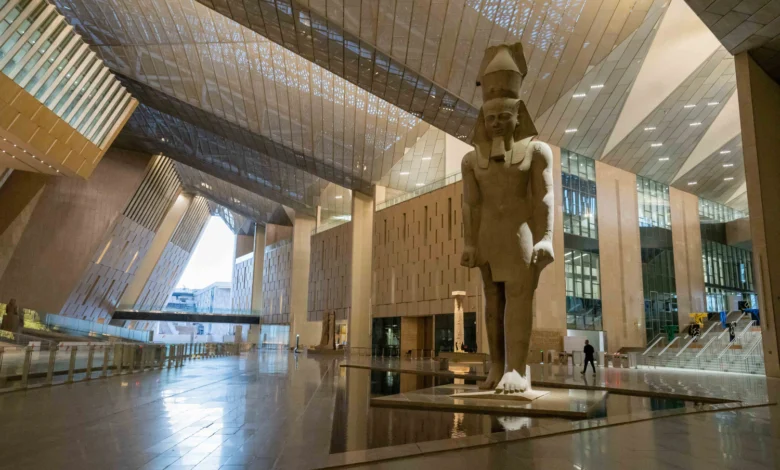
- 2022–2025 (The Infrastructure Boom and Rebound): This period marked a dramatic resurgence. Egypt invested heavily in transformative infrastructure, most notably the long-anticipated development of the Grand Egyptian Museum (GEM) near the Giza Pyramids, alongside expansive road networks, new airports, and the modernization of urban centers like Cairo and Alexandria. By 2025, arrivals surged to a record 19 million.
- 2026 and Beyond (The Strategic Pivot to Value): Having successfully restored traveler confidence and achieved record-breaking volume, the Egyptian Tourism Authority officially inaugurated its new phase: transitioning from a volume-driven market to a value-driven economic powerhouse, with the definitive $36 billion to $40 billion revenue target set for 2030.
Official Responses and Stakeholder Perspectives
Representatives from the Egyptian Tourism Authority have been vocal in framing this transition not merely as a financial target, but as a holistic approach to sustainable tourism development. In recent policy briefings, tourism officials have emphasized that managing visitor flow is critical to preserving the country’s fragile archaeological heritage and enhancing the overall visitor experience.
“Arrivals have driven the story for years, and the country remains on track to reach 30 million visitors annually by 2030,” the Egyptian Tourism Authority stated in an official release. “The next target is value.”
This sentiment is widely shared by private sector stakeholders, hotel operators, and touristic investors across the country. Industry analysts point out that mass tourism, while generating immediate cash flow, places severe strain on public infrastructure, water resources, and historical monuments. By encouraging higher-spending tourists who stay longer in the country—often spreading their itineraries beyond Cairo and Luxor into regions like the Fayum Oasis, the Red Sea mountains, and the White Desert—the economic benefits of tourism are distributed more evenly while mitigating the ecological and physical wear and tear on primary tourist sites.
International travel trade associations and luxury hospitality groups have responded favorably to Egypt’s new trajectory. Major hotel chains have accelerated plans to introduce high-end properties in emerging destinations along the Red Sea coast and within Upper Egypt, reflecting growing confidence in the government’s ability to attract a wealthier demographic of global travelers.
Broader Economic Implications and Analytical Outlook
The push to capture up to $40 billion in tourism receipts by 2030 carries profound macroeconomic implications for Egypt. Tourism is one of the nation’s most vital sources of foreign currency, playing a critical role in stabilizing the Egyptian pound, creating direct and indirect employment for millions of citizens, and supporting small-to-medium enterprises ranging from local artisans to transport providers.
Economists note that shifting the focus from quantity to value yields a higher multiplier effect per tourist. A luxury traveler utilizing boutique accommodations, private guides, high-end dining, and exclusive transport services consumes significantly fewer public resources per dollar spent than a high volume of budget travelers relying on heavily subsidized mass-market packages. This efficiency is crucial as Egypt continues to manage broader economic reforms and infrastructure expansion.
However, achieving this transformation will not be without challenges. Industry experts emphasize that reaching the 2030 revenue target requires continuous improvements in service standards, workforce training, aviation connectivity, and the ease of obtaining visas. Ensuring that the digital infrastructure—including seamless booking platforms, high-speed connectivity at archaeological sites, and transparent digital payment systems—matches the expectations of luxury travelers will also be paramount.
Furthermore, maintaining a balance between high-end development and accessibility remains a delicate task for policymakers. As Egypt rebrands itself as a premier destination for luxury and immersive cultural travel, it must preserve the welcoming, inclusive spirit that has defined Egyptian hospitality for millennia.
As the decade progresses, all eyes will be on North Africa’s tourism giant to see whether its bold mathematical leap from volume to value can successfully redefine the future of Mediterranean and Middle Eastern travel, setting a new benchmark for sustainable national tourism development in the 21st century.
Related posts: