The American political arena stands at a critical crossroads, marked by intense partisan friction, legislative gridlock, high-stakes local elections, and a rapidly evolving national debate heading toward the 2026 midterm elections. Guided by CNN Political Director David Chalian, the CNN Political Briefing podcast serves as an essential journalistic barometer for these shifting dynamics. From the halls of Capitol Hill, where Republican leadership faces internal rebellions and federal budget showdowns paralyze Washington, to municipal races in New York City and legislative battles in California, the nation’s political machinery is undergoing a profound transformation.
This analysis explores the multifaceted challenges currently confronting both major political parties, the friction within the Republican caucus under the shadow of the MAGA movement, the strategic calculations of Democrats aiming to recapture Congress, and the structural realignments reshaping American governance.
Capitol Hill in Turmoil: Internal GOP Fractures and Leadership Challenges
The internal stability of the Republican Party in the House of Representatives has faced severe strain, highlighted by mounting frustrations among rank-and-file lawmakers regarding leadership efficacy. A prominent example emerged when California Republican Representative Kevin Kiley voiced sharp criticisms regarding House Speaker Mike Johnson, asserting that leadership had faltered at critical legislative junctures. These intra-party disputes expose a deeper "vibe shift" within the Republican conference as members navigate the complexities of governing under a narrow majority while preparing for the legislative and electoral hurdles of the 2026 midterms.
Compounding these national tensions are local electoral maneuvers designed to alter the balance of power. In California, new congressional district lines championed by Democratic Governor Gavin Newsom have threatened the job security of several incumbent Republicans, including Kiley. This weaponization of redistricting underscores the high-stakes environment in which federal lawmakers must campaign, balancing their loyalty to national party platforms with the stark realities of shifting local demographics.
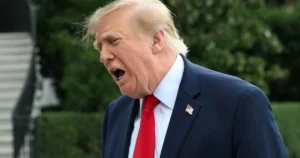
Simultaneously, the broader conservative movement is grappling with questions regarding its long-term identity and the enduring influence of President Donald Trump. While Trump remains the dominant figure of the Make America Great Again (MAGA) base, rare fissures have appeared in this alliance. Incidents such as policy reversals on sensitive transparency matters—including the handling of historical investigative files—alongside persistent voter anxiety regarding economic inflation, the cost of living, and the administration’s heavy focus on foreign affairs, have invited critique even from loyalist factions. Political analysts like POLITICO’s Jonathan Martin suggest these developments prompt critical discussions about whether the party is entering a transitional phase, forcing Republicans to evaluate prospective successors and strategize for a political landscape beyond Trump’s immediate leadership.
Federal Gridlock: The Mechanics and Fallout of Government Shutdowns
Few events test the resilience of American governance quite like a federal government shutdown. Throughout late 2025, Washington witnessed prolonged fiscal impasses that severely disrupted federal agencies and fueled a bitter blame game between the legislative and executive branches.
During the height of these standoffs, key congressional figures from both sides of the aisle articulated deeply contrasting strategic visions. Progressive Democrats, such as Representative Ro Khanna of California, maintained a firm stance on non-negotiable federal priorities, arguing that safeguarding social safety nets and public funding was paramount. Conversely, moderate and battleground Republicans, including Representative Mike Lawler—who represents a district carried by the opposition in the previous presidential election—argued that the opposition party committed a critical tactical error by allowing the shutdown to materialize, believing voters would ultimately hold Democrats accountable for the economic disruption.
The stalemate ultimately required intricate legislative navigation, drawing commentary from seasoned strategists. Former Virginia Governor and Democratic National Committee Chairman Terry McAuliffe weighed in on the intra-party debates among Democrats regarding how to leverage such crises. McAuliffe emphasized that while electoral victories provide momentum, coherent economic messaging remains essential for the party to successfully challenge the GOP majority in the upcoming midterms. Meanwhile, campaign architects like Suzan DelBene, Chair of the Democratic Congressional Campaign Committee, laid out aggressive blueprints aimed at flipping crucial House seats, focusing heavily on voter dissatisfaction with congressional dysfunction.

Urban Politics Reinvented: The 2025 Mayoral Race in New York City
While Washington battled over federal funding, local elections across the country provided a fascinating preview of shifting ideological currents within the electorate. The 2025 mayoral race in New York City commanded national attention, rewriting traditional political playbooks and highlighting the growing prominence of progressive figures within urban centers.
The race was defined by the remarkable rise of Zohran Mamdani, a once little-known state assemblyman who captured the Democratic nomination and ultimately secured victory in America’s largest city. Mamdani’s campaign successfully mobilized a coalition of progressive voters by focusing heavily on housing affordability, tenant rights, and economic inequality, thereby challenging the established political hierarchy of New York. Political anchor Errol Louis of Spectrum News NY1 noted that Mamdani’s unorthodox strategy and populist messaging effectively altered how urban campaigns are waged, providing a potential template for progressive candidates nationwide.
For the Republican party, contesting the mayoralty in a city where registered Democrats outnumber Republicans by a margin of six to one has always presented an extraordinary hurdle. Curtis Sliwa, the GOP standard-bearer who previously mounted a challenge against former Mayor Eric Adams, found himself running a challenging race against both Mamdani and disgraced former Governor Andrew Cuomo. Despite immense pressure from establishment figures urging him to step aside to consolidate the anti-progressive vote, Sliwa pressed forward, reflecting the enduring populist streak within urban conservatism.
Beyond New York, the broader 2025 electoral map featured fierce gubernatorial and municipal contests in states like New Jersey and Virginia. CNN correspondents Jeff Zeleny and Eva McKend tracked the final weeks of these campaigns, reporting on how local issues—ranging from education policy to taxation—served as crucial testing grounds for national party branding ahead of the midterms.
Accountability, Justice, and Historical Precedents
The intersection of law and politics remained a dominant theme throughout this period, underscored by unprecedented legal actions involving high-ranking government figures. Among the most notable developments was the federal prosecution of former FBI Director James Comey, an event legal experts described as an extraordinary chapter in the history of American jurisprudence.
Legal analysts, including former federal prosecutor Elie Honig, placed the prosecution within a broader historical framework. In his analysis of executive power and Department of Justice investigations spanning from the Nixon administration to the Trump era, Honig highlighted the profound institutional implications of utilizing federal prosecutorial power against former intelligence and law enforcement chiefs. Such proceedings not only test the structural independence of the judicial system but also deepen public polarization regarding the rule of law and the accountability of public officials.
Broader Implications and Outlook for the 2026 Midterms
The convergence of internal congressional rebellions, municipal political realignments, and high-stakes legal battles paints a clear picture of an American political system under intense stress. The fissures within the Republican caucus reflect the complex task of maintaining party unity amidst generational and ideological transitions, while Democrats must reconcile their progressive impulses with the pragmatic demands of winning working-class voters in competitive districts.
As the nation looks toward the 2026 midterm elections, the outcomes of these legislative standoffs and local electoral experiments will heavily influence the balance of power in Washington. The ability of congressional leaders to manage internal dissent, address persistent economic anxieties, and navigate institutional friction will determine whether governance can overcome partisan polarization. Through rigorous analysis and direct engagement with key political players, ongoing journalistic coverage ensures that the electorate remains informed about the forces shaping the future of American democracy.