Atletico Madrid and Real Madrid clash in war of words following controversial derby officiating decisions

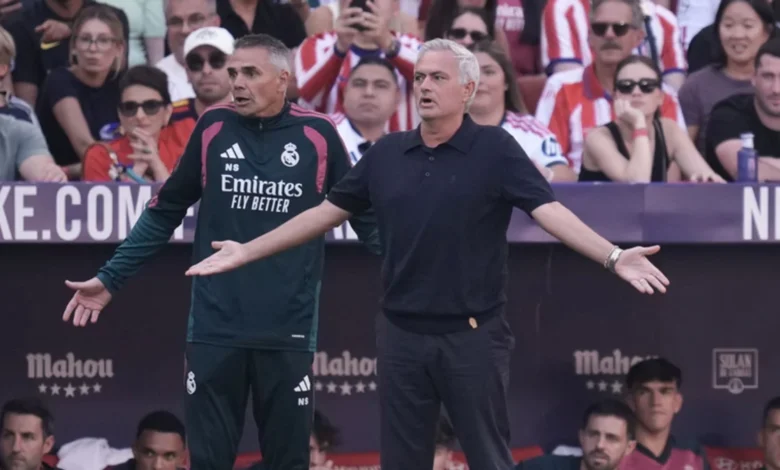
The fallout from Sunday’s heated Madrid derby has transcended the pitch, evolving into a bitter institutional dispute between Atletico Madrid and Real Madrid. Following a 2-1 defeat at the Metropolitano, Real Madrid manager Jose Mourinho launched a scathing critique of match official Miguel Angel Ortiz Arias, an attack that has since been met with a sharp, social media-driven rebuttal from the Atletico Madrid camp. The tension between the two clubs—already high due to the traditional rivalry—has been exacerbated by specific officiating calls that Real Madrid argues directly altered the course of the match and their standing in the La Liga title race.
A Match Defined by Disputed Decisions
The narrative of Sunday’s encounter shifted fundamentally in the first half, a period Real Madrid contends was marred by systemic errors. The primary point of contention revolves around two specific challenges that Real Madrid officials insist warranted red cards for Atletico players. In the 35th minute, Atletico defender Cristian Romero challenged Jude Bellingham, appearing to plant his studs into the midfielder’s knee. While referee Ortiz Arias initially issued a caution to the wrong party, a VAR intervention led him to the pitchside monitor. Following the review, the official rescinded a card issued to Bellingham but merely booked Romero, a decision that has sparked significant debate regarding the interpretation of "serious foul play" under current FIFA officiating guidelines.
Compounding the frustration for the visitors was a second incident involving Lee Kang-in, who appeared to strike Federico Valverde’s ankle with his studs in the 44th minute. Despite the proximity of the referee, no disciplinary action was taken, and the VAR team did not intervene. These two incidents occurred during a scoreless period, and Real Madrid maintains that had these players been dismissed, the tactical landscape of the match would have shifted drastically in their favor.
The Turning Point: The Second Half Collapse
The match reached its decisive juncture five minutes after the half-time interval. Real Madrid defender Dean Huijsen was shown a red card for a professional foul on Giuliano Simeone inside the penalty area. The resulting spot-kick was converted by Alejandro Grimaldo, giving Atletico the lead. The numerical disadvantage proved insurmountable for Real Madrid, as Jonathan David doubled the hosts’ lead in the 58th minute. Although Antonio Rudiger headed in a late goal to reduce the deficit, the damage was already done.
This shift from an 11-vs-11 contest to a 10-vs-11 disadvantage served as the catalyst for Mourinho’s post-match explosion. The manager presented printed photographs of the Romero and Lee challenges to the media, asserting that the refereeing staff had failed to maintain the integrity of the contest. "We could skip the press conference because the story of the match is right here," Mourinho stated. "Those were two clear red cards. The difficulties we’ve faced since the sending-off—11 against 10—well, we can imagine what 50 minutes of 11 against nine would have been like if justice had been done."
Institutional Responses and the Social Media War
The intensity of the conflict escalated on Monday when Atletico Madrid utilized their official X (formerly Twitter) account to respond to the criticisms. In a calculated move, the club posted a video featuring a printer producing a sheet of paper with the hashtag #StopAcosoArbitralYA, which translates to "stop referee harassment now." This was followed by a static image of Mourinho from his press conference with the same caption.
This digital campaign represents a strategic effort by Atletico to shift the narrative away from the technical errors and toward the perceived pattern of pressure applied by Real Madrid on officiating bodies. The club appears to be framing Mourinho’s comments as an attempt to intimidate referees, a tactic that has historically been a point of friction in La Liga. By publicly labeling the criticism as "harassment," Atletico is signaling to the Spanish Football Federation (RFEF) that they view the ongoing discourse as detrimental to the safety and autonomy of match officials.
Technical Analysis: The Refereeing Performance
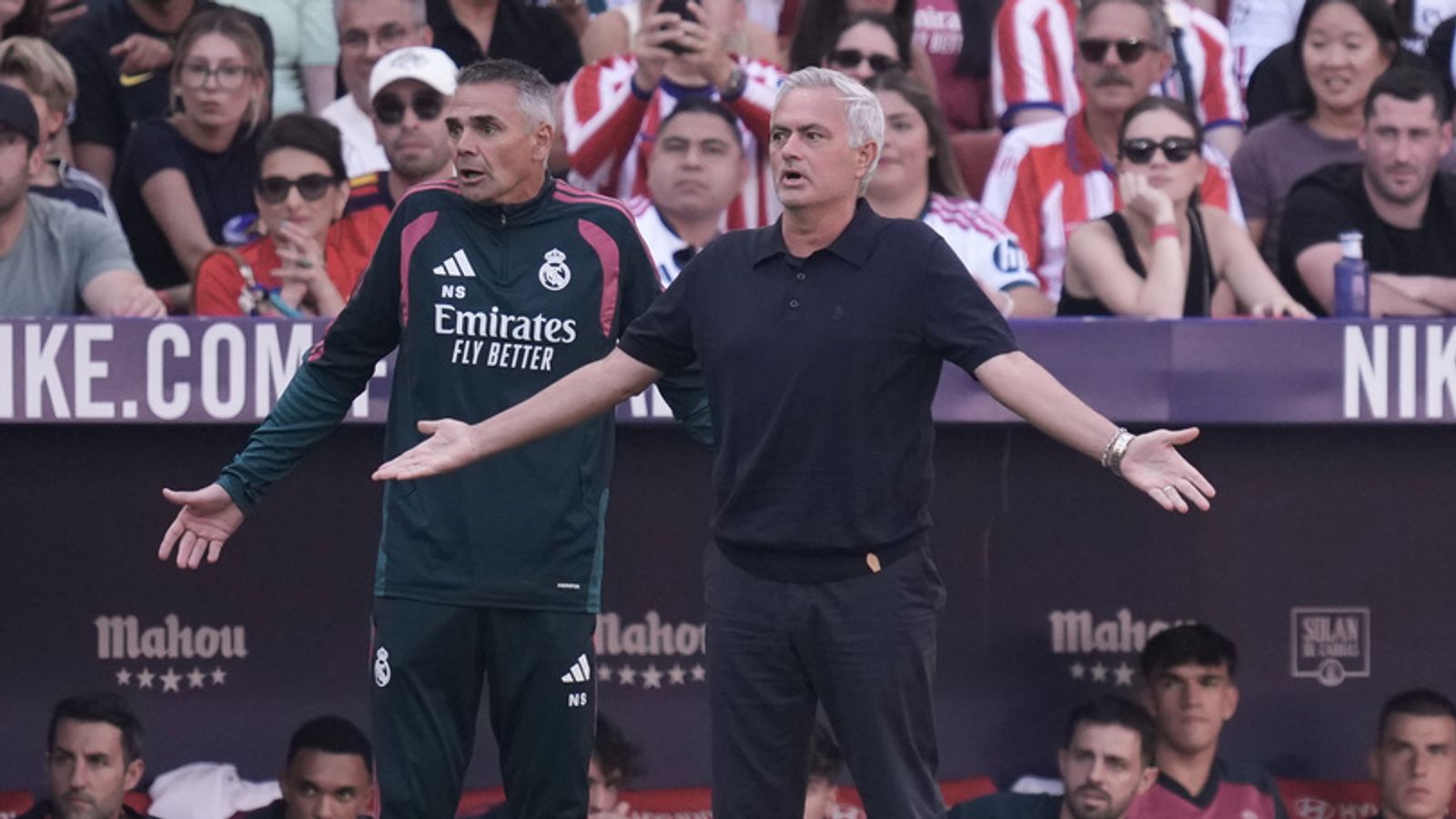
The scrutiny of Miguel Angel Ortiz Arias is particularly notable given his profile in the league. Mourinho pointedly criticized the appointment, highlighting the 41-year-old’s lack of international experience. "They’ve put a referee, aged 41, with no international experience—it’s certainly not because he’s a great referee," Mourinho claimed, adding that the atmosphere at the Metropolitano—which he characterized as "80s-style pressure"—appeared to overwhelm the officiating team.
Statistically, the game was highly contested, but the disciplinary imbalance was stark. Real Madrid, already frustrated by being six points adrift of Barcelona in the league table, views these points as vital. The official match report released by Real Madrid provided a chronological breakdown of the "poor officiating," explicitly naming the incidents involving Romero and Lee as the factors that "shaped the match." This formal documentation suggests that Real Madrid is preparing to file a grievance with the RFEF, though such reports rarely lead to the overturning of results or retrospective disciplinary action against opposing players.
Broader Implications for La Liga
The incident underscores a growing tension regarding the use of VAR and the consistency of disciplinary standards in Spanish football. When refereeing decisions become the focal point of the post-match discourse, the sporting merit of the competition is often called into question. The "level playing field" that Mourinho alluded to is a recurring theme in his public rhetoric, often used to suggest that his club is subject to different standards than their rivals.
Furthermore, the public nature of the feud—played out through press conferences and social media—indicates that the traditional "gentleman’s agreement" between clubs to respect the sanctity of officiating is fraying. With the RFEF under increasing pressure to standardize refereeing protocols, the fallout from this derby may force the league to address how managers interact with the media regarding controversial decisions.
Contextualizing the Rivalry
The Madrid derby has always been more than a regional sporting fixture; it is a clash of identities. Historically, Atletico Madrid has positioned itself as the working-class alternative to the perceived institutional dominance of Real Madrid. When these clubs lock horns, every officiating decision is viewed through a lens of bias or conspiracy. Mourinho’s specific mention of "80s-style pressure" references an era of Spanish football where the home-field advantage was often attributed to the intimidating influence of the crowd on referees. By invoking this, Mourinho is attempting to frame his defeat not as a tactical failure, but as a victimhood of systemic bias.
Looking Ahead
As the dust settles, the focus will turn to the RFEF’s Technical Committee of Referees. While it is unlikely that the result of the match will be altered, the committee may issue a statement regarding the performance of the officiating team. Meanwhile, both clubs must prepare for the next round of league fixtures. For Real Madrid, the challenge is to overcome the psychological blow of the defeat and regain ground in the title race. For Atletico, the victory is a significant morale boost, though the ongoing war of words risks overshadowing their performance on the pitch.
The current atmosphere suggests that the return leg at the Santiago Bernabeu will be played under an even higher level of scrutiny. As the league season progresses, the memory of these contested calls will likely remain a flashpoint in the wider conversation about the standards of officiating in professional football. The clash between Mourinho’s combative style and the institutional pushback from Atletico serves as a reminder that in the high-stakes world of La Liga, the game is never truly over once the final whistle blows.
Related posts: