Federal Firefighting Forces Pushed to the Brink as Climate-Driven Wildfires Overwhelm Current Operational Capacity

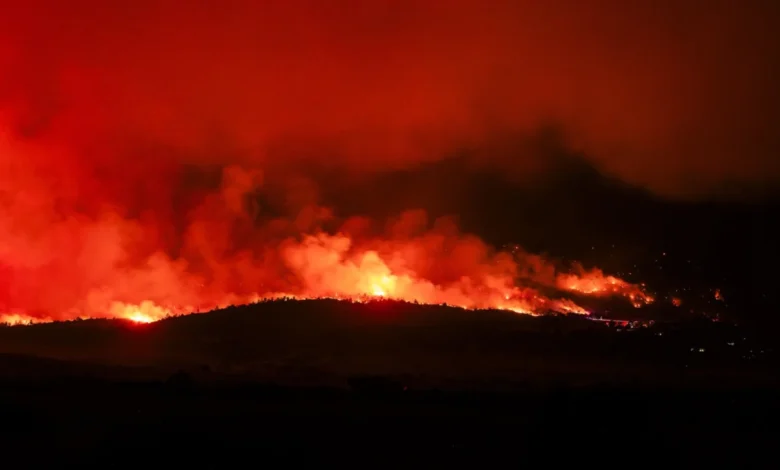
The American landscape is currently witnessing one of the most volatile fire seasons in modern history, as a combination of extreme climatic conditions and federal policy shifts has placed unprecedented strain on the nation’s wildland firefighting workforce. As of mid-September 2026, over 8.4 million acres have been scorched across the United States—a figure representing 149 percent of the ten-year average. This season has not only tested the physical endurance of the men and women on the front lines but has also ignited a contentious debate over whether federal administrative directives are prioritizing aggressive suppression over the fundamental safety of personnel.
The Escalating Crisis of 2026
The 2026 fire season has been defined by its relentless nature. By early July, the Aspen Acres fire in Rye, Colorado, had already consumed more than 73,000 acres, cementing its status as the eighth-largest blaze in the state’s history. This event was merely a precursor to a broader, nationwide trend of increased fire intensity. Data from the Wildland Fire Lessons Learned Center indicates that firefighters are being "overrun" by flames at the highest frequency seen in two decades.
By mid-August, federal agencies had already recorded 12 "entrapments"—a critical emergency classification describing scenarios where firefighters are caught in the path of a fire, often blocked from escape routes or forced into safety zones under extreme thermal stress. This represents a twenty-year high for such incidents. The human toll has been equally severe, with 14 on-duty fatalities reported so far this season. Among these were the tragic deaths of three firefighters at the Knowles fire in Colorado, followed by the subsequent death of a fourth crew member due to related injuries, marking the deadliest entrapment incident in 13 years.
A Chronology of Operational Strain
The fatigue reported by crews is the result of a season that began early and has refused to subside. Typically, fire seasons follow a predictable arc, but 2026 has remained in a state of high alert for an abnormal duration. The National Interagency Fire Center (NIFC) tracks "Preparedness Levels" (PL) on a scale of 1 to 5, with PL5 signifying that national resources are fully committed and the potential for new large fires is high.
This year, the United States remained at PL5 for 48 consecutive days, nearly doubling the ten-year average for sustained peak-alert status. While the national status was downgraded to PL4 on September 4 and further to PL3 shortly thereafter, the residual impact on the workforce is profound. Firefighters who have been deployed in near-constant rotations since April report symptoms of severe exhaustion, which experts warn is directly impacting decision-making capabilities on the ground.
Administrative Directives and the "Full Suppression" Mandate
At the heart of the controversy is a shift in federal strategy. Agriculture Secretary Brooke Rollins and Interior Secretary Doug Burgum have both issued directives this year mandating a return to "fast and full" suppression tactics. This policy shift effectively discourages the use of "managed fire"—the practice of allowing certain low-risk fires to burn to clear out excess fuel and promote forest health—in favor of aggressive, immediate containment.
While administration officials argue that this approach is necessary to protect communities and infrastructure in an era of catastrophic fire potential, many veteran fire managers and ecologists view the policy as a dangerous overreach. Timothy Ingalsbee, a fire ecologist and executive director of Firefighters United for Safety, Ethics and Ecology, argues that the current strategy ignores the reality of the "fire environment." According to Ingalsbee, the push for aggressive direct attack is often ineffective in the face of modern, high-intensity blazes and serves only to exhaust personnel and equipment without achieving meaningful long-term safety.
The Leadership Gap
The logistical foundation of firefighting—the experienced leaders who manage task forces and division-level operations—is crumbling. These positions require decades of field experience to master. As the demands of the job have increased, the attrition rate among veteran supervisors has spiked.
Bobbie Scopa, a retired fire chief and current vice-president of the advocacy group Grassroots Wildland Firefighters, notes that the current structure is failing to replace these specialized roles. "We have had shortages for 20 years, and it’s only gotten worse," Scopa stated. The result is a reliance on temporary or less-qualified personnel to fill critical supervisory roles, a practice that five U.S. Senators—Michael Bennet, Alex Padilla, Ron Wyden, Adam Schiff, and John Hickenlooper—highlighted in a recent letter to the Department of the Interior and the USDA. The senators expressed grave concern that the combination of staffing shortages and forced overtime is creating a hazardous environment that inevitably leads to the increased fatality rates observed this year.
Official Stance vs. Reality on the Ground
The federal government maintains that the system is functioning as intended. In testimony provided to a congressional subcommittee in July, USFS Chief Tom Schultz stated, "Our firefighting workforce is stronger than at any point in recent years. We are fully staffed and equipped to respond aggressively to every unplanned ignition."
However, this rhetoric stands in stark contrast to the reports emerging from the field. Firefighters, speaking under the condition of anonymity, described a reality of depleted rosters and an inability to fulfill requests for support from local communities. The discrepancy suggests a fundamental misalignment between the administrative assessment of the agency’s capabilities and the actual operational reality.
Broader Implications: The Inflation of Fire
Fire management experts often draw an analogy between firefighting capacity and the economy: if the environment (fire behavior) acts like inflation, the resources (firefighters) are the wages that have failed to keep pace. As the climate crisis continues to lengthen the fire season and increase the intensity of blazes, the traditional methods of fighting fire are becoming less sustainable.
The current financial burden is also significant. The combined suppression budget of $6 billion is rapidly being depleted, with weeks of potential fire risk still remaining in the calendar year. Critics argue that the current "smother everything" approach is not only expensive but counterproductive. By suppressing every fire, the forest floor continues to accumulate "fuel load"—dead trees and brush that would otherwise be cleared by smaller, controlled fires. This ensures that when a fire does break out, it is significantly more destructive and harder to control, thereby perpetuating the very crisis the current administration seeks to mitigate.
Looking Ahead
The 2026 season serves as a grim indicator of a new, harsher reality. With thousands of firefighters still deployed and the lingering effects of months of sleep deprivation, smoke inhalation, and physical injury, the workforce is nearing a "breaking point," according to industry advocates.
The path forward remains uncertain. Without a significant shift in how the federal government approaches wildland fire—specifically by addressing the chronic retention issues, revising the "full suppression" mandate to allow for more strategic fire management, and acknowledging the limitations of current resources—the cycle of exhaustion and danger is likely to intensify. As the nation grapples with the long-term impacts of a changing climate, the question remains whether the current firefighting infrastructure can adapt to a future where the traditional fire season is becoming a year-round threat. For the crews currently navigating the embers of 2026, the priority remains survival, yet many fear that the institutional decisions being made in Washington are making that objective increasingly difficult to achieve.
Related posts: