The Hidden Benefactor: Uncovering the Russian Oligarch Behind Donald Trump Jr.’s Private Island Wedding

The investigation into the private wedding festivities of Donald Trump Jr. and his bride, Bettina Trump, has unveiled a significant and previously undisclosed financial link to a Russian national with deep ties to the Kremlin. Reporters from ProPublica spent days meticulously analyzing fragmented digital footprints, social media metadata, and private correspondence to confirm that Umar Kremlev, a Russian oligarch and confidant of President Vladimir Putin, served as a primary financial benefactor for the couple’s multi-day wedding celebration in the Bahamas this past May. This revelation has triggered an immediate formal inquiry from the House Oversight Committee, raising critical questions regarding the intersection of personal relationships, foreign influence, and potential conflicts of interest within the inner circle of the American political establishment.

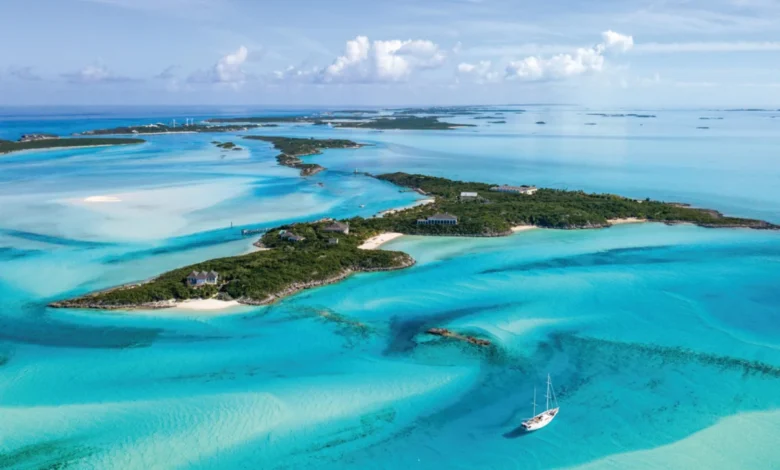
The wedding, held on a set of ultra-exclusive private islands in the Exumas—a chain of islands renowned for hosting global elites—was initially presented as a tightly controlled, intimate family affair. Official documentation released by the family and various lifestyle publications showcased a curated aesthetic of beachfront ceremonies and high-end celebrations. However, the reality of the logistics behind the event suggests a level of financial sponsorship that was absent from the public narrative.
Chronology of the Investigation and Digital Evidence
The discovery of Kremlev’s presence was the result of a rigorous forensic investigation into the digital trail left by guests and the hosts themselves. Initial scrutiny focused on official media releases and social media posts from the wedding weekend, which featured prominent guests such as Jared Kushner and Eric Trump. Notably, despite the intimate guest list of approximately 50 people, Umar Kremlev was conspicuously absent from these official galleries.

The breakthrough occurred when investigators cross-referenced the wedding dates with content posted to the Telegram channel of the Russian oligarch. Videos uploaded by Kremlev during the same weekend showed him in a tropical setting. A specific visual detail—the distinct design of wicker patio furniture appearing in the background of his video—was matched against promotional imagery of the private island resorts where the Trump wedding took place.
Further verification was secured through an Instagram gallery posted by a guest, a swimsuit model and friend of the bride. A group photograph, which had been previously overlooked, depicted a large gathering on a white sand beach. In the back row, partially obscured but clearly identifiable, was Kremlev. This image provided the visual confirmation necessary to link the oligarch directly to the event. Subsequent analysis of records and interviews with three individuals familiar with the event’s logistics confirmed that Kremlev had paid for the rental of the private island and several other high-ticket expenses for the Saturday and Sunday festivities.

Financial Arrangements and the Role of the IBA
The financial structure behind these payments is particularly noteworthy. Records indicate that the funds were funneled through a Dubai-based entity affiliated with the International Boxing Association (IBA). The IBA, which is currently led by Kremlev, has faced significant scrutiny and controversy in recent years. The organization has been a primary beneficiary of funding from Gazprom, the Russian state-owned energy giant, creating a direct financial link between the wedding expenses and a corporation that is effectively an arm of the Russian state.
The wedding weekend was divided into several distinct events. While the Friday ceremony was attended by an even smaller circle, the Saturday and Sunday receptions involved more extensive guest lists and extravagant production values. These included a Junkanoo band, a custom seafood boat buffet, and a professional fireworks display over the ocean. The company responsible for the fireworks display typically charges approximately $70,000 for such productions—an expense that, like the island rental, was covered by the oligarch.

Official Responses and Public Statements
Following the publication of these findings, the couple released a joint statement via Instagram, acknowledging that Kremlev had hosted the celebrations on the final two days of the weekend. "Our dear friend Umar very generously hosted two incredible nights of celebrations for us after our wedding," the statement read. "It was an extraordinarily generous wedding gift from a friend, and something for which we were and remain incredibly grateful."
A spokesperson for Donald Trump Jr. emphasized that the relationship is purely personal. "Umar is a personal friend of Don," the spokesperson stated, further noting that there is no formal business relationship between the two men. Similarly, the press office for Kremlev described him as a "businessman and philanthropist," asserting that he and Trump Jr. met "a couple of years ago" and that they have never discussed political matters.

Despite these assurances, the involvement of a high-profile Russian figure in the financing of an event for the president’s son has drawn intense scrutiny. The top Democrat on the House Oversight Committee has launched an investigation, demanding that Trump Jr. produce all communications with Kremlev and provide a detailed ledger of "all purchases made for your wedding by foreign nationals."
The Geopolitical Context and Potential Implications
The proximity of this event to broader geopolitical tensions cannot be ignored. At the time of the wedding, Kremlev was identified in reports as having been part of a Russian delegation in China, accompanying President Putin—a claim that his press office later attempted to qualify by stating he was not part of the "official" delegation. Regardless of his formal status, Kremlev has been subject to personal sanctions by the Ukrainian government due to his reported ties to the Russian security services and his role in managing an organization heavily subsidized by Russian state-controlled entities.

The implications of this financial arrangement are being debated by experts in counterintelligence and government ethics. Frank Montoya Jr., a retired senior FBI official with extensive experience in counterintelligence, underscored the inherent risks of such arrangements. "If I’m paying for your wedding, at some point, you’re going to owe me something," Montoya observed. This sentiment captures the core of the ethical concerns: the "quid pro quo" potential inherent when an individual with significant foreign ties provides massive financial gifts to a person in a position of political influence.
Analysis of the "Curated" Narrative
The discrepancy between the "intimate" image projected by the family and the reality of the event’s funding highlights a broader trend in how the Trump family manages its public and private image. By curating the visual footprint of the wedding, the family maintained a veneer of domestic normalcy while simultaneously engaging in high-stakes social interactions that involved individuals under intense international scrutiny.

The fact that the presence of several Russian nationals puzzled some of the wedding guests themselves suggests that the financial arrangements were not widely publicized even among the attendees. The "missing" photos—those that show the full, unfiltered guest list—reveal a reality that stands in sharp contrast to the carefully staged portraits of the bride and groom.
Conclusion: Lingering Questions
As the House Oversight Committee begins its work, several questions remain at the forefront. Why would an oligarch with close ties to the Kremlin seek to fund the wedding of a former president’s son? What was the expected outcome of such a "gift"? And most importantly, how does this incident fit into the wider framework of interactions between Russian nationals and the Trump inner circle?

The case serves as a stark reminder of the complexities of modern influence. When a wedding, an event traditionally associated with private joy and personal ties, becomes a vehicle for the movement of large sums of money from a sanctioned foreign national to a domestic political figure, it ceases to be merely a private affair. It becomes a matter of national interest. Whether this transaction was truly a "gift" or the beginning of a more complex relationship remains to be determined by the ongoing investigations. For now, the wicker chair in the background of a Telegram video and the back of a man’s head in an Instagram group photo serve as the primary evidence in a story that is far from concluded.