President Trump announces ban of CNN MS NOW and Politico from White House press access as legal experts warn of constitutional crisis

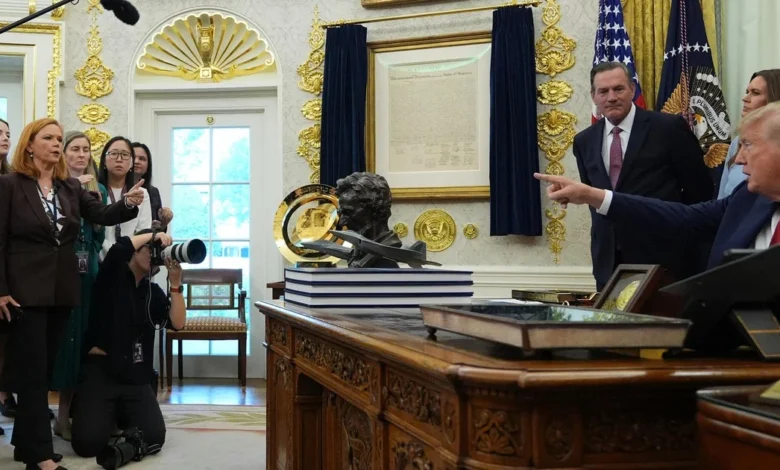
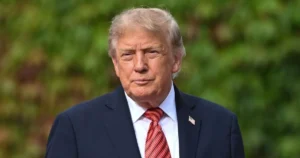
In a significant escalation of tensions between the executive branch and the national press corps, President Trump announced on Friday, September 18, 2026, that his administration is revoking the White House press credentials of CNN, MS NOW, and Politico. The announcement, delivered via the president’s personal social media platform, Truth Social, marks a new phase in the administration’s long-standing confrontation with major news organizations, citing what the president termed "constant reporting of fake news" as the primary justification for the expulsion.
The directive, which the administration claims is effective immediately, has sent shockwaves through the Washington press corps, raising immediate questions regarding the boundaries of executive authority and the protections afforded to journalists under the First Amendment of the U.S. Constitution.
Chronology of Escalation and Justification
The president’s announcement followed a period of mounting friction between the White House and the designated news outlets. During a brief session in the Oval Office shortly after the social media post, President Trump was pressed by reporters on the legal basis for his decision, particularly in light of his oath of office to uphold the Constitution. When asked how he reconciles the ban with democratic norms, the president responded, "Because they’re fake news. I get so tired of reading and seeing fake news."
When asked to pinpoint the specific event or story that triggered the move, the president suggested that no singular catalyst existed, instead framing the decision as the result of a cumulative frustration. "It’s really just cumulative stories of the last two years," the president stated. "You get sick of it." When further questioned on whether the move was intended to intimidate the press, the president denied such intent, while reaffirming his disdain for the outlets in question.
Despite the administration’s stated intent to ban these organizations, as of late Friday afternoon, correspondents from the affected outlets remained on the White House grounds, and the logistical implementation of the ban remained unclear. The White House has not yet issued a formal administrative order outlining how physical access to the press pool or the West Wing will be restricted.
Legal Precedents and Constitutional Challenges
The move is widely expected to trigger a wave of litigation, mirroring past conflicts between the Trump administration and the media. Legal scholars point to a long line of jurisprudence that limits the executive branch’s ability to use access as a tool for punishment.
Jameel Jaffer, executive director of the Knight First Amendment Institute at Columbia University, issued a sharp rebuke of the policy. "The First Amendment prohibits the president from punishing journalists because he doesn’t like their coverage," Jaffer stated. "If President Trump means to expel these news organizations from the White House press pool, his action is doubly unconstitutional because the press pool is a ‘public forum’ under the First Amendment, which means the president can’t exclude journalists from it on the basis of their viewpoints."
The current situation bears a striking resemblance to the legal battles of the president’s first term. In 2018, the White House attempted to strip CNN correspondent Jim Acosta of his press credentials following a contentious news conference. That move led to a federal lawsuit in which a judge ultimately ordered the restoration of Acosta’s credentials, ruling that the administration had violated the reporter’s due process rights.
Furthermore, the administration is already embroiled in an ongoing legal dispute involving the Associated Press. In 2025, the White House attempted to bar the AP from presidential coverage following a disagreement over the outlet’s refusal to adopt specific editorial terminology regarding the Gulf of Mexico. A federal judge ruled in April 2025 that the White House was required to restore access to presidential spaces, though a subsequent appeals court ruling allowed for limited restrictions in specific, high-security areas. This case remains active, and the new bans are likely to be consolidated or cited in future hearings regarding the reach of executive power.
Industry and Institutional Responses
In the hours following the president’s announcement, the targeted organizations issued statements standing by their reporting and condemning the move as an assault on the press. CNN’s statement was particularly emphatic, noting that the network "stands fully behind our White House team and their fair and accurate reporting." The statement added that the network possesses a constitutional right to conduct reporting without government interference, characterizing the potential ban as an "illegal assault on that fundamental and constitutionally-protected right."
Representatives for Politico and MS NOW have similarly signaled that they are evaluating their options, including potential legal action. The White House press office has largely directed inquiries to the president’s public remarks, declining to provide additional clarification on the operational scope of the ban or how the administration intends to defend the policy in court.
Broader Implications for Democracy and Governance
The exclusion of news organizations from the White House is not merely a logistical hurdle for journalists; it represents a fundamental change in the relationship between the government and the governed. White House access is typically governed by the White House Correspondents’ Association (WHCA), which handles the rotation of the "pool"—a small group of journalists who accompany the president and report on behalf of the entire press corps. If the administration succeeds in bypassing or overriding the traditional standards for credentialing, it could fundamentally alter the transparency of the executive office.
Political scientists and media analysts observe that while presidents have historically had adversarial relationships with the press, the systematic removal of outlets based on content criticism is an outlier in modern American history. A core concern among press freedom advocates is the "chilling effect" such a policy might have on investigative reporting. If news organizations fear that critical, fact-based reporting will result in the loss of access, they may be forced to choose between maintaining their reporting standards and preserving their ability to cover the president.
Analysis of the Policy Impact
The administration’s focus on "fake news" as a standard for exclusion introduces an subjective criteria that is notoriously difficult to codify. In the eyes of the law, the distinction between "bias" and "falsehood" is critical. While the White House characterizes the reporting as "fiction and lies," the legal standard for such a claim would require proving actual malice or verifiable falsehoods, a burden that the executive branch has struggled to meet in previous judicial encounters.
Furthermore, the timing of this move—occurring in the latter half of the current administration—suggests an intensification of the president’s media strategy. By framing the media as an adversary rather than an institution that serves to check executive power, the administration is further polarizing the information landscape.
The outcome of this situation will likely be determined in the federal courts. Given the precedents established during the 2018 Acosta case and the ongoing 2025 AP litigation, the judiciary will be tasked with determining whether the president’s prerogative to control access to the Oval Office overrides the First Amendment’s protection of the press. For now, the status of the affected journalists remains in limbo, as the nation watches to see if the administration moves to physically enforce a policy that many legal experts view as a direct challenge to the constitutional order.
Related posts: