For years, the technological giants behind the generative AI revolution, Microsoft and OpenAI, have fought a multi-front legal battle to maintain the secrecy of their internal decision-making processes. As major news organizations—including The New York Times and various regional publishers—alleged that these firms were engaged in massive, unauthorized copyright infringement to train their large language models (LLMs), the companies sought to keep their internal communications under seal. However, a significant legal development occurred on September 17, 2026, when a motion for summary judgment was unsealed, providing the public with an unprecedented, candid glimpse into the internal anxieties of the executives responsible for the most significant shift in information technology in decades.
The unsealed documents reveal that long before the widespread public rollout of products like ChatGPT and Copilot, internal stakeholders at both companies were acutely aware that their scraping practices were not only legally precarious but also potentially catastrophic for the news industry. The records suggest that executives and engineers viewed the reliance on scraped news content as a "doom loop"—a self-defeating cycle where AI platforms cannibalize the very sources of information necessary to sustain their own intelligence.
The Internal Reckoning: Theft or Innovation?
The most striking revelations within the court filings come from Microsoft’s own offices. Brent Hecht, the Director of Applied Science at Microsoft, penned internal assessments that stand in stark contrast to the company’s public-facing legal arguments. In documents obtained by the plaintiffs, Hecht reportedly characterized the mass scraping of news content as "an astonishing theft of unprecedented proportions." He went further, describing the systemic ingestion of journalism as potentially the "largest theft of labor in human history."
These internal admissions directly challenge the "fair use" defense that Microsoft and OpenAI have consistently presented in federal court. While the companies have argued that their model training is a transformative process that provides a societal benefit, Hecht’s internal commentary suggests that at least some members of the technical leadership viewed the strategy as a "complete mockery" of the concept of fair use.
At OpenAI, the internal sentiment was equally concerned with the potential for existential damage. Nick Turley, head of the ChatGPT division, explicitly acknowledged in internal correspondence that commercial products trained on news content posed an "existential threat" to the publishers themselves. The documents reveal a clear understanding that by creating a product capable of synthesizing and summarizing news, the companies were effectively building a substitute for the very platforms that provided the raw data for their models.
A Chronology of Conflict and Subscription Circumvention
The tension between tech giants and news publishers did not emerge overnight; it is the culmination of years of aggressive data acquisition. The chronology of the dispute highlights a pattern of behavior that news organizations argue demonstrates bad faith.
In early developmental stages, as engineers sought to build more robust models, the focus was on high-quality, reliable text. News archives, with their structured and verified reporting, became the primary target for web crawlers. The unsealed documents indicate that when OpenAI staffers discovered that their scrapers were being blocked by paywalls—most notably on The New York Times’ website—they did not interpret this as a signal to respect the intellectual property. Instead, they celebrated technical workarounds.
Internal messages between OpenAI staffer Nick Ryder and President Greg Brockman confirm that when a "hack" was identified to bypass the Times’ paywall, the response was a casual, "Ah, nice." This specific incident, now a cornerstone of the plaintiffs’ legal argument, suggests that the bypassing of digital security measures was not a technical glitch but a prioritized, encouraged behavior within the development team.
Furthermore, Microsoft CEO Satya Nadella, while testifying under oath, attempted to reconcile the company’s practices with legal norms. However, his testimony inadvertently bolstered the publishers’ case. Nadella admitted that the shift in user behavior is undeniable: chatbots are effectively "stealing" clicks by providing the information directly on the AI interface, thereby removing the incentive for users to visit the source website.
Supporting Data: The Cost of the "Doom Loop"
The economic fallout for the news industry is not merely speculative; it is documented in the data presented to the court. Microsoft’s own internal metrics recorded devastating drops in click-through rates (CTR) for various news organizations that had been identified as plaintiffs in the lawsuit.
According to the unsealed motion, some news organizations saw their traffic from referral sources drop by between 83 and 94 percent following the integration of AI-driven search features. This data aligns with independent reports from the news organizations themselves, which have tracked a concurrent decline in revenue and reader engagement.
The "doom loop" logic functions as follows:
- AI companies scrape news content to train models.
- These models, through chatbots, provide users with summarized information, reducing the need for users to click on the original news article.
- Publishers lose traffic, which leads to a decline in subscription and advertising revenue.
- With reduced revenue, publishers have fewer resources to produce the original, high-quality reporting that AI models require to remain accurate and relevant.
- The AI models degrade in quality as the "supply chain" of reliable information shrinks.
Official Responses and Legal Posturing
In response to the unsealing of these documents, Microsoft has attempted to distance itself from the comments made by its own personnel. A spokesperson for the company stated that the internal documents "reflect one employee’s individual perspective" and do not constitute a formal legal analysis or an official company stance. The spokesperson maintained that Microsoft’s AI products remain a "transformative fair use" and that the comments made by Nadella were merely "observations" regarding broader trends in internet usage, rather than an admission of copyright liability.
OpenAI has maintained a lower profile regarding the specific allegations, not immediately responding to requests for comment. However, legal representatives for the news organizations have characterized the release as a pivotal turning point. Steven Lieberman, counsel for the New York Daily News and affiliated publications, stated that the evidence "shows that OpenAI and Microsoft knew that what they were doing was wrong." He emphasized that the companies’ long-term effort to keep these files confidential was a deliberate attempt to prevent the public and the court from understanding the internal consensus on the nature of their data collection.

Broader Implications for the Future of Information
The ongoing litigation represents more than just a dispute over copyright; it is a battle for the economic future of the digital information ecosystem. The plaintiffs argue that if the court finds that the use of news content for training generative AI is not fair use, it will force a market correction that could save the industry. By requiring AI companies to license content, the legal system could potentially restore the incentives for journalists and publishers to continue their work.
Conversely, the tech firms argue that such a ruling would stifle innovation and hinder the development of technologies that could provide immense societal value. They contend that AI is a new medium that requires a new approach to information consumption, and that the "substitutive" nature of chatbots is simply the evolution of the web, much like the search engine was in the late 1990s.
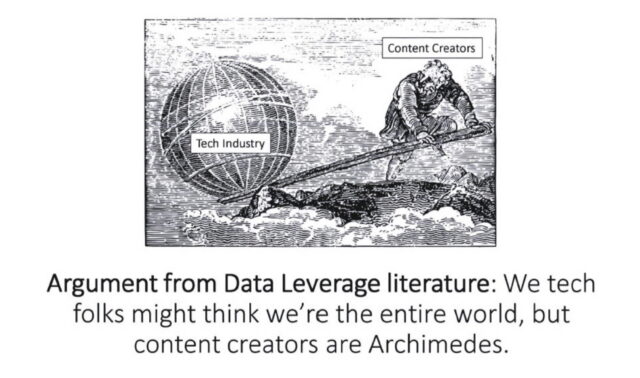
As the case moves toward trial, the "doom loop" cartoon found in Microsoft’s internal documents stands as a poignant symbol of the entire dispute. It illustrates a self-destructive system where the creators of the technology acknowledge that they are consuming their own foundations. Whether the courts will intervene to break this cycle or allow the market to continue its current trajectory remains the central question of this landmark legal battle. The outcome will likely define the relationship between human-generated creative work and artificial intelligence for decades to come.