Microsoft fined nearly $2.5 million for air quality violations in Virginia as Loudoun County implements a yearlong pause on new data center approvals

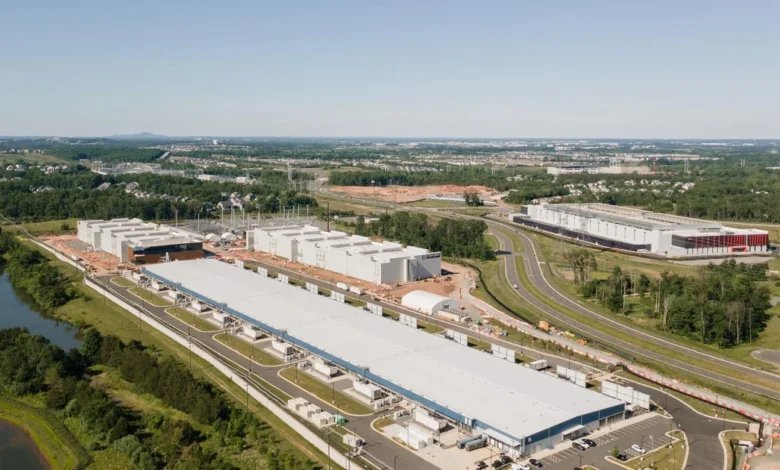
The Virginia Department of Environmental Quality (VDEQ) has issued a record-setting $2.47 million civil penalty against Microsoft Corporation, marking the largest environmental fine ever imposed on a data center operator in the Commonwealth of Virginia. This unprecedented enforcement action follows a significant environmental compliance breach at a Microsoft-owned facility in Leesburg, Virginia, during the summer of 2025. The incident, which involved the unauthorized release of pollutants during a prolonged electrical failure, has ignited a firestorm of debate regarding the environmental footprint of the massive technology hubs that define Northern Virginia’s modern economy.
Anatomy of an Infrastructure Failure
The regulatory enforcement stems from a critical operational failure that occurred in June 2025. According to official VDEQ reports, the Microsoft facility suffered a catastrophic failure of a local electrical substation, necessitating a transition to on-site emergency power. To maintain operations during this disruption, the data center relied on 62 emergency diesel-powered generators for a seven-day period.
Under the facility’s state-issued air permit, these emergency engines are strictly regulated to prevent the excessive release of particulate matter and greenhouse gases. However, the extended duration of the outage resulted in the facility exceeding its permitted emission limits for carbon monoxide (CO), volatile organic compounds (VOCs), and fine particulate matter (PM10 and PM2.5). These pollutants are known to pose significant health risks, particularly to residents living in close proximity to industrial power sources, as they can exacerbate respiratory conditions and contribute to long-term cardiovascular health issues.
As part of the settlement agreement, Microsoft has agreed to pay the civil penalty, with $2.4 million of the total funds earmarked for a regional environmental initiative. The VDEQ plans to utilize these resources to deploy an extensive network of air-quality monitoring sensors throughout Northern Virginia. The goal is to provide real-time data transparency in areas with the highest density of data centers, allowing regulators and the public to better understand the cumulative impact of industrial power generation in "Data Center Alley."
Chronology of the Crisis
The intersection of massive digital infrastructure and local community life has been a point of friction in Loudoun County for years. The recent fine serves as a culmination of mounting tensions.
- Pre-2025: Loudoun County established itself as the world’s premier data center hub, hosting over 250 facilities. During this period, concerns regarding noise pollution, visual blight, and energy consumption began to escalate.
- June 2025: The electrical substation failure at the Leesburg facility triggers a week-long reliance on diesel generators, leading to the VDEQ violation.
- August 2025: Investigations into the emissions breach conclude, leading to negotiations between Microsoft and state regulators.
- September 15, 2026: The Loudoun County Board of Supervisors officially implements a one-year pause on the approval of new data center applications.
- September 16, 2026: The VDEQ publicly confirms the $2.47 million settlement with Microsoft, highlighting the need for increased oversight in the sector.
The Legislative Response in Loudoun County
The economic and environmental pressures reached a breaking point on September 15, 2026, when the Loudoun County Board of Supervisors voted 7-1 to implement a yearlong pause on new data center approvals. While the county attorney advised that an outright moratorium might be legally vulnerable under state law, the board utilized a strategic pause to halt the processing of new applications.
This decision reflects a growing sentiment among residents that the rapid pace of development has outstripped the infrastructure’s capacity and the environment’s resilience. Greg Pirio, a resident of Sterling who lives adjacent to a power-heavy data center, testified before the board regarding the necessity of reform. "The community must be involved in setting up the new standards and guardrails to mitigate the damage that has already been done to the environment and well-being of our community," Pirio stated during the public hearing.
The pause is not absolute; developers may still file applications, but the board has signaled that no action will be taken on them for at least 12 months. This window of time is intended to allow for a comprehensive review of land-use policies, zoning regulations, and the potential implementation of more stringent environmental standards for future builds.
Economic Benefits Versus Public Health
The debate over data centers in Virginia is essentially a struggle between two competing definitions of progress. On one side are the proponents of the industry, who point to the staggering economic contributions of the sector. Data centers are a massive tax base generator for the county, with projected revenues of $1.3 billion. Supporters argue that these funds are essential for maintaining the high quality of public education, parks, and law enforcement services that have made Northern Virginia an attractive place to live.
Nicole Riley of the Data Center Coalition expressed deep concern over the board’s decision, arguing that such regulatory hurdles damage the region’s reputation. "Moratoriums and other anti-competitive policies send a signal that an area is closed for business," Riley stated. She noted that the industry supports not only the tech firms themselves but also a vast ecosystem of local businesses, trade unions, and vocational schools that provide the specialized training required for data center construction and maintenance.
However, critics argue that the "transformative economic benefits" come at an unsustainable cost. The reliance on diesel backup power, the high noise levels generated by cooling systems, and the aesthetic impact on suburban landscapes have led to a organized pushback from homeowners.
Implications for the Future of Data Infrastructure
The Microsoft settlement and the Loudoun County pause are likely to serve as a bellwether for data center development across the United States. As the demand for cloud computing and artificial intelligence continues to grow, the need for massive, power-intensive data centers will increase. This creates a recurring conflict: how to provide the digital backbone for the global economy while ensuring the health and safety of the communities that host these facilities.
From a regulatory perspective, the use of fines to fund independent, real-time air quality monitoring suggests a shift toward more proactive oversight. By placing sensors in the communities surrounding data centers, the VDEQ is moving toward a model of "data-driven regulation," where public health decisions can be based on granular, localized evidence rather than periodic self-reporting by corporations.
For industry players, the message is clear: the era of unchecked, rapid expansion is facing increased scrutiny. Future development will likely require a greater focus on sustainable energy, such as hydrogen-based fuel cells or advanced battery storage, to replace the reliance on traditional diesel-powered backup generators. As the Board of Supervisors begins its monthslong review, the outcome will likely dictate whether Loudoun County remains the global center of the digital world or pivots toward a more restrictive, community-focused development model.
Ultimately, the events of September 2026 represent a critical junction for Northern Virginia. The $2.47 million penalty, while significant for a single incident, is relatively small compared to the annual revenue generated by the industry. However, the policy shift represented by the one-year pause in approvals indicates that the social license to operate in Loudoun County is no longer a guaranteed commodity. Both industry leaders and local government officials must now navigate a complex path that balances the relentless demands of the digital age with the health and environmental rights of the local population.