When Bureaucracy Overshadows Survival: Taya Hailstone’s Fight for Medicaid Highlights the Looming Crisis of New State Work Requirements

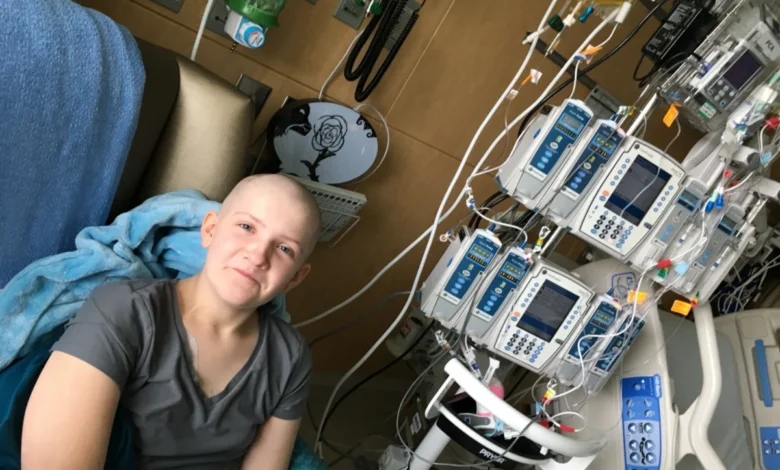
The physical toll of childhood cancer often extends far beyond the final round of chemotherapy or radiation, trapping survivors in a perpetual cycle of chronic illness and systemic hurdles. For 19-year-old Taya Hailstone of Roundup, Montana, five years in remission from childhood Hodgkin lymphoma have not translated into a return to a standard lifestyle. Severe organ damage, chronic nerve pain, and digestive tract complications—stemming from a torn intestine and partial removal during her initial battle at age 10—mean that basic, everyday actions like loading a dishwasher, gripping a fork, or walking unassisted across a room present exhausting daily challenges.
Yet, despite her ongoing medical vulnerabilities and frequent medical appointments, Montana’s state health department decided last year that Hailstone was no longer eligible for low-cost disability health coverage through Medicaid. Instead of evaluating her current medical charts or consulting her treating physicians, state administrators shifted her coverage to the state’s Children’s Health Insurance Program (CHIP)—another branch of Medicaid—merely three months before she would age out of it entirely. This administrative ruling, which arrived without a review of her actual medical records, underscores a growing national anxiety: as states rush to implement sweeping new federal Medicaid work requirements, vulnerable patients are falling through the cracks of an increasingly complex and unforgiving bureaucratic apparatus.
A Fragile Path: From Childhood Diagnosis to Administrative Battles
Hailstone’s medical journey has dominated nearly half of her life. Diagnosed with blood cancer as a preteen, she endured treatments that saved her life but ravaged her body. Today, her health fluctuates unpredictably on a daily basis. Lingering side effects leave her with persistent brain fog, severe dehydration risks, and swelling in her hands and feet that compromises her motor skills. Alongside her mother, Kyla Hailstone, she regularly makes the grueling two-hour round-trip drive from Roundup to Billings three times a week for specialized care, attending physical therapy, occupational therapy, and mental health counseling sessions.
The administrative clash with the state began after Hailstone voluntarily stopped receiving Social Security disability payments. Her decision was driven by an aspiration shared by many young adults recovering from severe illnesses: she hoped to regain enough strength to enter the workforce and save a modest amount of money—an objective heavily constrained by the strict income and asset caps tethered to traditional Social Security disability benefits. However, because her health remains too fragile to sustain consistent, gainful employment, relinquishing those payments stripped away a vital marker that state bureaucrats historically used to validate disability status.
Upon noticing the cessation of her Social Security disbursements, Montana officials made an administrative determination without requesting records from Hailstone’s active medical team. Currently, Hailstone is able to maintain her Medicaid coverage only because she and her mother are actively appealing the state’s decision. Without this coverage, the specialized treatments required to manage the permanent aftermath of her cancer would be financially insurmountable.
"It feels like this process was made to make you give up," Hailstone said, capturing the exhaustion shared by numerous chronic illness patients navigating public assistance programs.
The Shifting Landscape of Medicaid Work Requirements
Hailstone’s case is far from an isolated incident; rather, it serves as a harbinger of systemic friction colliding with major shifts in federal health policy. Historically, patients with disabilities have struggled with administrative hurdles, processing errors, and systemic confusion when attempting to secure and maintain federally subsidized health coverage. Now, those challenges are compounding exponentially.
Under the federal policy framework enacted through legislation such as the One Big Beautiful Bill Act passed last year, states are mandated to implement strict work-for-coverage rules by January 2027. These regulations require millions of Medicaid enrollees to prove they are actively working, participating in education, or performing volunteer work to retain their health insurance. According to projections by the Congressional Budget Office (CBO), an estimated 18.5 million individuals will be subjected to these new compliance checks. Data from KFF reveals that more than 40% of these affected enrollees live with chronic health conditions. While the legislation includes provisions to excuse individuals who are certified as too sick to work—specifically targeting those categorized as "medically frail"—the onus falls entirely on states to establish operational systems capable of reviewing and verifying these medical exemptions.
Federal timelines have forced many states to accelerate their implementation schedules. Nebraska initiated its work requirements in May, while Montana followed suit by launching early compliance checks in July, with plans to begin actual disenrollments for noncompliance scheduled for October. This compressed timeline has left state agencies scrambling to adapt their infrastructure to handle complex medical determinations.
The Burden of Proof and Legal Pushback

In the statutory language drafted by Congress, lawmakers intended to permit exemptions for individuals whose medical conditions impair their ability to work. However, subsequent federal rules released by administrative agencies went beyond initial congressional outlines, requiring enrollees to provide exhaustive documentation proving that their illnesses specifically preclude employment.
This expansion has alarmed healthcare advocates, public aid researchers, and legal experts. Organizations like Families USA have argued that the new federal guidance forces state agencies to construct a decentralized, state-level patchwork of evaluation systems that rivals or exceeds the complexity of the Social Security Administration’s long-standing disability review apparatus. To contextualize the scale, the federal Social Security disability program spent more than $5 billion last year alone to administer benefits for roughly 7 million national beneficiaries. In stark contrast, federal legislation provided a mere $200 million for all states to share as they gear up to implement the new Medicaid work requirements. Consequently, state agencies have increasingly turned to private contractors, paying millions of dollars to update public aid systems that frequently struggle with operational errors and wrongful denials.
The friction between federal mandates and state execution culminated in legal action. In June, a coalition of 25 states filed a formal lawsuit against the federal administration challenging the medical frailty documentation rules. The plaintiff states argue that the mandates impose evidentiary burdens that are excessively difficult for patients to fulfill and logistically impossible for state agencies to assess accurately. That federal lawsuit remains ongoing, leaving state administrators in a regulatory limbo while deadlines draw near.
Local Realities and the Risk of Disenrollment
At the local level, legal aid organizations and advocacy groups are bracing for an administrative surge. Megan Dishong, deputy director of the Montana Legal Services Association, noted that obtaining state-level recognition of a federal disability status has always depended heavily on variable state resources.
"Whether that happens is always a bit of a crapshoot just based on state capacity," Dishong explained. "Things fall through the cracks."
Jon Ebelt, a spokesperson for the Montana Department of Public Health and Human Services, maintained that the state health department adheres to established protocols, noting that the agency accepts disability determinations directly from the Social Security Administration. While state agencies possess the authority to conduct internal disability assessments when an applicant lacks an active SSA designation, Ebelt emphasized that such internal reviews are not mandatory if an individual qualifies through alternative administrative pathways. Furthermore, Ebelt reiterated the department’s commitment to treating every client with respect and assisting eligible individuals in securing appropriate coverage.
Despite these assurances, policy experts warn that convoluted benefit structures inherently punish vulnerable populations. Pamela Herd, a social policy professor at the University of Michigan who specializes in bureaucratic obstacles to public benefits, pointed out the systemic flaws inherent in overly complicated public aid architecture.
"When we’ve designed public programs in ways that people can’t figure out whether they’re eligible without consulting lawyers, we’ve done something wrong," Herd observed. "That has huge, huge implications for what’s to come."
The Broader Implications for Healthcare Access
As states navigate the transition toward fully enforced work requirements, the implications for patients, physicians, and safety-net institutions are profound. Independent medical professionals—already managing heavy clinical workloads and administrative burnout—now face the added responsibility of acting as adjudicators, tasked with drafting complex medical justifications to prove their patients qualify for work exemptions. Healthcare providers worry that subjective standards of "medical frailty" will lead to arbitrary decisions, increasing the likelihood that genuinely disabled patients will lose coverage simply due to paperwork errors or delayed medical chart reviews.
For Taya Hailstone, the immediate priority is finding a pragmatic way through the bureaucratic maze. To safeguard her access to necessary medical treatments, she has been forced to restart the arduous process of reapplying for Social Security disability payments. While securing that federal status will impose strict caps on her future earning potential and limit how much she can work, it remains the most reliable mechanism to guarantee her continued enrollment in Medicaid.
As Montana and other states prepare to enact full disenrollments under the new work requirement guidelines, stories like Hailstone’s illustrate the human cost of administrative transitions. Without streamlined communication between state agencies, federal programs, and medical providers, millions of chronically ill Americans face the alarming prospect of losing vital healthcare access in an opaque, unyielding system.
Related posts: