Smithsonian Museum Exhibits in Manhattan Spark National Debate Over American History Portrayals

The presentation of early American history at federal institutions has emerged as a central flashpoint in contemporary cultural and political discourse. At the center of this debate is the Manhattan branch of the National Museum of the American Indian, a facility operating under the umbrella of the Smithsonian Institution. Recent reviews of the museum’s permanent installations and educational materials reveal a starkly critical perspective on the nation’s founding era, highlighting the profound devastation experienced by Native American communities during the Revolutionary War while frequently omitting broader historical context.
These findings arrive as the Smithsonian Institution faces intense scrutiny from the federal government regarding its curatorial standards. With the United States approaching the 250th anniversary of its founding, the administration of President Donald Trump has initiated a comprehensive review of exhibits and educational curricula across federal museums. The administration contends that certain federally funded displays have adopted an overly negative narrative regarding the nation’s origins, shifting focus away from the foundational principles established by the nation’s architects and toward a critical framework emphasizing historical injustices.
Curatorial Focus and Historical Omissions
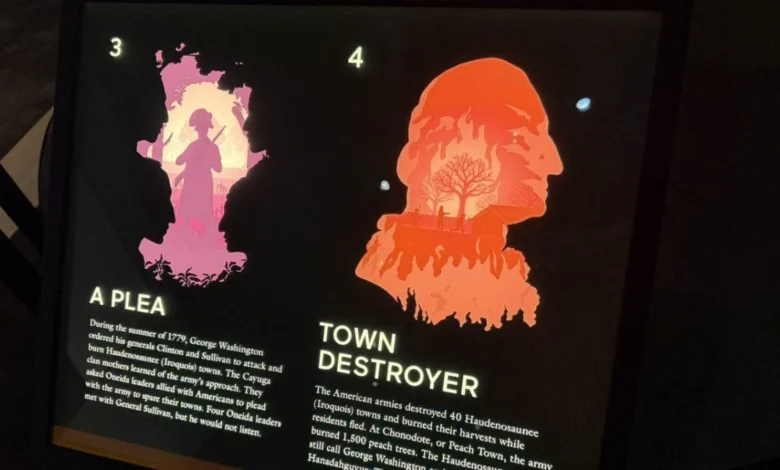
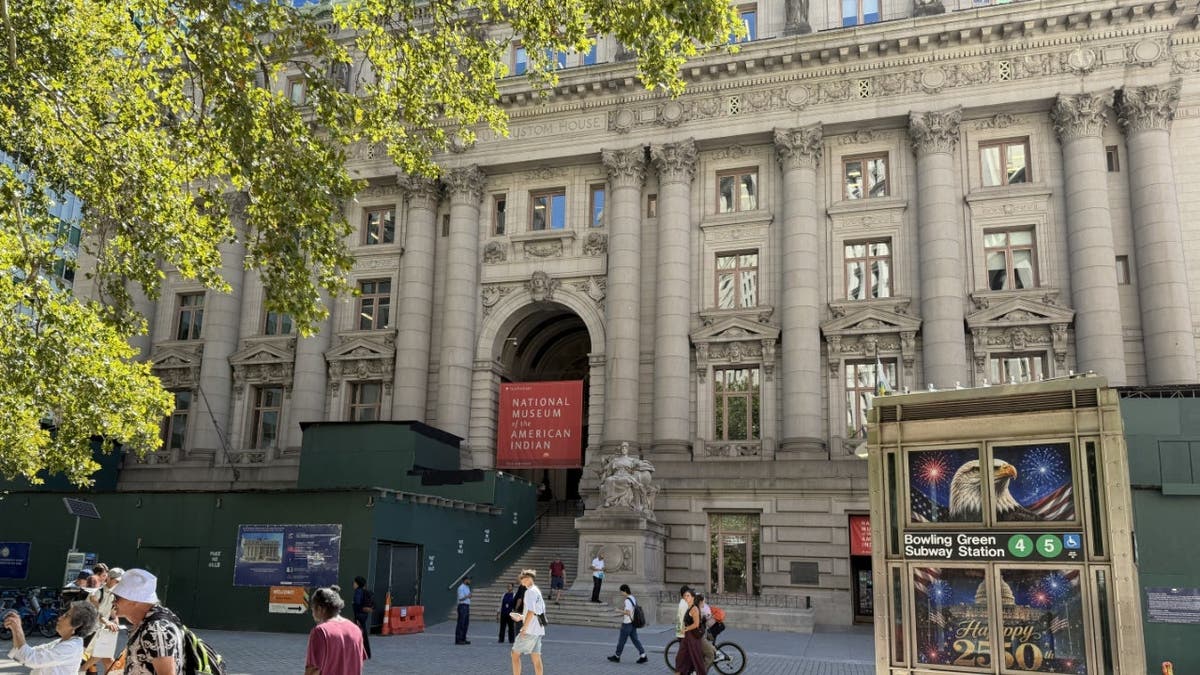
During a visit to the National Museum of the American Indian, located inside the historic Alexander Hamilton U.S. Custom House in Lower Manhattan, displays within the "Native New York" exhibition illustrate the complex and often contentious intersection of indigenous history and the American Revolution.
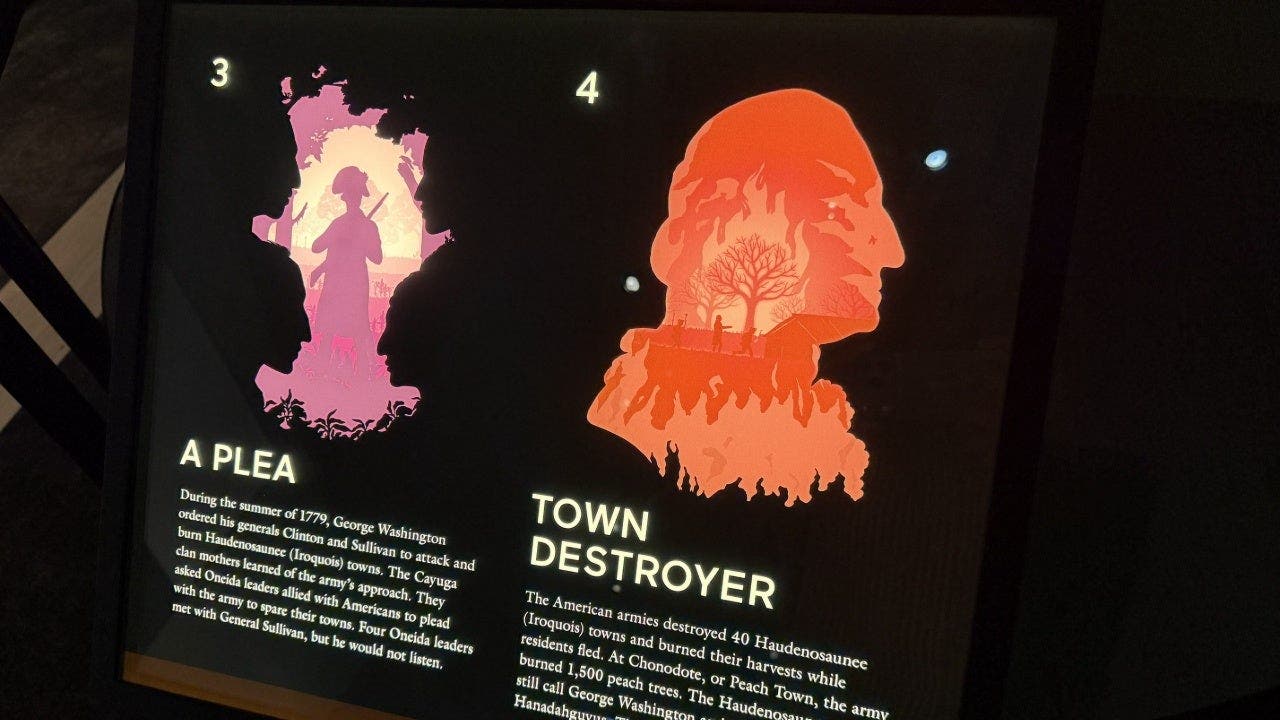
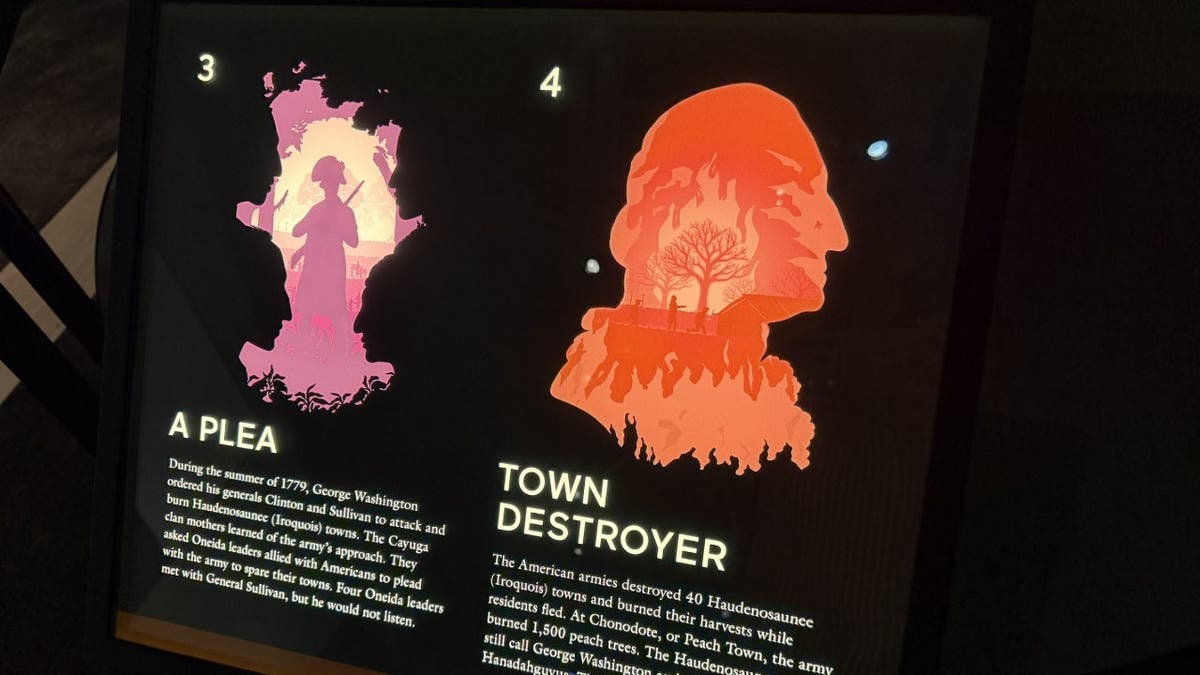
A prominent feature within the gallery displays an artistic profile of George Washington—reminiscent of the imagery found on United States quarters—accompanied by the designation "town destroyer." The descriptive text beneath the panel informs visitors that American military campaigns during the Revolutionary War destroyed approximately 40 Haudenosaunee (Iroquois) towns and burned their harvests, prompting fleeing residents to adopt a name that translates to "town destroyer" for Washington and subsequent U.S. presidents.
However, historical analysts note that the exhibit panel omits critical context regarding the military strategy and geopolitical pressures that precipitated the Continental Army’s actions. According to documentation from the National Park Service, the American offensive against the Six Nations homelands was a direct military response to devastating frontier raids carried out in 1778 by indigenous warriors and American loyalists in the borderlands of New York and Pennsylvania. These frontier attacks crippled the Continental Army by disrupting food supplies and manpower while causing widespread casualties and displacement among frontier settlers.
Similar editorial choices are visible across other installations within the facility. Another educational placard, framing the history of the Iroquois confederacy from 1779 to 1804 through the perspective of an indigenous narrator, asserts that the region remained peaceful until the commencement of the American Revolution. Critics of the exhibit point out that this narrative overlooks centuries of pre-contact conflicts among native populations, such as the Beaver Wars fought between the Iroquois and neighboring tribes over control of the lucrative animal pelt trade during the seventeenth century.
Educational Resources and Digital Outreach
The museum’s interpretive framework extends beyond physical galleries into digital resources designed for middle school classrooms and educators nationwide. Curriculum materials provided online by the institution frequently employ specialized terminology to characterize the foundational period of the United States.
For instance, instructional videos utilized in teaching modules describe the American War for Independence as a disruptive and dangerous endeavor, occasionally characterizing early American colonists through terms such as squatters and trespassers. In another video installation detailing Native American alliances during the conflict, the museum asserts unequivocally that an American soldier shot and killed Chief White Eyes, a prominent Lenape leader who had allied with the American forces. While the exhibit includes smaller explanatory text acknowledging that the exact cause of White Eyes’ death remains historically contested—noting that he was likely, rather than definitively, murdered by an American soldier—critics argue that the primary visual and auditory presentations lean toward absolute conclusions on debated historical points.

The Broader Smithsonian Controversy and Federal Oversight
The scrutiny facing the Manhattan museum is part of a broader, ongoing dispute between federal authorities and the leadership of the Smithsonian Institution. The Trump administration has raised repeated objections to what it characterizes as a systematic institutional shift toward identity-based historical interpretation and social justice advocacy.
Ahead of the nation’s upcoming semiquincentennial celebrations, federal officials have signaled that funding allocations and administrative support could be contingent upon adjustments to exhibits deemed divisive or historically unrepresentative of the nation’s founding ethos. The administration’s directives demand that the institution realign its presentations to honor the Founding Fathers and the ideals of the American Revolution rather than emphasizing institutional flaws.
This friction has drawn commentary from legal experts, historians, and cultural critics. Supporters of the current curatorial approach argue that modern museums have a responsibility to incorporate marginalized perspectives and confront the darker chapters of American expansion, ensuring that the historical experiences of indigenous populations are fully represented. Conversely, detractors argue that modern museum curation has drifted away from objective scholarship toward ideological advocacy. Observers note that institutions originally designed to chronicle broad natural and cultural histories have increasingly evolved into identity-focused spaces intended to validate specific cultural narratives.
Retail Offerings and Additional Critiques
The debate over the museum’s messaging extends even to its retail spaces. Positioned near the exit of the Alexander Hamilton U.S. Custom House, the museum bookstore features an array of literature addressing indigenous history and contemporary political theory. Among the prominently displayed titles is "An Indigenous Peoples’ History of the United States," alongside graphic novel adaptations, specialized studies on indigenous slavery, and works concerning gender identity and modern federal policy.
Critics of these offerings point to passages within these texts that challenge foundational American documents and institutions, arguing that the inclusion of such literature within a federally funded museum gift shop underscores a broader institutional bias. Proponents of the bookstore’s selection maintain that providing access to diverse scholarly and literary viewpoints is an essential function of a comprehensive museum dedicated to native cultures.
As the review ordered by the Trump administration proceeds, the Smithsonian Institution faces complex decisions regarding its curatorial direction. The ongoing dialogue highlights a fundamental tension in American public life: how national institutions should balance the commemoration of foundational achievements with the acknowledgment of historical grievances, and whether publicly funded educational spaces should serve as instruments for national unity or critical social reflection. Officials from the Smithsonian Institution did not immediately respond to requests for comment regarding the federal reviews or the specific exhibit content in Manhattan.