
Iran War Middle East
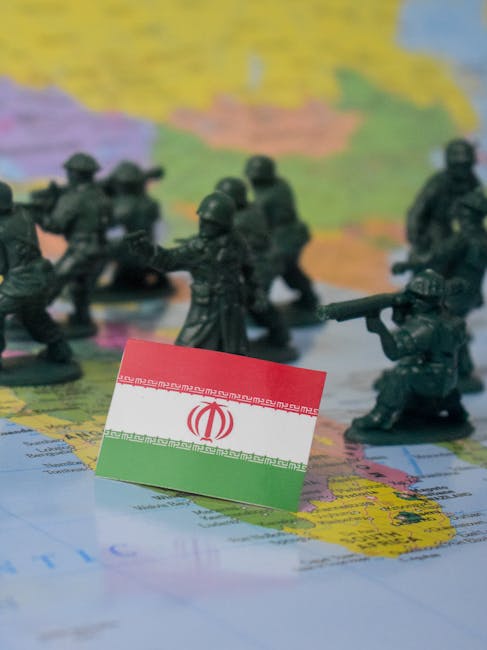
Iran’s Shadow: Unraveling the Complex Web of Middle Eastern Conflict and Geopolitical Stakes
The Middle East, a region perpetually defined by a volatile cocktail of historical grievances, resource competition, and ideological divides, finds itself in a prolonged state of flux, with Iran emerging as a central, and often disruptive, actor. Understanding the nuances of "Iran war Middle East" requires a deep dive into the multifaceted nature of this conflict, which is less a singular, declared war and more a pervasive geopolitical struggle manifest through proxy engagements, covert operations, and the constant threat of escalation. Iran’s strategic ambitions, driven by a desire for regional hegemony, a response to perceived external threats, and the propagation of its revolutionary ideology, directly fuel the instability that characterizes much of the contemporary Middle East. This article will dissect the key theaters of conflict where Iran is directly or indirectly involved, explore the motivations behind its actions, analyze the responses of regional rivals and global powers, and ultimately assess the long-term implications for the delicate balance of power in the Middle East.
One of the most prominent manifestations of Iran’s regional influence is its extensive network of proxy forces. These are non-state actors, often armed, trained, and funded by Tehran, that serve Iran’s strategic objectives without direct Iranian military involvement. Hezbollah in Lebanon stands as a prime example, a potent Shiite militant group that has evolved into a significant political and military force, capable of challenging Israel and influencing Lebanese domestic politics. The Houthi movement in Yemen, engaged in a brutal civil war against a Saudi-led coalition, receives substantial support from Iran, providing Tehran with a strategic foothold on the Arabian Peninsula and a means to pressure its rivals. In Iraq and Syria, Iran’s Quds Force, an elite unit of the Islamic Revolutionary Guard Corps (IRGC), has been instrumental in supporting Shiite militias and President Bashar al-Assad’s regime, respectively. These proxies allow Iran to project power, exert pressure, and achieve strategic gains while maintaining a degree of plausible deniability and minimizing the risk of direct military confrontation with its adversaries. The strategic advantage of these proxies lies in their ability to tie down enemy resources, create asymmetric threats, and advance Iran’s geopolitical interests at a relatively low cost.
The ongoing rivalry between Iran and Saudi Arabia forms a central axis of the "Iran war Middle East." This competition is deeply rooted in historical animosities, sectarian differences (Shiite Iran versus predominantly Sunni Saudi Arabia), and a starkly contrasting vision for the region’s future. Saudi Arabia views Iran’s growing influence and its support for Shiite communities across the Middle East as an existential threat to its own security and regional dominance. This has led to a costly proxy war in Yemen, where Saudi Arabia has intervened militarily to restore the internationally recognized government, which Iran supports. The conflict has resulted in a devastating humanitarian crisis, further exacerbating regional tensions. Beyond Yemen, the rivalry plays out in diplomatic isolation efforts, economic competition, and a constant struggle for influence in countries like Iraq, Syria, and Lebanon, where both nations vie for the allegiance of political factions and sectarian groups. The strategic objective for Saudi Arabia is to contain Iran’s expansionist policies and prevent the spread of Iranian influence, while Iran aims to challenge Saudi hegemony and secure its position as a preeminent regional power.
Israel’s security concerns are intrinsically linked to the "Iran war Middle East." Tehran’s unwavering support for anti-Israel militant groups like Hezbollah and Hamas, coupled with its nuclear ambitions and its consistent rhetoric of hostility towards the Jewish state, presents a significant security challenge for Jerusalem. Iran’s efforts to establish a military presence in Syria, including missile factories and weapons depots, have drawn direct Israeli airstrikes, creating a dangerous escalation ladder. Israel views Iran as its most formidable adversary in the region and has adopted a proactive stance to counter its influence, engaging in covert operations, cyber warfare, and diplomatic maneuvering to isolate Iran and disrupt its nuclear program. The threat of Iran acquiring nuclear weapons is a red line for Israel, and Jerusalem has repeatedly stated its willingness to take military action to prevent such an eventuality. This deep-seated animosity and mutual threat perception create a constant state of tension and the potential for a wider conflagration.
The United States’ role in the "Iran war Middle East" is a complex and evolving one. For decades, Washington has sought to counter Iran’s influence, citing concerns about its nuclear program, its support for terrorism, and its destabilizing regional activities. This has manifested in economic sanctions, military deployments, and diplomatic efforts to build regional alliances against Iran. The Obama administration’s pursuit of the Joint Comprehensive Plan of Action (JCPOA), a nuclear deal with Iran, was an attempt to curb its nuclear ambitions through diplomacy, though it was controversial and ultimately abandoned by the Trump administration, which reimposed stringent sanctions. The Biden administration has explored a return to the JCPOA, albeit with modifications, reflecting the ongoing debate about the most effective approach to managing the Iranian threat. The US military presence in the region, including naval forces in the Persian Gulf and military bases in countries like Iraq and Qatar, serves as a deterrent and a projection of American power, aimed at reassuring allies and constraining Iranian actions. The strategic dilemma for the US lies in balancing its commitment to regional security with the risks of direct military confrontation with Iran and its proxies.
Iran’s nuclear program remains a critical flashpoint in the "Iran war Middle East." Despite its assurances that its program is for peaceful purposes, Western powers and regional rivals harbor deep suspicions that Tehran is pursuing the development of nuclear weapons. The JCPOA was designed to put verifiable constraints on Iran’s nuclear activities, but its collapse and Iran’s subsequent enrichment of uranium to higher levels have rekindled fears of a nuclear-armed Iran. The prospect of Iran acquiring nuclear weapons would fundamentally alter the strategic landscape of the Middle East, potentially triggering a nuclear arms race among regional powers and posing an unprecedented threat to global security. International Atomic Energy Agency (IAEA) inspections and diplomatic negotiations are ongoing, but the path forward remains fraught with uncertainty and the persistent threat of military intervention.
The economic dimensions of the "Iran war Middle East" are also significant. Iran’s oil-rich economy is a key leverage point, with international sanctions aiming to cripple its financial resources and limit its ability to fund its regional activities. However, Iran has demonstrated a remarkable resilience, adapting its economy to circumvent sanctions and relying on illicit trade and support from allies. The Strait of Hormuz, a vital chokepoint for global oil trade, is a constant source of tension, with Iran periodically threatening to disrupt shipping, a move that would have devastating global economic consequences. Conversely, the economic stability of regional rivals like Saudi Arabia and the UAE is directly impacted by the ongoing conflicts, leading to increased defense spending and a constant drain on resources.
The broader implications of the "Iran war Middle East" extend far beyond the immediate theaters of conflict. The persistent instability fuels humanitarian crises, displacing millions and exacerbating existing social and economic woes. The rise of extremist groups, though often not directly sponsored by Iran, thrives in environments of chaos and despair, posing a threat to regional and international security. The constant risk of escalation, whether through miscalculation or deliberate action, threatens to draw in global powers and engulf the region in a wider, devastating conflict. The geopolitical chessboard is intricate, with alliances constantly shifting and the interests of numerous state and non-state actors intertwining.
Ultimately, the "Iran war Middle East" is not a singular war with defined beginnings and ends, but rather a perpetual state of strategic competition and low-intensity conflict. It is a complex tapestry woven with threads of religious sectarianism, historical animosities, resource competition, and ideological clashes. Iran’s assertive foreign policy, its utilization of proxy forces, and its nuclear ambitions have undeniably reshaped the regional order and continue to pose significant challenges to the security and stability of the Middle East. The international community, including global powers and regional actors, remains locked in a delicate balancing act, seeking to contain Iranian influence, prevent further escalation, and foster a path towards lasting peace, a goal that, for now, remains elusive in this perpetually volatile region. The ongoing strategic competition ensures that the shadow of "Iran war Middle East" will continue to loom large over the region for the foreseeable future, with profound implications for global geopolitics and security.
