The Ocean Fever: How Marine Heat Waves Are Rewriting the Global Underwater Map

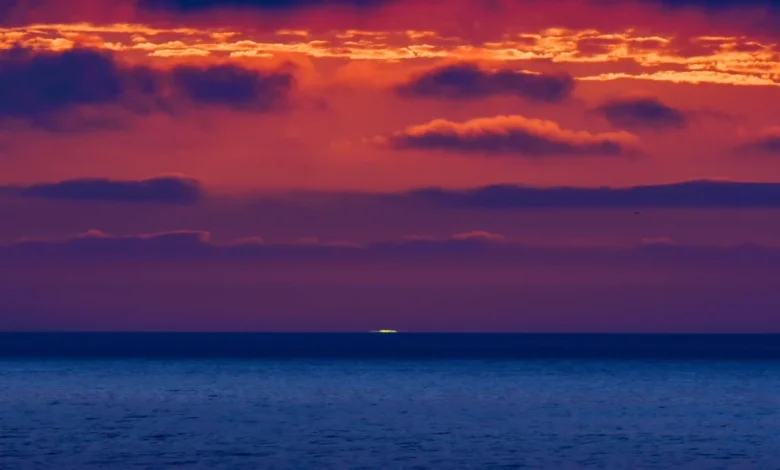
The common octopus, typically a resident of the temperate, predictable waters of the Mediterranean, has become an unlikely climate refugee, hitchhiking on plankton currents to colonize the English Channel. Last year, these cephalopods arrived off the coast of England in a localized bloom, but the current year has seen an unprecedented surge—the largest in 75 years. This phenomenon is not merely an anomaly of migration; it is a symptom of a profound transformation occurring across 82 percent of the world’s oceans, which are currently experiencing marine heat waves. Driven by anthropogenic climate change, these "ocean fevers" are fundamentally altering the biological, economic, and chemical architecture of our planet’s life-support system.
A Shifting Ecosystem in the North Atlantic
For decades, octopus larvae drifting into the colder, northern waters of the English Channel were met with a biological dead end; the temperatures were simply too low for them to survive, let alone thrive. That barrier has been erased. Experts at the UK’s Marine Biological Association have identified an intense marine heat wave off the coasts of Devon and Cornwall, where water temperatures have climbed as much as 9 degrees Fahrenheit above historical averages.
Unlike past incursions where the return of cold-water currents would cull the population, this current heat wave has persisted long enough for the octopuses to establish a foothold and, more crucially, to reproduce. The ecological ripple effects are staggering. Local fishers have reported a 7,700 percent increase in octopus landings compared to previous norms, turning a climate disaster into a temporary, albeit precarious, economic boon. However, this shift comes at a cost. Traditional fisheries for scallops, lobster, and crab are witnessing a sharp decline as the predatory octopuses reshape the seafloor food web. Predators that thrive on octopus—such as seals, conger eels, and dolphins—have seen their numbers swell, while rare visitors like bluefin tuna and sharks have become increasingly common in British waters, signaling a permanent restructuring of the regional marine community.
Defining the Crisis: The Mechanics of Marine Heat Waves
To classify an event as a marine heat wave, temperatures must exceed the 90th percentile of normal seasonal variation for a period of at least five consecutive days. While these events have historically occurred due to natural variability, the fingerprint of human-induced climate change is undeniable. Since 1940, the frequency of days per year defined by extreme surface heat has tripled.
The mechanism behind this acceleration lies in the ocean’s role as the planet’s primary heat sink. Oceans have absorbed more than 90 percent of the excess heat generated by greenhouse gas emissions. While gradual ocean warming allows some species the time to adapt or migrate, marine heat waves are acute, extreme, and rapid. They provide organisms with almost no window for evolutionary or behavioral adjustment. As Dr. Catherine Gregory, a climate scientist at the University of Bern, noted, the Western Mediterranean, the Celtic Region, the Bay of Biscay, and the Iberian Peninsula have all endured their most extreme July heat wave conditions on record, creating a compounding effect that stretches far beyond local shorelines.
The Legacy of the Blob and the New Pacific Reality
The current global crisis is often compared to "The Blob," the massive, persistent marine heat wave that dominated the eastern Pacific between 2014 and 2016. Triggered by a high-pressure ridge that suppressed cooling winter winds, The Blob elevated temperatures by up to 10 degrees Fahrenheit in some areas. The results were catastrophic.
In 2015, researchers like Ric Brodeur found that the base of the Pacific food chain—shrimp-like krill—had effectively vanished, leaving nets that should have been teeming with life nearly empty. The resulting famine was felt at the top of the food chain, with the North Pacific humpback whale population plummeting by 20 percent. Even after the surface temperatures returned to "normal," the reproductive decline of these whales persisted for years, with population recovery not beginning in earnest until 2021.
Today, the scientific community is observing a "New Blob" forming in the Pacific, sprawling over 24 million square miles. Compounded by a historically strong El Niño, this event is spiking sea temperatures far earlier in the season than historical models predicted. The fear among biologists is that the cumulative damage from previous events has left ecosystems with zero resilience to withstand the current onslaught.
Underwater Rainforests in Retreat
Perhaps the most visible casualty of these heat waves is the collapse of kelp forests. These underwater rainforests, which provide essential habitat for everything from sea otters to juvenile rockfish, are highly temperature-sensitive. Along the coast of Northern California, 95 percent of kelp cover was lost during the 2014–2016 heat wave. The ecological void left behind was immediate: red abalone populations were decimated, leading to long-term recreational fishing bans, and seabird populations faced a similar fate.
Alaska’s common murres serve as a grim bellwether for this decline. During the peak of the heat waves, approximately 4 million murres starved to death as warmer currents drove away the forage fish they relied upon. A 2024 study of the population confirmed the worst fears of ecologists: there has been no recovery. The heat wave did not just kill individual birds; it triggered a fundamental ecosystem shift that rendered the environment uninhabitable for the species.
Algal Blooms and the Toxicity of Warm Water
As surface waters heat up, they create a thermal cap that prevents vertical mixing—the process by which deep, nutrient-rich water reaches the surface. This stratification, combined with warmer temperatures, creates the ideal environment for harmful algal blooms. A massive bloom currently stretching from Southern California to British Columbia is dominated by Pseudo-nitzschia, an alga that thrives in heat and produces domoic acid.
This neurotoxin bioaccumulates, moving from small fish to larger marine mammals, including sea lions, whales, and porpoises. The result is a cycle of mortality that is increasingly common along the Pacific coast. Similarly, coral reefs globally are facing an existential threat. A bleaching event that spanned from early 2023 to mid-2025 affected over 84 percent of the world’s reef areas. Because the recovery windows between these bleaching events are closing, reefs are losing their ability to regenerate, threatening the biodiversity of the entire ocean.
Looking Toward an Uncertain Horizon
The scientific consensus is that the warming of the oceans is no longer a future threat; it is a present-tense catastrophe. While the economic impact on the fishing and tourism industries is significant, the loss of biological heritage is arguably more profound. From the kelp forests of the Pacific to the new octopus populations in the English Channel, the rules governing marine life are being rewritten.
Scientists at the Scripps Institution of Oceanography and beyond are issuing dire warnings that the current temperature trends are perfectly aligned with the most extreme historical markers. As the ocean continues to absorb the excess heat generated by human activity, the duration and intensity of these marine heat waves are expected to climb. The "New Blob" and the current global spikes are not isolated incidents; they are, according to researchers, the beginning of a long-term, volatile transition for the global marine environment. For policymakers and the public alike, the evidence suggests that the era of stable, predictable ocean conditions has come to a close, replaced by a new, hotter reality that requires immediate, systemic intervention to mitigate further collapse.
Related posts: